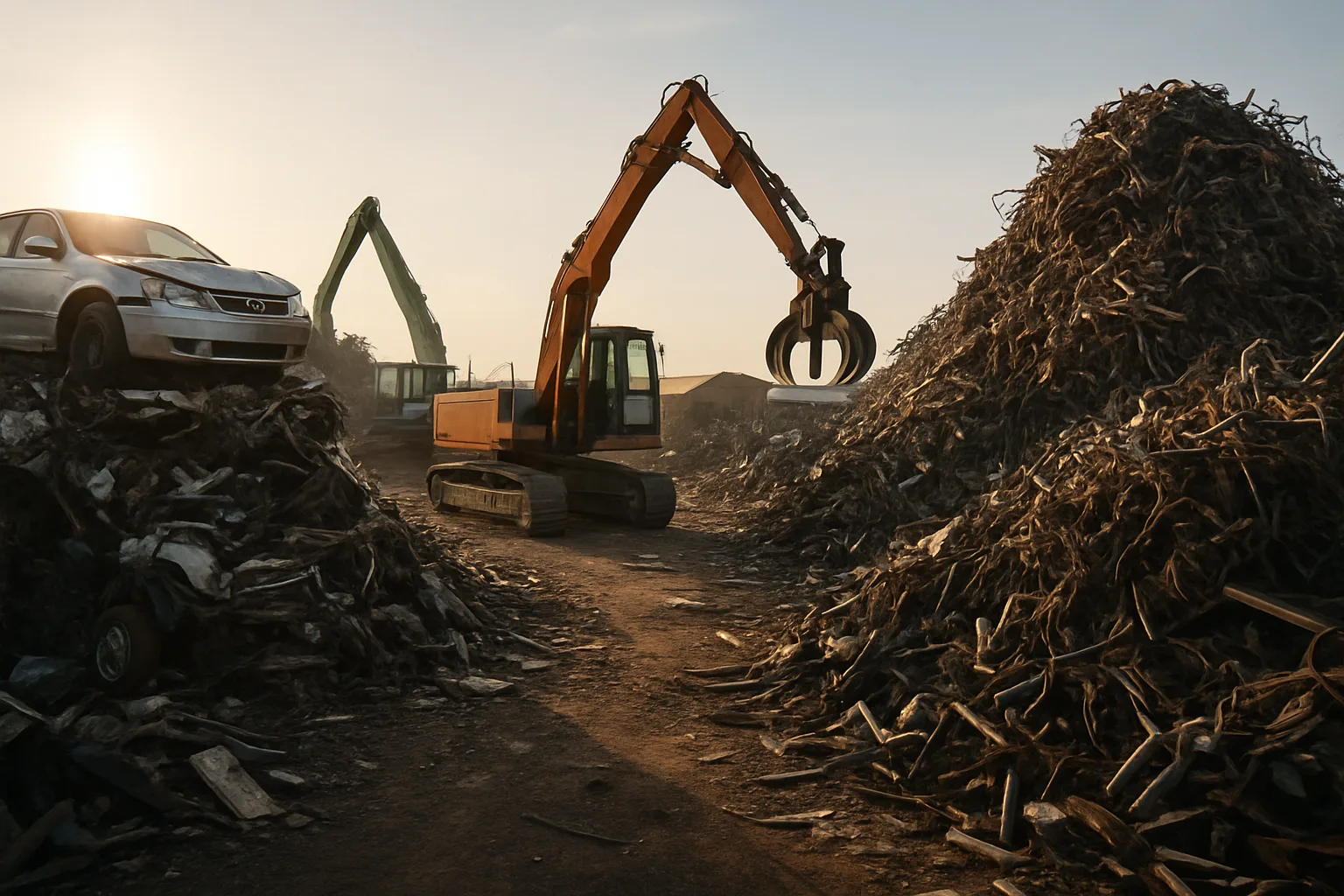
Most people think about the day they buy a car. Almost nobody thinks about the day it dies — and what happens after. But every vehicle you've ever owned has a full lifecycle, from the assembly line to the scrap yard, and understanding that journey changes how you think about selling yours.
If you're sitting on a car that's done its job and you want to sell my car for cash Kamloops, knowing where your vehicle fits in that lifecycle puts money in your pocket. It tells you what parts still have value, what the metal is worth, and how to avoid leaving cash on the table when you hand over the keys.
Let's walk through it — factory to crusher — and show you exactly where the opportunity is for Canadian car owners right now.
Stage One: Manufacturing and the Raw Materials That Start It All
Every car begins as raw material. Steel, aluminum, copper, rubber, glass, and plastics are sourced, refined, and shipped to assembly plants. A typical passenger vehicle contains roughly 900 to 1,000 kilograms of steel alone, along with significant volumes of aluminum, copper wiring, and non-ferrous metals like platinum, palladium, and rhodium in the catalytic converter.
This is important because those materials don't disappear when the car stops running. They're still in there, waiting. The same commodities that cost manufacturers money to source are worth real money when the vehicle reaches end of life. That's not a coincidence — it's the foundation of the entire scrap and recycling industry across North America.
- Steel: The dominant material — body panels, frame, axles, and doors
- Aluminum: Engine blocks, wheels, and body components in newer vehicles
- Copper: Wiring harnesses, motors, and electrical systems
- Precious metals: Platinum group metals (PGMs) inside catalytic converters
- Plastics and rubber: Interior components and tires (often processed separately)
Understanding this composition is what separates a smart seller from someone who just hands over the keys and hopes for the best.
Stage Two: The Working Life — Where Depreciation Does Its Damage
A car leaves the dealership and immediately starts losing value. That's not a myth — it's simple economics. The moment it's titled and driven, it becomes a used vehicle, and the market prices it accordingly.
Over 10 to 15 years of typical Canadian use — winters in British Columbia, highway kilometers, maintenance cycles — the vehicle depreciates to a point where repair costs start competing with resale value. That's the crossover moment. The engine is tired. The transmission is hesitating. The frame might have rust. A mechanic quotes more than the car is worth on any private sale platform.
This is where a lot of car owners in Kamloops get stuck. They don't want to give the car away, but they can't sell it privately at a price anyone will pay. The car sits in the driveway, losing value by the month. Sound familiar? The answer isn't to keep waiting — the answer is to understand what the car is actually worth at end of life and act on it.
Stage Three: The Transition — From Used Car to Junk Car
There's no official moment when a car becomes "junk." It's a sliding scale. But there are clear signals that a vehicle has crossed from the used car market into scrap and salvage territory:
- Repair estimates exceed the vehicle's private-sale value
- The car fails a safety or emissions inspection with costly remediation required
- The frame or unibody is compromised from rust or collision damage
- The engine has seized or requires a full rebuild
- The registration has lapsed and the owner has stopped investing in renewal
- The title is missing or the vehicle has been sitting unregistered for years
At this stage, the vehicle's value shifts entirely to its parts and materials. Salvage yards pull saleable components — doors, mirrors, engines, transmissions, seats — before the shell goes to the crusher. What remains becomes bulk scrap metal, priced by weight and composition. Platforms like SMASH are built specifically for this end of the market, connecting scrap yards with vetted buyers who bid competitively on loads rather than accepting whatever a single buyer offers.
If you're a yard operator managing catalytic converter cores, non-ferrous material, or end-of-life vehicle shells, sell your scrap metal on SMASH Recycling and let competition do what a single phone call never will.
Stage Four: The Scrap Yard — What Actually Happens to Your Car
Most people picture a junkyard as chaotic. In reality, a well-run scrap and salvage operation is systematic. When a vehicle arrives, it goes through a defined process:
Depollution first. Before anything else, hazardous fluids are drained — engine oil, transmission fluid, brake fluid, coolant, and refrigerants. This isn't optional. Environmental regulations across British Columbia and the rest of Canada require it. Yards that skip this step are operating illegally and creating long-term liability for themselves.
Parts harvesting. High-value components are removed and catalogued — catalytic converters, batteries, wheels, airbags, electronics, and engines. The best yards track this inventory carefully. Poor scrap metal inventory management means parts get lost, mislabeled, or sold below market because no one documented what came in. Accurate inventory, with photo documentation and serial tracking where applicable, is what separates profitable yards from ones that leave money sitting on the shelf.
Hulk processing. What remains after depollution and parts removal is the hulk — the metal shell. It gets shredded, sorted, and sold as ferrous scrap. The market price on that material fluctuates with global steel demand. Timing matters, and so does having buyers competing for your loads rather than accepting the first offer that comes in.
Selling Your Car in Kamloops: What You Actually Need to Know
If you're in Kamloops and you're ready to move a vehicle — whether it's a running used car, a high-mileage beater, or something that hasn't started in two years — here's what actually matters in 2026:
The market for end-of-life vehicles is active. Metal prices have remained significant enough that scrap buyers across Canada are motivated. You're not doing anyone a favour by letting a vehicle sit and corrode. You're destroying value every season it stays on your property.
You don't need to do this blind. Services built to help Canadian car owners get cash for your car in Canada exist specifically so you're not guessing what your vehicle is worth. Get a quote. Understand the breakdown. Know whether you're selling a parts car, a runner, or a full scrap load.
Documentation helps. If you have the title, registration, and service history, bring it. It makes the transaction cleaner and faster. That said, many end-of-life vehicles in British Columbia change hands without perfect paperwork — experienced buyers know how to work through it. Don't let a missing document stop you from exploring your options.
For more practical guidance on the process, read car selling tips from people who deal with this market every day.
And if you want to explore what local services look like in the Interior, check out Kamloops scrap metal services for region-specific information.
The Circular Economy — Why Scrapping Your Car Actually Matters
This isn't a feel-good section. It's economics.
When a vehicle reaches the end of its life and enters the recycling stream properly, the steel recovered reduces the need for virgin iron ore. Aluminum recovered costs a fraction of the energy required to produce new aluminum. Copper recovered from wiring harnesses goes back into manufacturing. Platinum and palladium recovered from catalytic converters re-enter the supply chain for new vehicle production.
In Canada, the automotive recycling industry processes hundreds of thousands of vehicles every year. It's not charity. It's a supply chain. And every car owner who decides to get a free car valuation and move their vehicle through legitimate channels is participating in that supply chain — and getting paid for it.
SMASH operates in this space at the wholesale level, giving scrap yards and buyers the tools they need to transact transparently. No subscription fees, no guessing games — just competition that helps reveal what the market will actually pay. For individual car owners, the equivalent is working with a cash-for-cars service that connects you to buyers who want your vehicle rather than accepting whatever the first caller offers.
If you're in Kamloops and you're ready to move on, the process is straightforward. Get a quote, schedule a pickup, and let the vehicle do its last useful job — putting money in your pocket and materials back into the supply chain.
Frequently Asked Questions
Q: How do I sell my car for cash in Kamloops if it doesn't run?
Non-running vehicles are bought and sold every day in Kamloops and across British Columbia. Cash-for-cars buyers specialize in vehicles that can't be driven — they arrange towing, assess the vehicle's scrap and parts value, and make an offer based on what it's actually worth. You don't need it running to get paid.
Q: What if I don't have the title for my junk car?
A missing title complicates the transaction but doesn't automatically kill it. Some buyers will work with alternative documentation, depending on the province and the buyer's policies. In British Columbia, ICBC records can often confirm ownership history. Contact a local cash-for-cars buyer directly and explain the situation — they'll tell you what they can work with.
Q: How is the price for my scrap car calculated?
Scrap car prices are based on the vehicle's weight, the current market price for ferrous and non-ferrous metals, the condition and salvageability of major components, and local demand. Prices fluctuate with commodity markets — what a car was worth six months ago may differ from today's value. Always get a current quote before committing.
Q: How quickly can I get cash for my car in Kamloops?
Most cash-for-cars transactions in Kamloops can be completed within one to three business days. You get a quote, agree on the price, schedule a pickup, and receive payment — often on the spot when the vehicle is collected. The process is designed to be fast because the buyer wants the vehicle, not a long negotiation.
Q: Does it matter what condition my car is in?
Condition affects price, but it rarely makes a vehicle unsellable to a scrap buyer. Even heavily damaged, rusted, or stripped vehicles have value in their metal content. A vehicle that a private buyer would walk away from is still worth something to a scrap yard. The key is getting it in front of the right buyer — one who's pricing based on scrap value, not resale potential.
Every car has a last chapter. In Kamloops and across Canada, that chapter can still put real money in your hands if you go through the right channels. Don't let a vehicle sit and deteriorate when there are buyers ready to move today. Get cash for your car in Canada — get a free quote at cashfor-cars.ca and find out what yours is worth right now.
Disclaimer: Scrap metal and vehicle prices fluctuate based on commodity markets and local demand. Always check current rates before finalizing any transaction.
Stay current on scrap metal market trends and industry news — follow SMASH on LinkedIn for regular updates straight from the recycling industry.