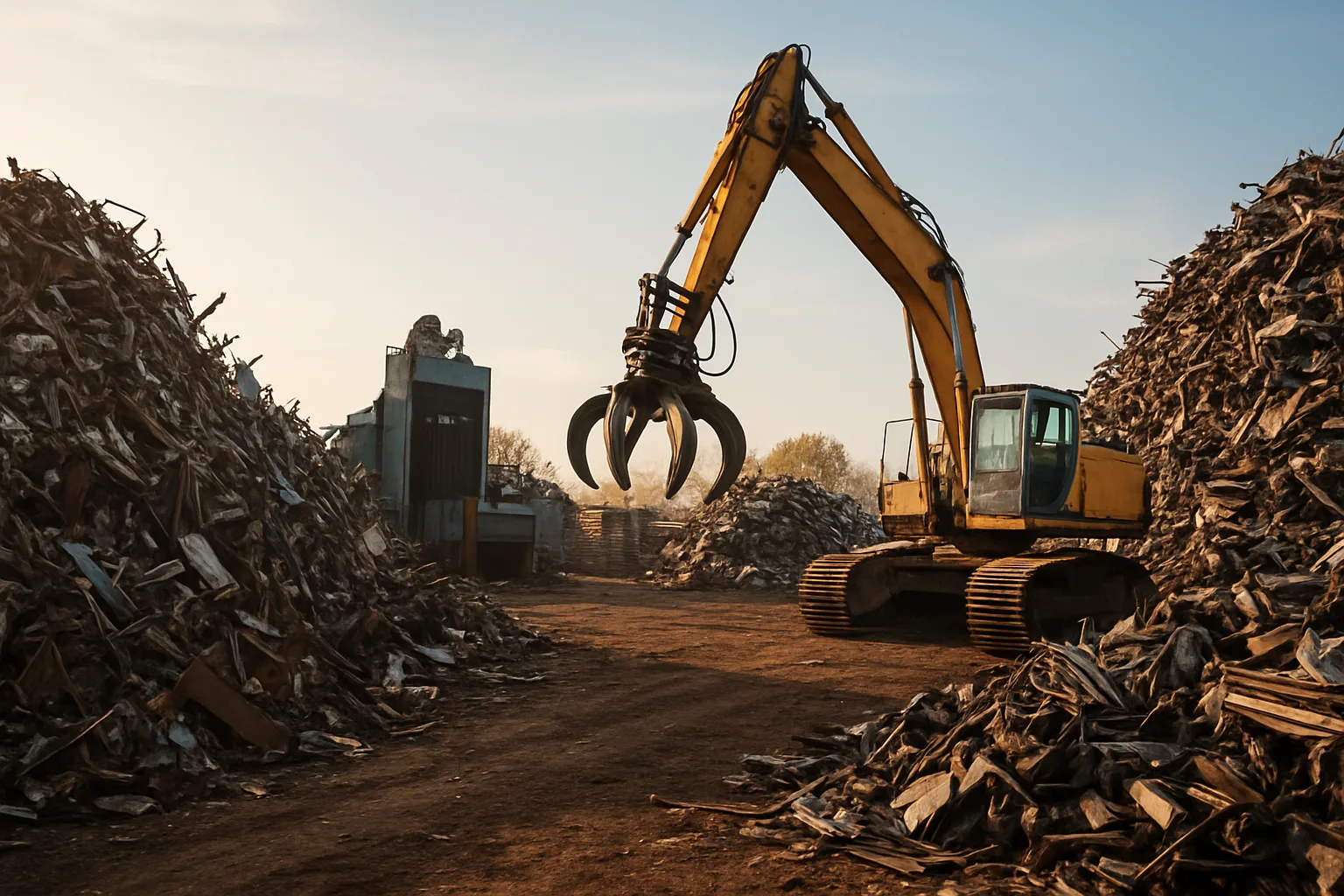
Your Car Doesn't Just Disappear — Here's What Actually Happens After Pickup
Most people hand over their keys, collect their cash, and never think about it again. But if you've ever wondered what happens to your old vehicle after you sell my car for cash Windsor — the answer is more systematic, and more valuable, than you'd expect. Auto recyclers don't just crush cars. They run a precision dismantling operation that extracts every dollar of value before a single piece of metal gets compacted.
Understanding this process matters for one practical reason: it explains why your car is worth what it's worth — and how to make sure you're getting a fair number before you sign anything. Whether you're selling a 2012 Honda Civic that finally gave out or a rusted-out pickup that's been sitting on your Windsor driveway for two winters, the process that follows pickup is largely the same.
Step One: Fluid Removal and Hazardous Material Decommissioning
Before any part comes off, the vehicle gets depolluted. This is a regulated process — especially in Ontario — and it has to happen before a car can legally be crushed or parted out. Every auto recycler in Windsor is required to drain and safely dispose of fluids before the vehicle moves anywhere in the facility.
Here's what gets pulled out at this stage:
- Engine oil and transmission fluid
- Coolant and antifreeze
- Brake fluid and power steering fluid
- Fuel (gasoline or diesel)
- Air conditioning refrigerant (recovered with certified equipment)
- Mercury switches (in older vehicles)
- Airbag inflators (handled as hazardous)
This step isn't optional and it isn't fast. A proper depollution can take 30 to 60 minutes per vehicle. Any recycler skipping this step is operating outside provincial environmental regulations — something legitimate Windsor yards don't do. If a buyer is offering to pick up your car and rushing you off the phone without any documentation, that's a red flag worth paying attention to.
Step Two: High-Value Parts Are Pulled First
Once the fluids are out, the vehicle moves to the dismantling bay. This is where the real value extraction happens. Skilled auto recyclers know exactly which parts have resale demand — and they pull those before anything else gets touched.
The most consistently valuable parts across most vehicles include:
- Catalytic converters (cats) — Often the single highest-value item on any scrap vehicle. Cats contain platinum group metals (PGMs) and can be worth hundreds of dollars depending on the make and model. Hybrids and late-model trucks tend to carry heavier cats.
- Engines and transmissions — Still-functional drivetrains get tested and listed for resale as used parts.
- Alternators, starters, and power steering pumps — Steady demand from independent mechanics.
- Rims and tires — Steel and alloy rims both have scrap and resale value. Quality rubber gets tested and resold.
- Batteries — Lead-acid batteries have their own recycling stream. Hybrid battery packs are increasingly valuable.
- Body panels, doors, and glass — If the vehicle has been in a collision, undamaged panels are resold to body shops.
- Seats, dash components, and electronics — Interior pieces move depending on vehicle popularity.
This is why the make and model of your car matters so much when a buyer quotes you a price. A 2008 F-150 has a much deeper parts market than a 2005 Pontiac Aztek. Recyclers factor resale potential into what they offer — which is exactly why you should never accept the first number without understanding what your vehicle is actually worth to the yard.
Step Three: The Body Shell Moves to the Scrap Metal Stream
After saleable parts are removed, what's left is mostly steel. The stripped body shell — along with the chassis, frame, and remaining metal components — gets classified as scrap. This is where junk car prices today become relevant, because the scrap value of steel fluctuates with commodity markets.
A typical passenger car in Canada weighs between 1,200 and 1,800 kilograms. Once fluids and parts are removed, the scrap shell might weigh 900 to 1,300 kilograms. At current steel scrap prices — which vary depending on grade and market conditions — that remaining metal carries real dollar value. Heavier vehicles like trucks, vans, and SUVs obviously yield more scrap weight, which is reflected in higher offers.
The shell typically gets sent one of two directions:
- On-site baler or shredder — Larger yards in Windsor and across Ontario compress and shred vehicles in-house before selling bulk material to steel mills.
- Sold as a whole shell to a larger processor — Smaller yards may sell stripped bodies to a regional shredder facility that handles volume processing.
Either way, that steel ends up at a mill, gets melted down, and re-enters the supply chain as new material. Your old car becomes rebar, structural steel, or automotive sheet metal again. The recycling loop is genuinely closed.
This is also where platforms like get competitive bids for your scrap in Canada matter most. When scrap metal moves through a B2B scrap metal marketplace, yards and processors compete on price instead of taking whatever a single buyer offers. That competition is what drives accurate price discovery — and it protects sellers from leaving money behind.
How Your Car's Scrap Value Gets Calculated — and Why Windsor Matters
If you're trying to figure out how much is my car scrap value before you get a free car valuation, here are the variables that actually move the number:
- Vehicle weight — Heavier vehicles carry more scrap metal. A full-size truck pays more than a compact sedan.
- Current steel and non-ferrous metal prices — These shift weekly. What your neighbour got for the same model six months ago may not match today's number.
- Parts demand for your specific make and model — High-demand vehicles command more because the parts value is stacked on top of scrap value.
- Condition of high-value components — An intact catalytic converter is worth significantly more than one that's been removed or damaged.
- Location and transport costs — In Windsor and the surrounding Ontario region, access to U.S. border crossing adds some nuance to regional pricing, since metal markets on both sides of the border interact.
Windsor is uniquely positioned. The city sits at one of the busiest automotive corridors in North America — and that proximity to both Detroit's industrial base and Ontario's steel processing infrastructure means Windsor scrap yards are generally active, competitive buyers. You're not in a thin market. You're in one of the better-connected scrap regions on the continent.
That said, don't assume proximity equals a fair offer automatically. Even in an active market, a single buyer quoting you without competition can still low-ball you. Getting multiple quotes — or using a platform built around competitive bidding — is how you make sure you're capturing actual market value.
If you're in the area, Windsor scrap metal services are well-established and accessible — use that to your advantage by getting more than one number before you commit.
What SMASH Does That the Old Way Doesn't
The old way of selling a junk car looks like this: one phone call, one offer, no idea if it's fair, sign and move on. That process hasn't changed much in decades. It relies on the seller not knowing the market — and buyers benefit from that information gap every single time.
SMASH changes the dynamic. Instead of one buyer taking a shot at your price, SMASH puts your vehicle in front of vetted buyers who compete against each other. That competition is what surfaces real market value. It's the same principle that applies to any auction — more bidders means better price discovery.
For sellers looking to sell my junk car Windsor, this matters because it removes the guesswork. You're not wondering if you got a fair number. You're watching buyers compete for your vehicle, which tells you exactly what the market thinks it's worth right now — not what one yard decides to offer on a Tuesday afternoon.
SMASH also handles the documentation side — photo documentation, inventory tracking, and invoicing — so the transaction has a clear paper trail. That matters when you're transferring ownership and want proof the vehicle changed hands properly.
Want to get cash for your car in Canada through a process that's actually transparent? That's what this platform was built for.
What You Should Do Before Your Car Gets Picked Up
Before the tow truck shows up, there are a few practical steps that protect your interests and make the process cleaner for everyone involved.
- Remove personal belongings — Check under seats, in the trunk, and in door pockets. Glove box too.
- Cancel your insurance — Once the vehicle is no longer in your possession, contact your insurer. Don't pay another month on a car you no longer own.
- Sign over the ownership documents — In Ontario, this means completing the vehicle permit transfer. Don't skip this. If someone else drives that car and causes damage before the plate is cleared, you may still be on the hook.
- Remove the plates — Ontario plates stay with the owner, not the vehicle. Take them off before pickup and return or transfer them as needed.
- Note the VIN — Keep a record of your vehicle identification number for your own documentation.
- Take photos — A quick walk-around with your phone gives you a record of the car's condition at time of handover.
This isn't complicated. It takes about 20 minutes and it protects you from follow-up headaches that are entirely avoidable. If you want more practical guidance before you sell, read car selling tips that walk you through the full process from quote to pickup.
Your car has value right up to the moment it gets shredded — and understanding the process is the first step to making sure you capture it. Windsor is a strong market for scrap vehicles, and with the right platform behind you, getting a fair price isn't luck. It's just using the right tools.
Frequently Asked Questions
Q: How do I sell my car for cash in Windsor, Ontario?
Contact a licensed auto recycler or use a platform like SMASH to get competitive quotes on your vehicle. You'll need your vehicle ownership documents, a photo ID, and the plates removed before pickup. In Windsor, same-day or next-day pickup is generally available for most vehicles.
Q: What do junk car buyers look at when setting a price?
Buyers factor in the vehicle's weight, current scrap metal prices, make and model demand for used parts, and the condition of high-value components like the catalytic converter. Heavier vehicles and popular models typically fetch more. Prices can shift week to week based on commodity markets, so it's worth getting a current quote rather than relying on what someone else received months ago.
Q: Is the catalytic converter really that valuable on a scrap car?
Yes — for many vehicles, the catalytic converter is the single highest-value component. It contains platinum group metals that have significant commodity value. Recyclers account for this when making an offer, which is one reason the same model can vary in price depending on whether the cat is intact. Never remove it before selling — it reduces your payout and may raise questions during the transaction.
Q: What documents do I need to sell my junk car in Windsor?
You'll need the vehicle permit (ownership document) issued in your name, and a government-issued photo ID. In Ontario, you sign off on the ownership at the time of sale and the buyer registers the transfer. Remove your plates before handover — Ontario plates belong to the owner, not the vehicle.
Q: How long does the whole process take — from quote to pickup in Windsor?
Most transactions move quickly. Getting a quote takes minutes. Pickup is typically scheduled within 24 to 48 hours of accepting an offer, and in many cases same-day service is available in Windsor and the surrounding Ontario area. Payment is made at the time of pickup — you don't wait for a cheque to arrive in the mail.
Ready to stop looking at that car in the driveway? If you're in Windsor or anywhere across Canada, cashfor-cars.ca makes it straightforward to get a real number on your vehicle and move forward — no guessing, no runaround. Get cash for your car in Canada and find out what yours is actually worth today.
For scrap metal market insights and industry updates, follow SMASH on LinkedIn — it's where the industry actually talks shop.