Junkyard, Salvage Yard, or Auto Recycler — Which One Actually Pays You?
Most people use these three terms like they mean the same thing. They don't. And if you're trying to sell my junk car Nanaimo, the difference matters — because the type of facility you call first can directly affect how much cash ends up in your hand. One might offer you $50. Another might offer five times that for the same vehicle.
Here's a straight breakdown of what each one is, how they operate, and which option puts the most money in your pocket when you're ready to get rid of an unwanted car in British Columbia.
What Is a Junkyard? (And Why It's Not Always Your Best Option)
The word "junkyard" gets thrown around loosely. Technically, a junkyard is a facility that accepts end-of-life vehicles and other scrap materials — cars, appliances, metal debris — and processes them primarily for scrap metal value. They're in the bulk metal business. Your car is weighed, crushed, and sold by the tonne.
That model works fine if your vehicle is completely stripped, non-running, and has zero resaleable parts. But if your car still has a working engine, a solid transmission, usable body panels, or intact electronics, a junkyard likely won't account for that when they quote you. You get paid for steel weight, not for value.
Key characteristics of a traditional junkyard:
- Pays by scrap metal weight (price per tonne)
- Accepts vehicles regardless of condition
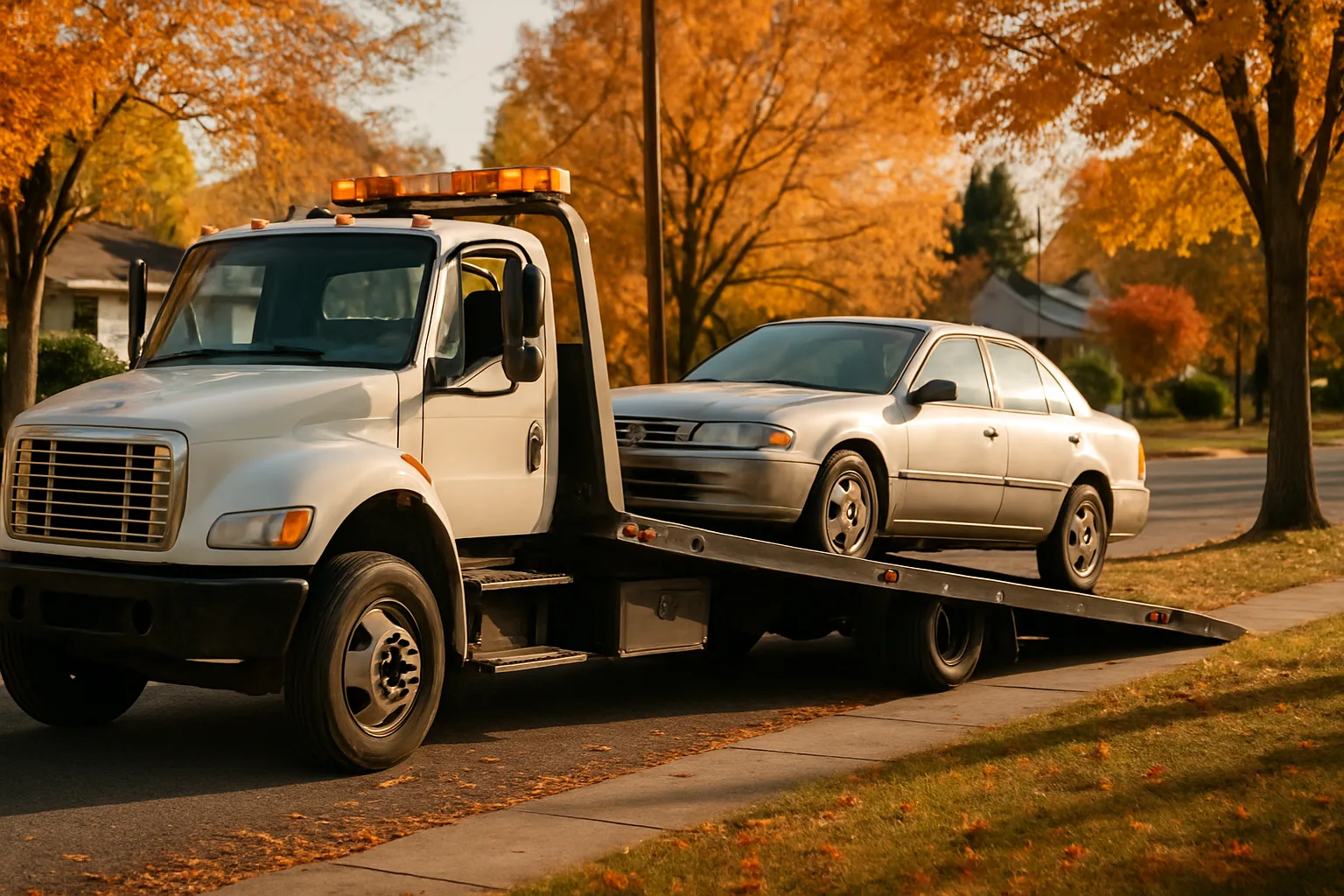
- Often provides free towing or scrap car removal near me-style pickup
- Limited inspection — they move fast and volume is high
- Less documentation, faster transaction
If getting rid of the car quickly matters more than maximizing your return, a junkyard gets the job done. But don't assume it's your best financial option without at least comparing it to the alternatives.
What Is a Salvage Yard? How It Differs From a Junkyard
A salvage yard — sometimes called a used auto parts yard or pull-a-part — operates on a completely different business model. Instead of crushing the whole car immediately, they inventory usable parts and resell them individually. Engines, transmissions, doors, mirrors, alternators, catalytic converters — anything with resale value gets pulled and sold before the carcass gets scrapped.
Because salvage yards extract more value from every vehicle, they can sometimes pay more than a junkyard for the right car. The catch? They're selective. They want vehicles with parts still in demand. A 2018 Honda CR-V with a blown head gasket? High interest. A 2003 Chevy Cavalier with 380,000 km and a rusted-out floor? Less so.
What to expect from a salvage yard:
- Higher potential payout if your vehicle has in-demand parts
- More detailed inspection before quoting
- May not accept every vehicle — they cherry-pick based on parts demand
- Processing takes longer — they're in no rush to crush
- Some offer sell my car fast Nanaimo-style same-day towing; others schedule pickups days out
Salvage yards are smart to call — but call more than one. Prices vary significantly depending on what's currently in demand in their inventory. A part they're overstocked on today won't get you much. The same part might be worth real money at a yard two towns over.
What Is an Auto Recycler — And Why the Terminology Matters in British Columbia
Auto recyclers are the most regulated and environmentally accountable of the three. In British Columbia and across Canada, licensed auto recyclers are required to follow specific environmental standards for draining and disposing of vehicle fluids — coolant, motor oil, brake fluid, refrigerants, and fuel — before the vehicle is processed. They're not just buying your car; they're handling it responsibly under provincial oversight.
Many auto recyclers operate as hybrid businesses — they pull and resell usable parts like a salvage yard, then send the remainder to be crushed like a junkyard. That full-cycle approach means they can often justify a stronger offer on your vehicle, because they're capturing value at every stage. If you're looking to get cash for your car in Canada while knowing it's being handled properly, an auto recycler is typically the strongest option.
What sets auto recyclers apart:
- Licensed and regulated — proper fluid depollution required
- Often members of industry associations (like ARC Canada)
- Full-cycle processing: parts resale + scrap metal recovery
- More likely to offer transparent, documented transactions
- Better suited for documenting title transfers and ownership paperwork
When you sell scrap car in British Columbia to a licensed auto recycler, you're also protecting yourself legally. A documented transfer of ownership means you're no longer on the hook for anything that happens to that vehicle afterward.
The Real Problem: One Call, One Quote, No Leverage
Here's where most car owners leave money on the table — regardless of which type of facility they call. They phone one place, get one number, and accept it. That's not negotiating. That's guessing.
A salvage yard might offer you $400 for a car another buyer would pay $700 for. A junkyard quotes low because scrap metal prices dropped this week. An auto recycler underbids because they're already overloaded with that make and model. None of them are going to volunteer that information.
That's exactly why platforms like SMASH exist. Instead of calling three places and comparing quotes manually, SMASH puts your vehicle in front of multiple vetted buyers simultaneously — creating real competition. More buyers bidding on your car means better price discovery. Not a guarantee of any specific number, but a fundamentally more competitive process than one call to one yard.
If you're in Nanaimo and you want to get a free car valuation before committing to anyone, start there. Know what your car is worth before you hand over the keys.
Which Option Should You Use When Selling a Junk Car in Nanaimo?
The honest answer: it depends on your car and your priorities. Here's a practical breakdown to help you decide.
Go to a junkyard if:
- Your car is completely stripped, crushed, or has zero usable parts
- Speed is your only priority — you want it gone today
- The vehicle is so damaged that parts recovery isn't realistic
Go to a salvage yard if:
- Your car has high-demand parts still intact (engine, transmission, body panels)
- The make and model is popular enough that parts sell fast
- You have a bit of time and want to maximize your return
Go to a licensed auto recycler if:
- You want a documented, legally clean transaction
- Environmental handling matters to you
- You need full paperwork — bill of sale, title transfer, receipts
- You're selling in Nanaimo or anywhere in BC and want provincial compliance
Use SMASH if:
- You want competition driving the quote, not a single buyer's mood
- You'd rather have buyers come to you than cold-call yards one by one
- You want transparency — documented bids, not verbal offers that disappear
You can also compare scrap metal bids from Canadian buyers directly through SMASH's platform — no subscription fees, no guessing. SMASH only wins when you do.
For more practical advice on navigating the selling process, read car selling tips that cover everything from paperwork to pricing.
What to Do Before You Call Any Buyer in Nanaimo
Before you hand over your vehicle — to a junkyard, salvage yard, auto recycler, or anyone else — run through this quick checklist. It takes 20 minutes and can meaningfully affect your final offer.
- Gather your ownership documents. Title, registration, and any service records you have. A documented vehicle history gives buyers more confidence and can support a stronger offer.
- Know your VIN. Run it before anyone else does. A VIN lookup tells you what your car is worth to a buyer before the conversation starts.
- Remove personal items and plates. In British Columbia, you keep your plates — they don't transfer with the vehicle. Return them to ICBC or transfer them to your next vehicle.
- Note what's working and what isn't. Accurate condition disclosure protects you legally and helps buyers give you a real quote instead of a lowball cushion.
- Get at least two or three quotes. Or skip that step and use a platform like SMASH to let buyers compete for your vehicle instead.
Vancouver Island has a healthy ecosystem of auto recyclers and salvage yards. Nanaimo is a regional hub — there are buyers in your area. The question isn't whether you can find a buyer. It's whether you're letting enough of them compete for your business. If you want cash for junk cars near me without leaving money behind, that competition is everything.
When you're ready to move, get cash for your car in Canada through a process that's straightforward, fast, and transparent. No subscription fees, no surprises.
Frequently Asked Questions
Q: What's the fastest way to sell my junk car in Nanaimo?
Contact a licensed auto recycler or use a platform like SMASH to get multiple offers quickly. Same-day pickup is common for vehicles in most areas of Vancouver Island, including Nanaimo. Having your ownership documents ready speeds the process significantly.
Q: Do I need to tow my car to the junkyard myself?
No. Most junkyards, salvage yards, and auto recyclers offer free towing or scrap car removal as part of the transaction. Confirm pickup is included in the quote before you agree — some facilities deduct a towing fee from the final offer.
Q: How much will I get for my junk car in Nanaimo?
It depends on your vehicle's weight, condition, make, model, and current scrap metal prices. Prices fluctuate — always get multiple quotes before committing. Platforms like SMASH create buyer competition, which can help reveal the true market rate for your vehicle.
Q: What happens to my license plates when I scrap my car in British Columbia?
In BC, plates belong to the owner — not the vehicle. When you sell or scrap your car, remove the plates first. You can return them to ICBC or transfer them to another vehicle you own. Do not leave plates on a vehicle when you hand it over.
Q: Is there a difference between selling to a salvage yard and an auto recycler in BC?
Yes. Salvage yards focus primarily on parts resale and vary widely in how they handle fluid depollution and paperwork. Licensed auto recyclers in British Columbia are regulated and must meet provincial environmental standards for processing end-of-life vehicles. For a clean, documented transaction, a licensed auto recycler is generally the safer choice.
Stay connected with the scrap metal market — follow SMASH on LinkedIn for industry updates, pricing trends, and scrap metal market insights across North America.