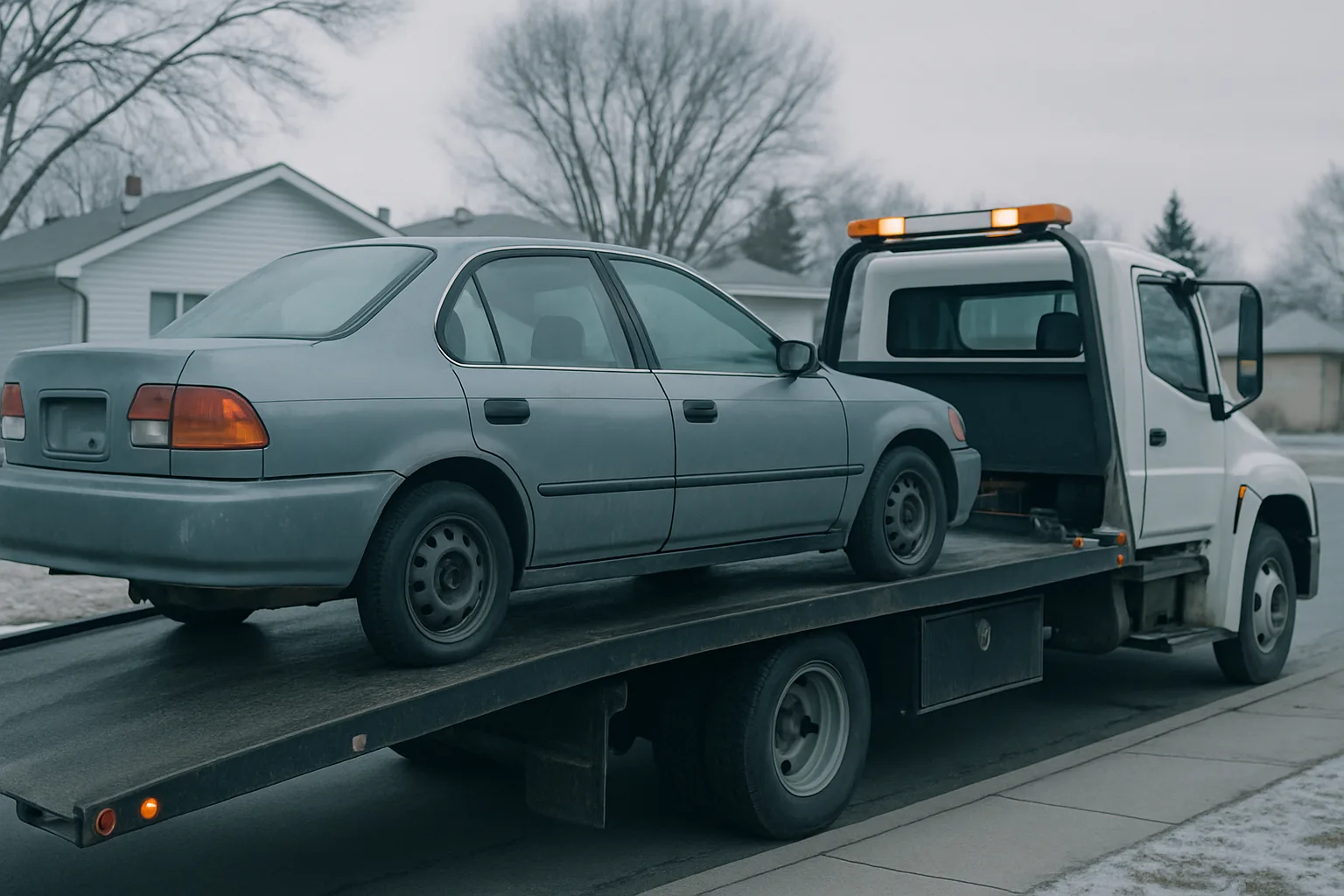
What Your Junk Car Is Actually Worth — And How to Get Every Dollar of It
Most people selling a scrap car in Saskatoon leave money on the table. Not because they're bad negotiators — because they never knew there was more money available in the first place. One phone call, one number, take it or leave it. That's how it's worked for decades. It doesn't have to work that way anymore.
Whether your car died in a Saskatchewan winter, got totalled, stopped passing inspection, or is simply taking up space in your driveway, it has real value. Metal value. Parts value. Buyer competition value. This guide breaks down how to extract the best possible scrap value from your vehicle — not just the first number someone throws at you.
Why Scrap Car Value Varies More Than You Think
Ask five different buyers what your car is worth. You'll get five different numbers. That's not a coincidence — it's how the market works when there's no transparency. Each buyer is trying to buy low and sell the margin. You, the seller, are the one absorbing that gap.
Several factors directly affect what your scrap car is worth on any given day:
- Curb weight: Heavier vehicles — trucks, SUVs, older sedans — contain more steel and generally fetch more per unit.
- Catalytic converter condition: Cats contain platinum, palladium, and rhodium. An intact cat on a functioning converter can add meaningful value to a scrap vehicle.
- Non-ferrous components: Copper wiring, aluminum wheels, brass fittings — these metals price out significantly higher than steel by weight.
- Current scrap metal prices: Prices move with global commodity markets. What steel fetched last month isn't necessarily what it fetches today. Always check scrap metal prices today before accepting any offer.
- Drivability: A car that runs, even barely, is easier and cheaper to move. That saves the buyer money — and that saving should be reflected in your quote.
- Vehicle age and make: Older North American-made vehicles often have higher steel content. Newer imports may have more aluminum and lighter alloys.
Understanding these variables before you make a single call puts you in a stronger position. You're not guessing — you're negotiating with context. A scrap car value calculator Canada-style tool can give you a rough baseline, but real price discovery comes from putting your vehicle in front of multiple vetted buyers at once.
The Old Way vs. the Smart Way to Sell a Junk Car in Saskatoon
The old way: you call a local scrapper, they quote you a number, you say yes or no. If you say no, you call someone else and hope for a better number. It's time-consuming, opaque, and skewed toward the buyer. You have no leverage because you have no visibility into what other buyers would pay.
The smart way: you document your vehicle properly, list it where multiple buyers can see it, and let competition do the work. That's where platforms like SMASH Recycling — where verified buyers bid on your metal change the dynamic entirely. Instead of one buyer setting the price, multiple vetted buyers compete for your load. That competition is what reveals the actual market price — not someone's lowball opening offer.
For car owners in Saskatoon looking to get cash for your car in Canada, this shift matters. Saskatchewan has active scrap infrastructure, active buyers, and real demand for vehicle metal. The market exists. The question is whether you're tapping into it properly.
How to Prepare Your Car to Maximize Its Scrap Value
Before you list or quote your vehicle, spend 20 minutes doing the prep work that most sellers skip. It directly impacts the number you receive. Buyers pay more confidently when they have complete information — and they discount aggressively when they don't.
Here's what to gather and document:
- VIN number: Your Vehicle Identification Number confirms the make, model, year, and trim. This is how buyers verify curb weight, engine size, and expected metal content. Don't skip this step.
- Photos: Take clear shots of all four sides, the undercarriage if accessible, the engine bay, and the catalytic converter. Visible damage, rust, or missing parts all factor into price — document honestly rather than let buyers assume the worst.
- Current condition notes: Does it run? Does it drive? Is the catalytic converter intact? Are there any non-ferrous components still in place — copper wiring, aluminum wheels?
- Title or ownership documentation: In Saskatchewan, you'll need proof of ownership to complete a legal sale. Having this ready speeds up the process and signals to buyers that the transaction is clean.
- Fuel and fluids status: Some buyers will drain these themselves; others factor it into their offer. Know what's in the vehicle before someone else tells you.
Thorough documentation gives buyers confidence. Confident buyers bid higher. That's not theory — that's how price discovery works when you're selling any commodity, including scrap vehicles. SMASH's inventory tools support photo documentation and serial tracking, making it straightforward to present your vehicle accurately to buyers who are ready to compete.
Understanding Scrap Metal Prices and How They Affect Your Car's Value
Steel is the backbone of a scrap car's value. Most passenger vehicles contain between 1,500 and 3,000 pounds of steel, depending on year, make, and body style. When steel prices are up, scrap car values follow. When they soften, offers come in lower. This is why the same car can generate meaningfully different quotes in different market windows.
Beyond steel, here's what else contributes to a vehicle's scrap value:
- Aluminum: Found in wheels, engine blocks (on many modern vehicles), and body panels. Aluminum prices per pound significantly exceed steel.
- Copper: Wiring harnesses, radiator cores, starter motors. Copper is consistently one of the higher-value non-ferrous metals in a vehicle.
- Catalytic converter metals: Platinum group metals (PGMs) inside cats can have real value depending on the vehicle and converter type. An intact cat is worth more than a removed or damaged one.
Checking scrap metal prices today isn't just useful — it's essential if you want to time your sale intelligently or at minimum understand whether an offer reflects current market rates. Prices fluctuate based on global commodity markets, demand from steel mills, and shipping and logistics costs. Always verify current rates before accepting any quote — the numbers in this article are for general context, not live pricing.
In Saskatchewan, regional demand patterns can also shift prices. A large construction or demolition cycle in the province can tighten metal supply and push values up. That context matters when you're evaluating whether a local offer is fair.
What "We Buy Junk Cars Saskatoon" Actually Means — and What to Watch For
You've seen the signs. You've Googled it. We buy junk cars Saskatoon results are everywhere — from craigslist listings to roadside placards. Some of those buyers are legitimate, experienced, and fair. Others are opportunistic and counting on you not knowing the actual value of your vehicle.
Here's how to tell the difference:
- They give you a number before asking for any details. A real buyer needs your VIN, vehicle condition, and location before they can quote accurately. A ballpark before those details is a low anchor meant to set expectations low.
- They can't explain how they arrived at their number. Ask them. A legitimate buyer can tell you what steel is trading at, what your vehicle's approximate weight is, and how they're calculating their margin.
- No paperwork or title transfer process. If a buyer isn't asking for ownership documentation, that's a red flag — legally and practically.
- They pressure for a fast answer. Real buyers have inventory pipelines. Urgency tactics are a negotiating tool, not a logistical reality.
Platforms like SMASH vet their buyers before they're allowed to participate in auctions. That means when you're selling through a SMASH-connected process, you're not dealing with an anonymous number off a roadside sign — you're dealing with buyers who have been screened, who have active purchasing history, and who are competing on price rather than on getting to you first.
If you're ready to skip the guesswork, get a free car valuation and see what your vehicle is actually worth in today's market.
Making the Most of Local Resources for Cash for Cars in Saskatoon
Saskatoon has real scrap infrastructure — yards, processors, and buyers who are actively purchasing vehicles. Saskatchewan's geography and industrial base mean there's consistent demand for vehicle steel, especially in agricultural and construction-adjacent markets where metal supply feeds downstream uses.
That said, proximity doesn't equal the best price. A local buyer in Saskatoon is convenient, but convenience has a cost if that buyer knows they're your only real option. The goal isn't to find the closest buyer — it's to find the best offer from a vetted buyer, whether they're local or regional.
Use local context to your advantage by knowing what Saskatoon scrap metal services look like on the ground — pickup timelines, towing logistics, documentation requirements — but don't let that knowledge trap you into a single-buyer conversation. The moment you have multiple buyers competing, the conversation changes entirely.
For more strategies on selling smart, read car selling tips from people who know the Canadian market and the scrap vehicle landscape from both sides of the transaction.
Your car has sat long enough. If it's not running, not registered, or not worth repairing, the metal inside it still has real value. Don't let that value walk out the door in someone else's pocket. Get a free quote at cashfor-cars.ca — no obligation, no pressure, just a real number based on what your vehicle is actually worth today.
Frequently Asked Questions
Q: How much can I get for a scrap car in Saskatoon?
Scrap car values depend on the vehicle's weight, condition, metal composition, and current commodity prices. Heavier vehicles with intact catalytic converters and non-ferrous components generally fetch more. Because scrap metal prices fluctuate, your best move is to get multiple quotes and check current market rates before accepting any offer.
Q: Do I need the title to sell a junk car in Saskatchewan?
Yes. In Saskatchewan, proof of ownership is required to legally transfer a vehicle — even a scrap vehicle. Have your registration or title ready before you engage with buyers. It protects you legally and signals to buyers that the transaction is clean, which can positively affect the offer you receive.
Q: How do I know if I'm getting a fair scrap car value?
The best way to validate a quote is competition — get multiple offers from different buyers and compare. A fair offer should reflect the vehicle's approximate weight, current steel and non-ferrous metal prices, and the buyer's towing or logistics cost. If a buyer can't explain their number, that's a signal to keep shopping.
Q: What happens to my car after I sell it for scrap in Saskatoon?
Most scrap vehicles are depolluted (fluids drained, hazardous materials removed), then crushed or shredded. The metal is sorted — ferrous from non-ferrous — and sold to mills and processors who melt it down for reuse. Catalytic converters are processed separately for their platinum group metals. It's a fully circular process.
Q: Can I sell a car that doesn't run for cash in Saskatoon?
Absolutely. Non-running vehicles are sold for scrap every day. You'll need to factor in towing costs, which reputable buyers often include in their offer or quote separately upfront. A non-running vehicle may receive a slightly adjusted offer to account for handling, but it absolutely has scrap value — especially if the cat and non-ferrous components are intact.
Follow SMASH on LinkedIn for scrap metal market insights, industry updates, and pricing trends across North America.