Most people don't realize a missing piece of paper can kill a scrap car deal before it starts. You've got a dead Honda sitting in your driveway, a buyer lined up, and then — nothing. Wrong name on the title. Registration expired. No keys, no release form. The deal falls apart and you're back to square one.
If you want to sell scrap car Nanaimo and actually get paid, paperwork is the first thing you sort out. Not the last. This guide walks you through exactly what you need, what's optional, and what happens if something is missing — so you don't waste a trip or lose money on a deal that should have been simple.
Why Paperwork Matters More Than You Think When Scrapping a Car
Scrapping a car isn't like selling a couch on Facebook Marketplace. There are provincial rules, liability concerns, and environmental regulations tied to vehicle disposal in British Columbia. The paperwork trail protects you as much as it protects the buyer.
Without the right documents, you risk two real problems. First, the scrap yard or service can refuse your vehicle entirely. Second — and this one bites people years later — if the car gets abandoned, stolen, or involved in an incident after you've "sold" it, your name can still be attached to it if you didn't transfer ownership properly.
Doing this right takes maybe 20 minutes of prep. Skipping it can cost you a lot more than that.
The Core Documents You Need to Sell a Scrap Car in British Columbia
Every legitimate scrap car transaction in British Columbia requires a baseline set of documents. Here's what you need to have ready before anyone shows up to collect your vehicle.
1. Proof of Ownership (Vehicle Title or Registration)
This is the non-negotiable. You need to prove the car is yours to sell. In British Columbia, that means your vehicle registration document issued by ICBC. This document shows your name, the VIN, and confirms you are the registered owner. No registration? You'll need to contact ICBC to get a replacement before you can proceed.
2. Government-Issued Photo ID
The scrap yard or pickup service will check that the name on your registration matches the person handing over the car. A driver's licence is the standard. A passport works too. This isn't bureaucracy for its own sake — it's how the buyer confirms they're not purchasing a stolen vehicle.
3. A Signed Bill of Sale or Transfer Form
When money changes hands, you want a paper trail. A bill of sale documents the transaction — what was sold, for how much, and to whom. In British Columbia, ICBC provides a standard Transfer/Tax Form (APV9T) that covers private vehicle sales. For scrap transactions, not every buyer uses this form, but a written record protects you if questions arise later. Ask for it. Any reputable buyer will provide one.
4. Release of Liability
Once the car leaves your driveway, you want it off your record. In B.C., you notify ICBC that you've sold or transferred the vehicle. This can be done online through the ICBC portal. Don't skip this step. If someone drives that car before it reaches the crusher, you do not want your name attached to it.
If you're using a service that offers Nanaimo scrap metal services, ask them directly whether they handle the transfer paperwork as part of the pickup process. Many reputable services do — it's worth confirming upfront.
What Happens If You Don't Have the Title or Registration
This comes up more than you'd think. The car belonged to a family member who passed away. You bought it years ago and never transferred the title. The registration is long expired. These situations aren't automatic deal-breakers, but they do require extra steps.
Here's what your options look like in practice:
- Expired registration: In most cases, this doesn't prevent a scrap sale — the car isn't going back on the road. But confirm with the buyer first.
- Car in a deceased relative's name: You'll need probate documentation or a letter of administration proving you have authority to dispose of the estate's assets. This varies based on the estate situation — consult ICBC or a notary if you're unsure.
- Lost or destroyed registration: Contact ICBC to request a replacement. There's a fee, but it's a straightforward process.
- Bought the car privately and never registered it in your name: This is the trickiest scenario. You'll need to work with ICBC to establish ownership before any sale can proceed.
The bottom line: if you're not sure about ownership status, sort it out before you call a buyer. It saves everyone time.
Free Scrap Car Pickup Nanaimo — What to Expect at the Door
If you've arranged free scrap car pickup Nanaimo, the driver who shows up will typically run through a quick checklist before handing over any cash. Knowing what they're looking for means you can have everything ready and get paid faster.
Here's what a standard pickup typically involves:
- ID check — They'll verify your photo ID matches the name on the registration.
- Vehicle inspection — A quick visual to confirm the car matches what was described (VIN, make, model, general condition).
- Key handover — If you have keys, hand them over. No keys doesn't always kill the deal, but having them helps.
- Document review — Registration or proof of ownership, bill of sale or transfer form if applicable.
- Payment — Cash, e-transfer, or cheque depending on the buyer.
The whole process usually takes under 30 minutes when everything is in order. Have your documents ready before the truck arrives. Don't make the driver wait while you dig through the glove box.
Platforms like SMASH help connect yards and buyers through a structured, vetted process — which means when documentation is required, both sides know what to expect. That's the kind of transparency that makes transactions move fast. You can learn more at smashrecycling.ca.
Catalytic Converters and High-Value Components — Document Those Separately
If your scrap car still has its catalytic converter, pay attention here. Cats are high-value — and high-scrutiny. British Columbia, like many other provinces, has tightened rules around the sale of catalytic converters to combat theft. In B.C., sellers of used cats are often required to provide proof of ownership of the vehicle they came from.
What that means practically: if you're scrapping a car and the buyer is paying a separate premium for the cat, keep your vehicle documentation handy. The VIN on your registration should match the car the converter came from. Some buyers track this through serial number or VIN documentation — it's not just best practice, it's increasingly required.
This is one area where a catalytic converter auction model — like what SMASH facilitates — adds real value. Instead of taking whatever a single buyer offers for a high-value component, competitive bidding creates actual price discovery. More buyers, documented inventory, better outcomes. If you're sitting on a load of cats, that structure matters.
Want to get a free car valuation before committing to anything? Do that first — know what your car and its components are worth before you sign anything over.
Tips for a Smooth Scrap Car Transaction in Nanaimo
You don't need to be an expert to sell a scrap car. You just need to be organized. Here are a few things that make the process easier from start to finish in Nanaimo and across British Columbia:
- Pull the registration before you call anyone. Know what you have. Check the name on the document matches yours exactly.
- Write down the VIN. It's on the dashboard (driver's side, visible through the windshield) and often on the door jamb. Buyers will need it.
- Remove your plates. In B.C., licence plates belong to the owner, not the car. Take them off before the vehicle leaves. You may be able to transfer them or get a refund on unused ICBC insurance.
- Cancel your insurance. Once the car is gone, contact ICBC to cancel the policy and recoup any unused premium.
- Notify ICBC of the sale. Use the online tool to file a release of liability. This takes about five minutes and protects you immediately.
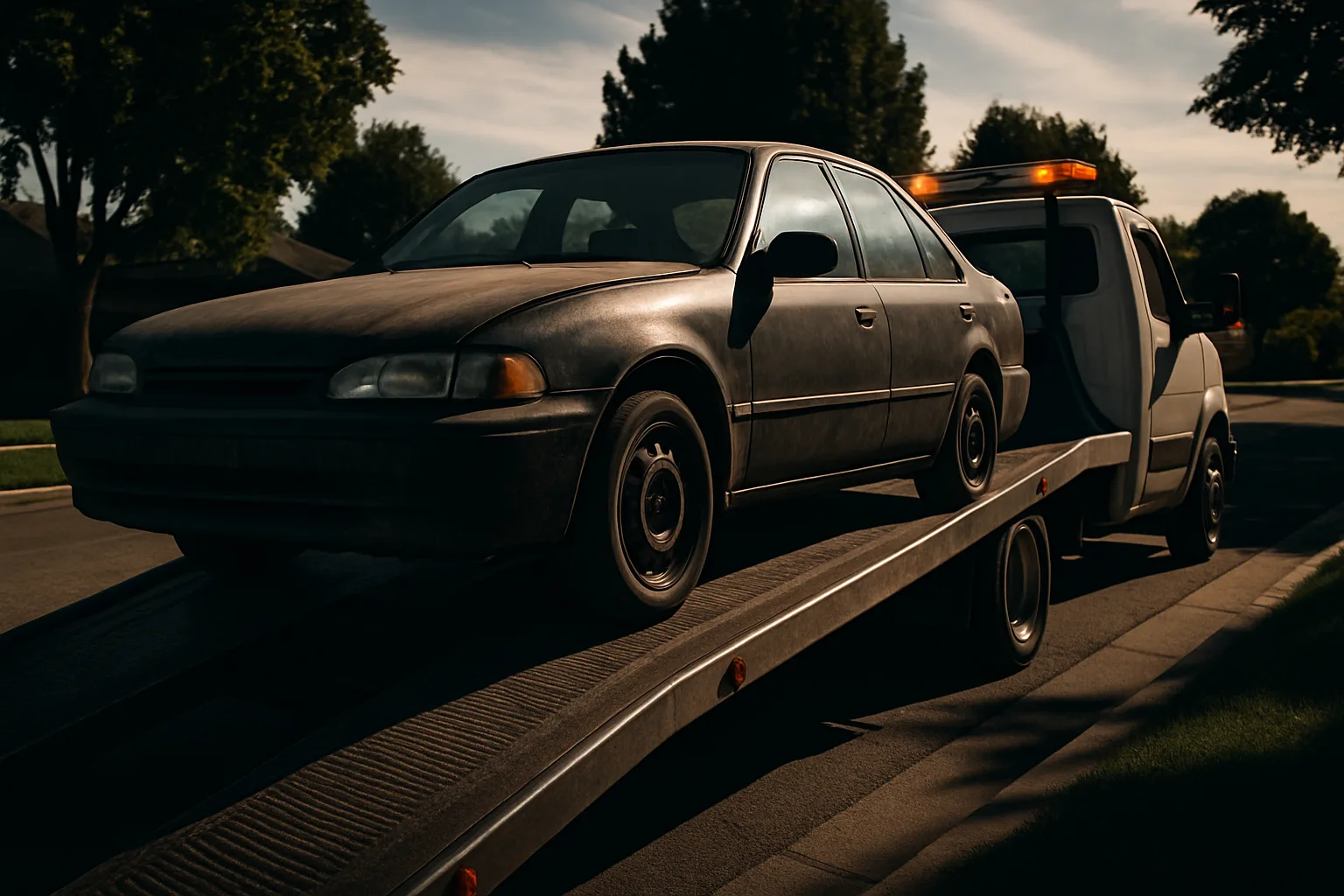
- Document the pickup. Take a photo of the car next to the tow truck and your bill of sale. A 30-second habit that saves headaches later.
If you're new to this process, read car selling tips that break down common mistakes first-time sellers make — and how to avoid them.
Ready to Sell? Here's How to Get Started
Getting your paperwork in order is step one. Step two is finding a buyer who makes the process straightforward — no guessing at prices, no last-minute lowballs, no runaround on pickup.
Whether you're dealing with a running car you no longer need or a complete write-off sitting in your yard in Nanaimo, the process is the same: know what you have, document it properly, and work with a service that treats you like a professional. If you want to get cash for your car in Canada without the usual friction, start with a quote and go from there. No pressure, no obligation — just a number you can actually work with.
Frequently Asked Questions
Q: Do I need the original title to sell a scrap car in Nanaimo?
In British Columbia, the vehicle registration document (issued by ICBC) serves as proof of ownership — not a separate title as in some U.S. states. You need a valid registration in your name, or documentation showing you have legal authority to sell the vehicle. If your registration is lost, contact ICBC to get a replacement before proceeding.
Q: Can I sell a scrap car in British Columbia if it's not registered in my name?
It's more complicated, but not impossible. If the car belonged to a deceased family member, you'll likely need estate documents proving you have authority to act. If you purchased the car but never registered it in your name, you'll need to work through ICBC to establish ownership first. Trying to skip this step can create legal problems — don't do it.
Q: What happens to my licence plates when I scrap my car in B.C.?
In British Columbia, plates belong to the registered owner, not the vehicle. Remove your plates before the car is towed away. You can return them to ICBC, transfer them to another vehicle, or cancel your insurance and potentially receive a partial refund on unused coverage.
Q: How do I make sure I'm not liable for the car after it's scrapped?
File a release of liability with ICBC as soon as the vehicle leaves your possession. This can be done online through the ICBC website and takes only a few minutes. This step officially removes the vehicle from your name and protects you if any incident occurs after the sale.
Q: Is free scrap car pickup actually free in Nanaimo, or are there hidden fees?
Reputable services that offer free scrap car pickup in Nanaimo do not charge towing fees — the value of the scrap metal covers that cost. That said, the cash offer you receive will reflect the car's scrap value after pickup costs are factored in. Always confirm the final cash amount and whether any deductions apply before you agree to anything in writing.
Scrap metal prices fluctuate based on market conditions. Always confirm current rates directly with your buyer before finalizing any transaction.
Stay current on scrap metal market trends and industry updates — follow SMASH on LinkedIn at linkedin.com/company/scrap-metal-auction-sales-hub.
```