How Junk Car Removal Actually Works — Step by Step
Most people sit on a dead car for months, sometimes years, because they assume the process of getting rid of it is complicated. It isn't. If you've got an unwanted vehicle taking up space in your driveway in Prince George or anywhere else in British Columbia, free scrap car pickup is simpler than you think — and you walk away with cash in your pocket.
Here's exactly what happens from the moment you decide to sell, to the moment the tow truck pulls away.
Step 1: Get a Quote for Your Scrap Car
The process starts with a quick valuation. You provide basic details about your vehicle — year, make, model, condition, and location. No need to clean it up, fix anything, or dig out old service records. The buyer just needs enough information to make you a fair offer.
What affects the quote?
- Vehicle weight — heavier vehicles contain more steel and other recoverable metals
- Condition — does it run? Are major components like the engine or transmission intact?
- Year and make — some models carry higher scrap or parts value
- Precious metal content — catalytic converters contain platinum group metals and are priced separately
- Current scrap metal market — prices shift week to week based on commodity markets
Platforms like smashrecycling.ca use a competitive buyer network to ensure your vehicle is seen by multiple buyers — not just one yard making a lowball offer over the phone. More competition means better price discovery. That's the difference between guessing and actually knowing what your car is worth.
Step 2: Accept the Offer and Confirm the Pickup
Once you accept a quote, the next step is scheduling your free scrap car pickup in Prince George. Most services offer flexible windows — same day, next day, or a specific time that works for you. You don't need the car to run. Flat tire, seized engine, no keys — most junk car buyers handle all of it.
Before pickup day, you'll want to have a few things ready:
- Proof of ownership — your vehicle registration or title. This protects you legally and confirms the vehicle is yours to sell.
- Your ID — government-issued photo ID is standard.
- Keys — if you have them. If not, let the buyer know upfront.
- Personal belongings removed — check the glove box, trunk, and under seats before the tow truck arrives.
In British Columbia, you'll also want to return or cancel your licence plates through ICBC before or on the day of sale. This stops any future liability attached to the vehicle. It's a quick step that's easy to overlook if you're doing this for the first time.
Step 3: The Tow Truck Arrives — Junk Car Removal Prince George
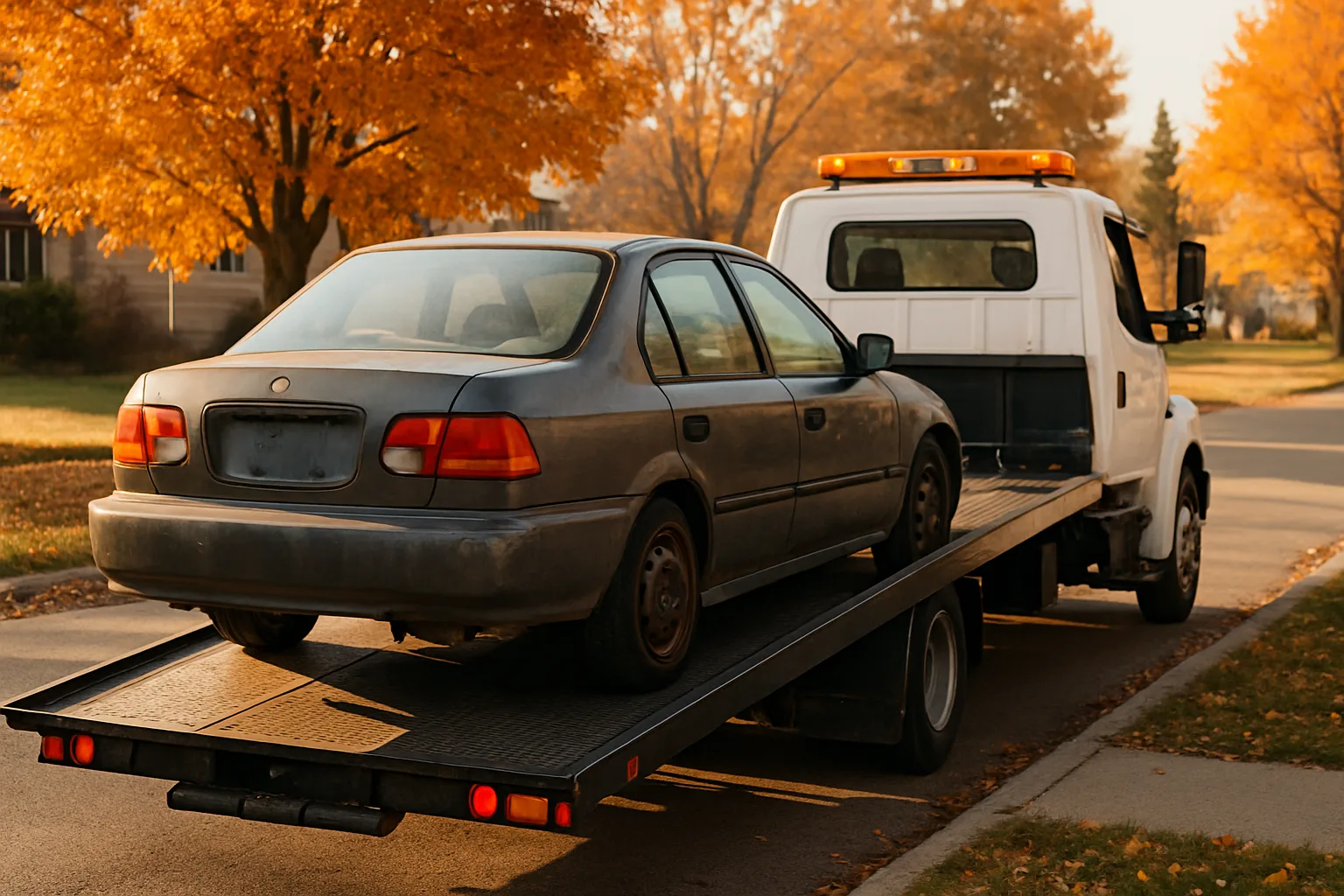
This is the part most people overthink. The tow truck shows up, the driver inspects the vehicle briefly to confirm it matches the description you gave, and the paperwork gets handled on the spot. The whole thing typically takes under 30 minutes from arrival to departure.
What happens at pickup:
- Driver verifies the vehicle against your quote details
- You sign a bill of sale or transfer of ownership document
- Payment is issued — cash, e-transfer, or cheque depending on the buyer
- Vehicle is loaded and removed from your property
Junk car removal in Prince George works the same way it does in Vancouver or Calgary. The distance and geography don't add complexity — reputable buyers factor pickup logistics into their offer upfront. No hidden fees after the fact.
If you want to get cash for your car in Canada without the back-and-forth of negotiating with a single buyer, the competitive auction model changes the dynamic entirely. Instead of one yard deciding your car's worth, multiple vetted buyers bid. You take the best number.
Step 4: The Car Gets Processed Through Scrap Metal Recycling Canada
Once your car leaves your driveway, it enters the recycling stream. This is where scrap metal recycling in Canada does the real work. A standard end-of-life vehicle goes through a structured dismantling process before it ever gets shredded.
Here's what happens to your car after pickup:
- Depollution — fluids are drained first. Engine oil, coolant, transmission fluid, brake fluid, and refrigerant are all removed safely before any crushing happens. This is required by environmental regulations across Canada.
- Parts harvesting — usable components get pulled. Alternators, starters, batteries, tires, and body panels with resale value go to used auto parts inventory.
- Catalytic converter removal — cats are one of the highest-value components on most vehicles. They contain platinum, palladium, and rhodium, which are recovered separately from ferrous scrap.
- Shredding — the remaining carcass goes to a shredder, which separates ferrous metals (steel, iron) from non-ferrous (aluminum, copper) and fluff.
- Sorting and baling — metals are sorted, graded, and baled or shredded into commodity-ready material for steel mills and smelters.
Nothing goes to waste. The steel in your old truck ends up in new construction. The aluminum gets remelted into new parts. Even the plastic and foam get processed. End-of-life vehicles are one of the most recyclable products on the planet — typically 80% or more of the vehicle by weight is recovered.
Want to understand how scrap yards handle pricing and selling that recovered material? Read car selling tips on our blog for deeper breakdowns on how the scrap chain works.
Step 5: Track Your Sale — How SMASH Changes the Process for Yards
On the buyer's side of this transaction, SMASH scrap metal auction is changing how recycling yards sell the material your car becomes. Instead of one smelter, one phone call, one price — yards list loads through SMASH and vetted buyers compete in a transparent auction format.
This matters to you as a car seller because it creates a healthier market overall. When buyers compete for material at the yard level, yards can afford to pay more at the gate. The whole chain benefits when pricing is competitive and transparent rather than based on whoever happened to answer the phone.
SMASH supports the full documentation chain — photo documentation, serial tracking, VIN lookup, inventory tools, and auto-invoicing. No subscription fees. The platform only wins when the seller wins. If you're curious how the downstream side of scrap metal recycling in Canada operates, smashrecycling.ca shows you exactly how that process works for yards and buyers.
What to Watch Out for When Selling a Scrap Car in Prince George
The process is straightforward, but there are a few things worth knowing before you commit to a buyer. Not all junk car buyers operate the same way, and a few red flags are worth watching for.
Watch out for:
- Lowball offers with no explanation — a legitimate buyer can tell you what's driving their number. If they can't, ask.
- Hidden pickup fees — free scrap car pickup means free. Get that confirmed in writing before scheduling.
- Pressure to skip the paperwork — always transfer ownership properly. If a vehicle you sold gets ticketed or used in a crime, you want a clear paper trail showing it's no longer yours.
- Buyers who can't verify they're licensed — recyclers in British Columbia operate under provincial regulations. Licensed buyers are accountable. Unlicensed operations aren't.
- Quotes that drop significantly at pickup — this is called a bait-and-switch. Confirm before the truck rolls out whether your quote is firm or subject to change on inspection.
Prince George has a solid base of legitimate scrap and auto recycling operations, but the same principles apply no matter where you are in Canada. Do a quick check, confirm the terms, and use a platform that puts competition — not a single buyer's discretion — in control of your price. Get a free car valuation before you commit to any single buyer.
For local options, Prince George scrap metal services can connect you with vetted buyers in your area who handle the full pickup and processing chain.
Frequently Asked Questions
Q: How does free scrap car pickup in Prince George work?
You request a quote online or by phone, accept an offer, and a licensed tow truck picks up your vehicle at a scheduled time — no charge to you for the pickup. Payment is handled at the time of pickup, and you sign over ownership on the spot. The whole process typically takes less than 24–48 hours from first contact to cash in hand.
Q: Do I need the title or registration to sell my scrap car in British Columbia?
Yes. Proof of ownership is required to legally transfer a vehicle in British Columbia. This protects you from future liability tied to the vehicle. If you've lost your registration, you can request a replacement through ICBC before the sale.
Q: How much will I get for my junk car in Prince George?
It depends on the vehicle's weight, condition, year, and current scrap metal market prices — which fluctuate regularly. Heavier trucks and SUVs typically return more than compact cars. Getting quotes from multiple buyers through a competitive platform gives you the clearest picture of what your specific vehicle is worth right now. Disclaimer: scrap prices change frequently — always check current rates before selling.
Q: Can I sell a car with no keys or that doesn't run?
Yes. Most junk car removal services, including those operating in Prince George, handle non-running vehicles as standard. No keys, flat tires, seized engines — none of that stops a pickup. Just disclose the condition upfront when requesting your quote so the offer reflects the reality of the vehicle.
Q: What happens to my car after it gets picked up for scrap?
Your vehicle goes through a regulated depollution process — fluids removed, usable parts harvested, and the remaining metal shredded and sorted for recycling. Scrap metal recycling in Canada recovers the vast majority of materials from end-of-life vehicles, including steel, aluminum, and precious metals from catalytic converters. It's one of the most efficient recycling streams in the country.
If you've got an unwanted vehicle sitting in your driveway, you don't need to keep looking at it. The process is fast, the paperwork is minimal, and the cash is real. Whether you're in Prince George or anywhere else across Canada, now is a straightforward time to act. Get cash for your car in Canada — get a free quote at cashfor-cars.ca and find out exactly what your vehicle is worth today.
Stay up to date on scrap metal market trends and industry insights by following SMASH on LinkedIn.