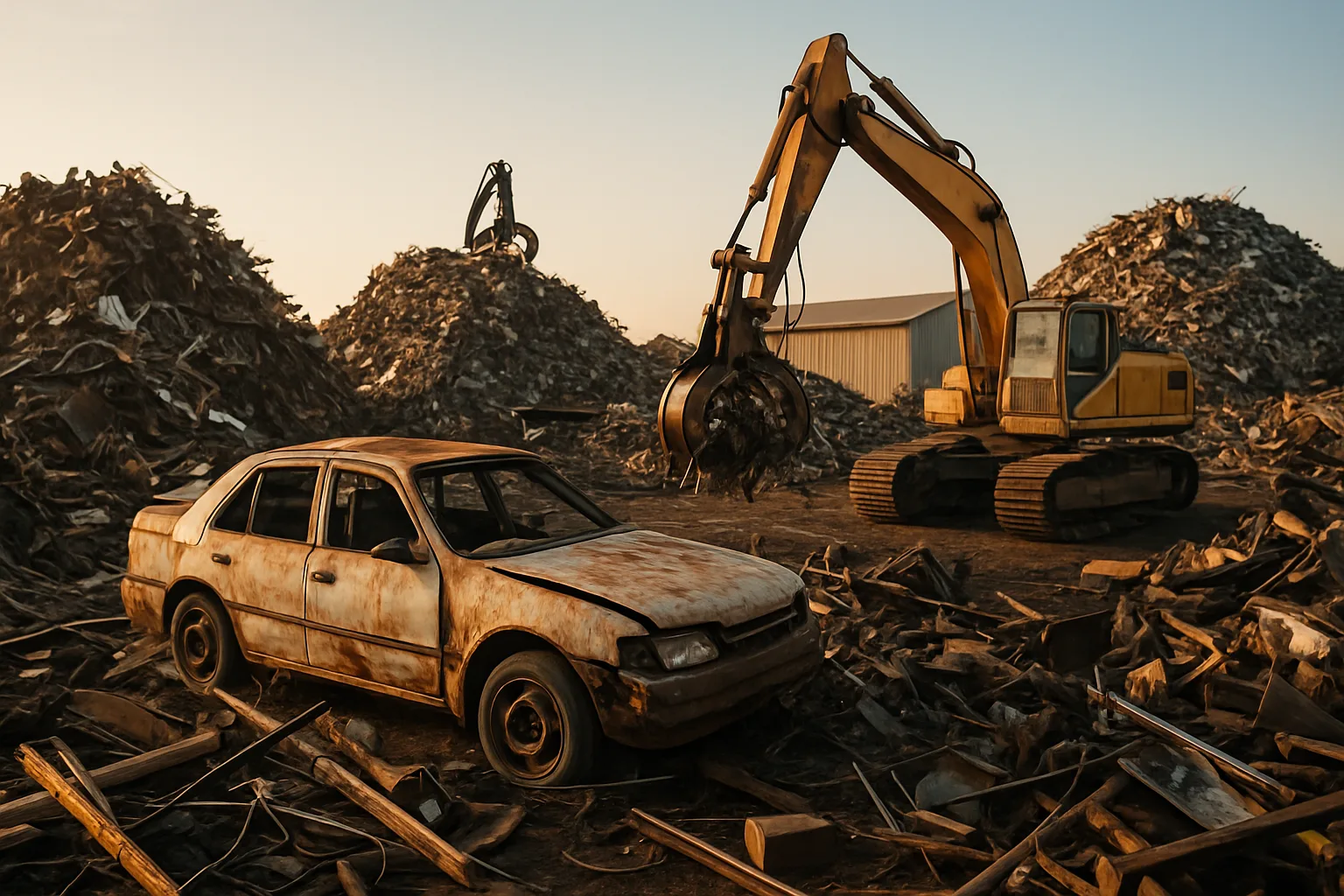
Every Car Is Headed to the Scrap Yard — The Question Is What It's Worth When It Gets There
Most people never think about what happens to a car after it leaves their driveway for the last time. But here's the truth: every vehicle ever built will eventually end up as scrap metal. The average car contains roughly 2,400 lbs of steel, 300 lbs of aluminum, and dozens of recoverable components — and all of it has value. Understanding the full lifecycle of a vehicle helps you make smarter decisions when it's time to sell, especially if you want to know your scrap car value today.
Whether you're in Thunder Bay sitting on a dead half-ton in your driveway, or anywhere else in Ontario with a car that's costing you more than it's worth, this is the guide you need before you make a call.
Stage One: Factory to Road — What Goes Into a Car That Later Comes Out as Scrap
A modern vehicle leaves the factory as a complex mix of materials. Steel makes up the majority of the frame, body panels, and chassis. Aluminum shows up in the engine block, wheels, and increasingly in body panels as automakers pushed for lighter builds through the 2020s. Copper runs through the wiring harness. Platinum, palladium, and rhodium sit inside the catalytic converter — some of the most valuable metals in the vehicle by weight.
All of that material was sourced, refined, shaped, and assembled — and when the car reaches end of life, the recycling industry reverses the process. Nothing disappears. It all flows back into the supply chain, which is exactly why scrap yards, processors, and buyers care deeply about what's in a vehicle. Knowing what your car contains is the first step toward understanding what it's actually worth.
- Steel: Chassis, frame rails, doors, roof panels
- Aluminum: Engine block, transmission housing, wheels, hood (on many models)
- Copper: Wiring harness, motor windings, alternators
- Catalytic converter: Contains platinum group metals — often the single most valuable recoverable component
- Lead: Battery (typically 21–30 lbs of recoverable lead)
- Plastic and glass: Lower recovery value, but still processed
Stage Two: Years on the Road — How a Car Loses Retail Value but Holds Scrap Value
A new car loses value the moment it leaves the lot. Most vehicles drop 15–20% in value in the first year alone. By year five to seven, many cars have lost more than half their original purchase price. Mechanical wear, rust, accidents, and market shifts all accelerate that decline. But here's what most owners don't realize: while retail value keeps dropping, the underlying scrap and parts value doesn't follow the same curve.
A 15-year-old sedan with a blown engine still has a catalytic converter, a battery, aluminum wheels, usable body parts, and hundreds of pounds of steel. The car's worth nothing to a private buyer. But to a scrap yard or a dismantler, it's a recoverable asset. The materials inside it were worth money in 2010, and they're still worth money in 2026. Market conditions shift the price, but the metal doesn't disappear.
This is especially relevant in northern Ontario markets like Thunder Bay, where older vehicles — trucks and SUVs especially — are common. Cold climates accelerate rust but don't destroy the recoverable metal content underneath. A rusted-out frame still has scrap steel value. The body rot just means it's closer to the end of its road life, not worthless.
Stage Three: End of Life — What Happens When a Car Enters the Scrap Stream
When a vehicle reaches end of life, it typically moves through several hands before it becomes raw material again. Here's how that process works in practice:
- Seller (you) contacts a buyer — cash for cars service, scrap yard, or auction platform
- Vehicle is assessed — weight estimate, make/model/year, condition, recoverable components
- Price is offered — based on current scrap metal prices, local demand, and vehicle specifics
- Vehicle is picked up — most reputable services handle towing at no cost to the seller
- Depollution — fluids are drained (oil, coolant, brake fluid, refrigerant), battery removed, airbags assessed
- Dismantling (if warranted) — high-value parts like cats, alternators, starters, and wheels are pulled before crushing
- Crushing and shredding — what remains gets crushed into a bale or fed into a shredder
- Sorting — ferrous and non-ferrous metals are separated using magnets and eddy current systems
- Sale to mills and smelters — sorted metal is sold to processors who turn it back into usable feedstock
Every step in that chain involves a transaction. The problem for most car owners is they only see step one — and they accept whatever number the first buyer offers, without knowing what the market actually supports. That's where platforms like SMASH Recycling — where verified buyers bid on your metal change the equation. When multiple vetted buyers compete for your material, you're not guessing at value. You're discovering it.
What Determines Your Scrap Car Value Today
If you're trying to figure out what your car is worth as scrap right now, in July 2026, here's what actually moves the number:
Steel and aluminum commodity prices. Scrap metal trades on global commodity markets. Price shifts — sometimes significantly — week to week based on demand from mills, trade conditions, and production cycles. What a car was worth six months ago may not reflect what it's worth today. Always get a current quote, not an estimate from memory.
Vehicle weight and composition. Heavier vehicles — full-size trucks, large SUVs, vans — generally yield more scrap metal by weight and often carry more recoverable non-ferrous components. A three-quarter-ton pickup has more recoverable material than a compact sedan, all else being equal.
Catalytic converter presence and condition. Cats are the most price-sensitive component on a scrap vehicle. Make, model, and engine size all affect cat value significantly. A missing or hollowed-out cat changes a vehicle's value materially — and reputable buyers will note it.
Local market conditions. Scrap prices vary regionally based on transportation costs, proximity to processors, and local buyer competition. In Thunder Bay, for example, distance from major processing hubs in southern Ontario can affect net pricing. Having multiple buyers competing — not just accepting the one yard's offer — matters more in markets like this, not less.
Vehicle documentation. A clean title, matching VIN, and documented ownership make a transaction faster and cleaner. Missing paperwork doesn't always kill a deal, but it complicates it. If you get a free car valuation from a reputable buyer, they'll tell you upfront what documentation they need.
Good scrap metal inventory management — knowing what you have, documenting it properly, and presenting it clearly — applies to yards and to individual sellers. A vehicle with photo documentation, a clear title, and known component status is easier to price and faster to move.
Why Thunder Bay Car Owners Should Think About Competition Before They Sell
Thunder Bay is a real market. There are real scrap yards, real buyers, and real demand for end-of-life vehicles in northwestern Ontario. But it's also a market where sellers often deal with limited buyer options — geography makes that a fact of life. One local yard, one offer, take it or leave it.
That dynamic is exactly why the model matters. The old way — one call, one number, one decision — works fine for the buyer. It doesn't work well for you. More buyer competition means better price discovery. That's not a sales pitch, it's basic economics.
Local Thunder Bay scrap metal services connected to broader buyer networks give sellers access to demand beyond their immediate geography. Whether your vehicle ends up with a local processor or moves to a buyer who specifically needs your make and model, the point is the same: you should know what the market will pay, not just what one buyer offers.
SMASH works with vetted buyers across North America — and that matters even for a seller in a mid-sized Ontario city. When you get cash for your car in Canada through a platform that creates competition, you're not leaving money on the table because of your postal code.
The Right Way to Sell Your Scrap Car in 2026
You don't need to be an expert in commodity markets or scrap processing to get a fair price for your vehicle. But you do need to avoid the common mistakes that cost sellers money:
- Don't accept the first number without checking the market. Get at least two or three quotes. Current scrap car value today should come from current buyers, not last year's memory.
- Know your vehicle's components. Is the cat still intact? Are the wheels aluminum or steel? Does the engine run? These details move the number.
- Don't strip the car yourself unless you know what you're doing. Removing a cat incorrectly, draining fluids improperly, or pulling the wrong parts can reduce value and create liability.
- Use services that offer free pickup. Towing costs should not come out of your payout. Reputable buyers absorb that cost.
- Get documentation in order before you call. Title, registration, and ID make the transaction faster and cleaner.
If you want to read car selling tips that go deeper on each of these points, there's more on the blog — from pricing breakdowns to what happens during the pickup process.
The lifecycle of a car ends at the scrap yard. But how much you walk away with depends entirely on how you handle the final transaction. Don't leave that to chance or settle for the first number someone throws at you. If you're ready to move a vehicle and want to know what it's actually worth in today's market, get a free quote at cashfor-cars.ca — no obligation, no pressure, just a real number based on what's actually moving right now.
Frequently Asked Questions
Q: How do I find out my scrap car value today?
The most accurate way is to contact a current buyer and get a live quote based on your vehicle's make, model, year, weight, and condition. Scrap metal prices fluctuate with commodity markets, so a quote from a few months ago may not reflect today's value. Always get a current number before you commit.
Q: Can I sell my scrap car in Thunder Bay if it doesn't run?
Yes. Most cash-for-cars services in Thunder Bay and across Ontario buy non-running vehicles. The car doesn't need to start or drive — most buyers handle towing as part of the transaction. A non-running vehicle still has steel, aluminum, a catalytic converter, and other recoverable material with real market value.
Q: Does a missing catalytic converter lower my car's scrap value?
Yes, significantly. Catalytic converters contain platinum group metals and are one of the highest-value recoverable components on an end-of-life vehicle. A missing or hollowed cat will reduce your payout. Be upfront about it — reputable buyers will ask, and honesty speeds up the transaction.
Q: How long does the process take from first contact to payout?
Most straightforward transactions can be completed in one to three business days. If your paperwork is in order and the vehicle is accessible, some buyers can arrange same-day or next-day pickup. Payment is typically made at time of pickup or shortly after, depending on the buyer's process.
Q: Do scrap car prices vary between Thunder Bay and southern Ontario?
They can. Regional factors like transportation costs, distance from processors, and local buyer demand all influence what a yard in northwestern Ontario can offer versus one closer to major processing hubs. That's why accessing a broader buyer network — rather than relying solely on one local offer — can make a real difference in markets like Thunder Bay.
Disclaimer: Scrap metal and vehicle prices fluctuate based on commodity markets and regional conditions. All pricing information in this article is general in nature. Always request a current quote before making any decisions about selling your vehicle.
Stay current on scrap metal market trends and industry news — follow SMASH on LinkedIn for regular updates straight from the yard floor.