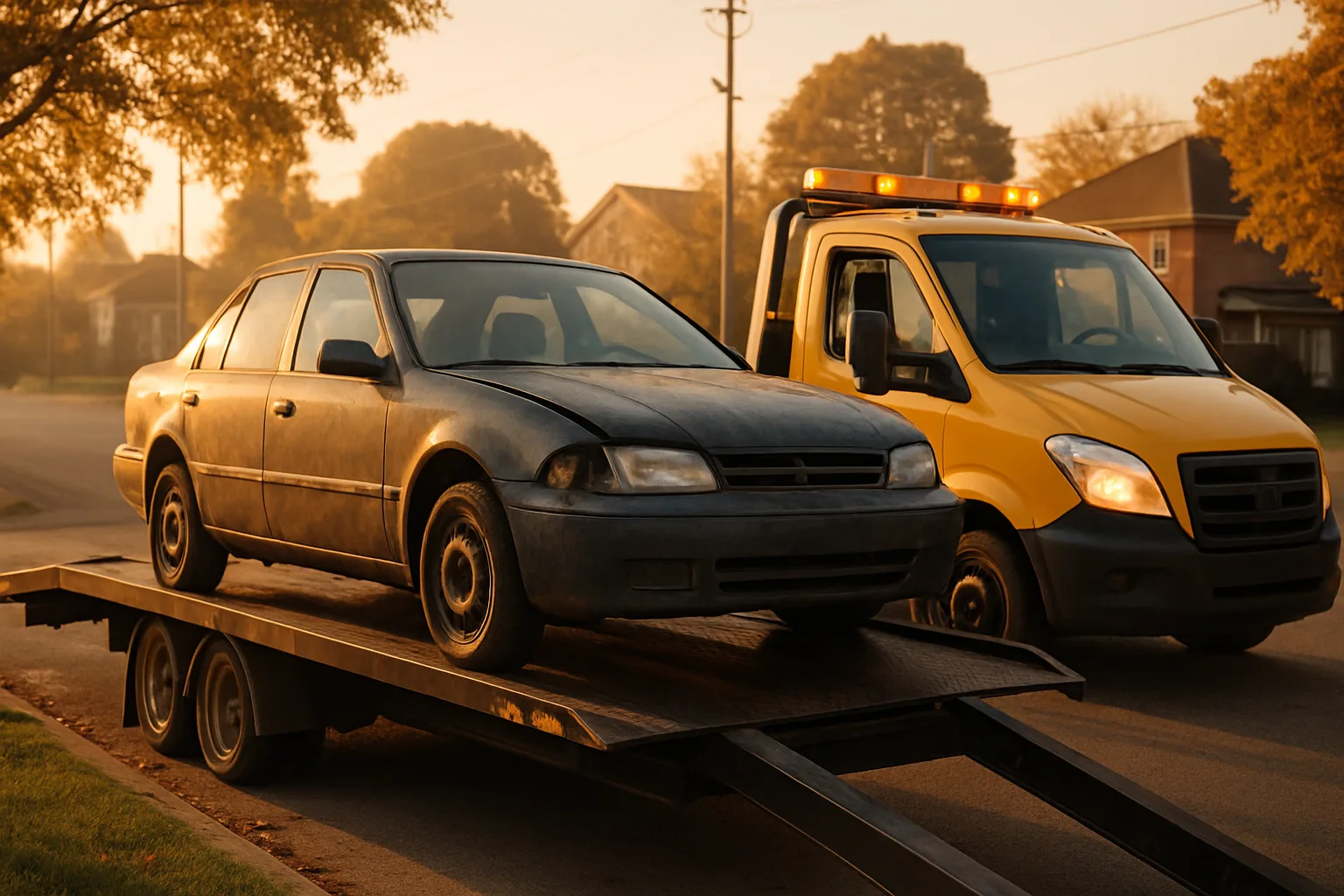
Your car took a serious hit — maybe a collision, a rollover, or a flood. Now it's sitting in your driveway eating up space, and you're wondering if it's worth anything at all. Here's the truth: accident-damaged vehicles are worth more than most people think, and junk car buyers near me Cambridge searches spike every time insurance companies start totalling vehicles. You don't need a running car to get real money out of it.
This guide walks you through exactly what happens when you scrap an accident-damaged car — what affects its value, what to do before you call a buyer, and how to make sure you don't leave money on the table.
Why Accident-Damaged Cars Still Have Real Value
A totalled car isn't a worthless car. When a vehicle gets written off by insurance, it means the repair cost exceeds a threshold — usually somewhere between 70% and 80% of the vehicle's market value. But the scrap and salvage industries don't care about repair costs. They care about what's still usable.
Even after a serious accident, most vehicles still contain:
- A catalytic converter — often completely undamaged in rear-end or side collisions, and worth real money due to the platinum, palladium, and rhodium inside
- Usable body panels, doors, mirrors, and glass that salvage yards resell
- A working engine or transmission — common in front-end hits where the drivetrain is intact
- Non-ferrous metals — copper wiring, aluminum wheels, and radiator cores that scrap yards process separately
- Ferrous scrap weight — the steel in the frame and body, which gets weighed and priced per tonne
The point is: buyers aren't buying your car as a car. They're buying it as a collection of parts and raw materials. That changes the calculation entirely. Whether you want to get cash for your car in Canada or find the best local buyer, understanding what your vehicle actually contains is step one.
What Actually Determines How Much Your Junk Car Is Worth After an Accident
There's no single number. If you've searched how much is my junk car worth calculator or how much is the average junk car worth, you've probably gotten ranges that feel too wide to be useful. That's because value depends on several real variables — and accident damage is just one of them.
Here's what actually moves the needle:
- Vehicle weight and size — Heavier vehicles produce more ferrous scrap. A full-size pickup or SUV will almost always return more per unit than a subcompact sedan, all else being equal.
- Make, model, and year — Some vehicles have parts in high demand at salvage yards. A late-model Honda, Toyota, or Ford F-150 has a large parts ecosystem. Rare or discontinued models may have fewer buyers.
- Condition of the catalytic converter — This single component can represent a significant portion of the total payout. If it survived the accident and is still attached, that matters. Platforms like Canada's B2B scrap recycling marketplace help recyclers and processors get competitive prices on cats through transparent auctions — rather than a single quote from a single buyer.
- Type and severity of accident damage — Rear-end damage often leaves the engine, front suspension, and catalytic converter intact. Head-on collisions may compromise the engine bay. Fire damage and flood damage are the most severe — they affect wiring, electronics, and metal integrity throughout the vehicle.
- Whether the title is clean or salvage — A clean title, even on a wrecked car, typically brings more flexibility. A salvage title is still workable — junk car buyers deal with them constantly.
- Current scrap metal prices — Steel, aluminum, and precious metal prices fluctuate daily based on global commodity markets. The date you call a buyer matters more than most people realize.
Disclaimer: Scrap metal prices change frequently. Always check current rates before making a decision.
Steps to Take Before You Call a Junk Car Buyer in Cambridge
Getting organized before you make that first call puts you in a stronger position. Buyers make quick decisions, and the more information you have ready, the smoother the process goes. If you're in the Cambridge area — or anywhere in Ontario — these steps apply directly to you.
1. Locate your vehicle title. In Ontario, you need the vehicle ownership (the pink slip) to legally transfer the vehicle. If you've lost it, you can get a replacement through ServiceOntario before you sell. Don't try to sell without it — legitimate buyers won't complete the transaction without proper paperwork.
2. Remove personal belongings. Sounds obvious, but accident vehicles often get towed directly from a scene and stored. Check the glove box, trunk, under seats, and any storage compartments. Important documents, garage openers, toll transponders, and personal items need to come out before pickup.
3. Cancel your insurance and plate. In Ontario, you can return your licence plates to a ServiceOntario location and cancel your registration once the vehicle is sold. Don't forget to notify your insurance company — you're still paying until you cancel.
4. Note what's still intact. Walk around the car (or have someone do it for you) and document what's still in place. Is the catalytic converter still attached? Are the wheels still on? Is the battery present? These details matter when a buyer is quoting you. You can also get a free car valuation based on your vehicle's current condition before committing to anything.
5. Get more than one quote. This is where most sellers leave money behind. One buyer, one number, take it or leave it — that's the old way. Getting multiple quotes takes more effort but creates real competition, which is exactly how better price discovery works. Whether you're in Cambridge or elsewhere in Ontario, more quotes means a clearer picture of what your vehicle is actually worth on the open market.
How the Selling Process Works for Accident-Damaged Vehicles
Once you've done your prep, here's what the typical process looks like when selling a wrecked or totalled car to a junk buyer:
Get your quotes. Call or submit online to at least two or three buyers. Provide your year, make, model, approximate weight or trim level, location, and a clear description of the damage. Mention whether key components — especially the catalytic converter and engine — are still present.
Schedule pickup. Most legitimate buyers in the Cambridge area offer free towing. The car doesn't need to run. They come with a flatbed or tow truck, load it up, and take it from there. Confirm pickup timing and whether payment is made on the spot — it should be.
Sign over the ownership. In Ontario, you sign the vehicle ownership over to the buyer at the time of sale. Make sure the buyer gives you a bill of sale as well — you'll want that for your records and for finalizing the insurance and plate cancellation.
Get paid. Payment is typically cash or e-transfer. Confirm the method before they arrive. Reputable buyers don't change the quote on pickup unless the vehicle condition is materially different from what was described.
For more practical advice on navigating the car selling process, read car selling tips that cover everything from paperwork to getting the best offer on different vehicle types.
How SMASH Helps Maximize Returns on Scrap and Salvage Vehicles
Here's where the conversation gets interesting — especially if you're a recycling yard or salvage operation dealing with accident vehicles in volume. The difference between a single-buyer quote and a competitive auction on high-value components can be significant.
SMASH is built for exactly this situation. When accident vehicles come through a yard — carrying cats, non-ferrous cores, and usable parts — running those components through a competitive auction format rather than calling one buyer reveals the real market price. That's not a theory. That's how price discovery works.
Platforms like SMASH bring vetted buyers to the table, document inventory with photos and serial tracking, and handle the back-end administration including auto-invoicing. For Cambridge scrap metal services, connecting with a broader network of buyers means more competition on your loads — and more transparency on what the market will actually pay.
There are no subscription fees. SMASH only wins when the seller wins. That alignment matters — especially when you're trying to squeeze real value out of a totalled vehicle rather than accepting the first number someone gives you.
Common Mistakes to Avoid When Scrapping an Accident Car
People make avoidable errors when they're stressed about a damaged vehicle and just want it gone. Here are the ones that cost real money:
- Selling without the catalytic converter — Some buyers will try to tell you the cat is damaged or missing when it isn't. Know whether yours is still attached before any buyer arrives.
- Accepting the first offer — The first number is rarely the best number. Take an extra hour and get at least one or two more quotes.
- Ignoring insurance timing — If your insurance already paid out a total-loss settlement and you still own the vehicle, make sure you understand the title situation before selling. Some insurance payouts require the insurer to take ownership — confirm who actually holds the title.
- Not getting a bill of sale — If someone drives (or tows) away with your car and something happens later, you want written proof the vehicle changed hands. Protect yourself.
- Leaving valuable components behind — Aftermarket stereos, trailer hitches, custom rims — anything you installed that has value should come off before you hand the car over, unless it was included in the quoted price.
If you're approaching this for the first time, the process is more straightforward than it looks. Thousands of Cambridge and Ontario car owners go through it every year. The key is being informed before you make the call.
Frequently Asked Questions
Q: Can I sell a car with accident damage and no title in Ontario?
In Ontario, you legally need the vehicle ownership (pink slip) to transfer a car. If yours is lost, apply for a replacement through ServiceOntario before selling. Most legitimate junk car buyers near Cambridge will not process a sale without proper documentation.
Q: How much is the average junk car worth after an accident?
There's no single average — value depends on the vehicle's weight, make, model, which components survived the accident, and current scrap metal prices. A heavier vehicle with an intact catalytic converter will return more than a small sedan with fire damage. Always get multiple quotes rather than relying on a single estimate.
Q: Do junk car buyers near me in Cambridge offer free towing?
Most do. Free pickup is standard in the industry for accident and junk vehicles that can't be driven. Confirm this upfront when you get your quote, and clarify whether payment happens at pickup or is sent separately.
Q: Will a salvage title affect how much cash I get for my car?
A salvage title generally reduces the value compared to a clean title, because it limits what the buyer can do with the vehicle — it can't be re-registered for road use without a rebuilt inspection. That said, junk and scrap buyers deal with salvage titles routinely, so it won't prevent a sale. It may just affect the final number.
Q: What happens to my car after a junk buyer takes it?
It depends on the buyer's operation. Some send accident vehicles to salvage auctions where usable parts are stripped and resold. Others process the vehicle directly for scrap metal. Components like the catalytic converter, aluminum wheels, and copper wiring are often separated and sold individually to maximize recovery value.
If you've got an accident-damaged vehicle sitting in your driveway or garage, there's no reason to let it keep depreciating. Getting a few quotes costs you nothing, and knowing what your car is actually worth puts you in control. Get cash for your car in Canada — get a free quote at cashfor-cars.ca and find out what your wrecked vehicle is worth today.
Stay current on scrap metal market trends and industry insights by following SMASH on LinkedIn — useful whether you're a yard operator, a buyer, or just trying to understand what drives the value of your next load.