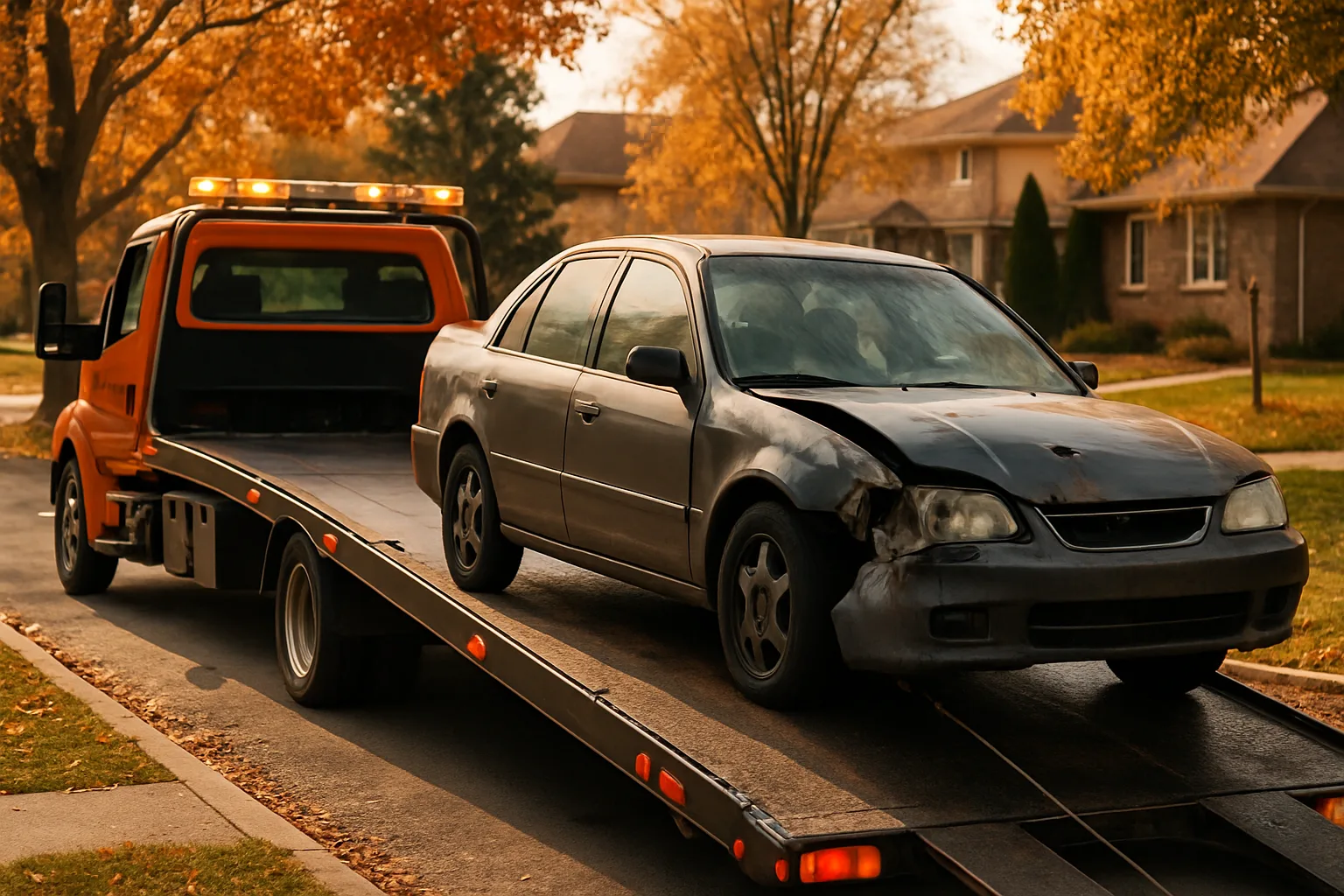
Every Car Has a Final Stop — Here's What Happens Before Yours Gets There
Most cars don't get junked overnight. The average vehicle changes hands two or three times, racks up 200,000+ kilometres, and costs its final owner thousands in repairs before it finally lands in a scrap yard. If you're sitting on an old car in Brampton and wondering whether it's time to sell, understanding that full lifecycle can save you money — and help you walk away with more cash than you expected.
This guide breaks down the entire journey of a car — from the assembly line to the crusher — and shows you exactly where your opportunity sits. If you want to get cash for your car in Canada, timing matters more than most people realize.
Stage One: Manufacturing and the New Car Market
A new vehicle rolls off an assembly line loaded with raw materials — steel, aluminum, copper wiring, rubber, glass, and a catalytic converter packed with platinum-group metals. The average car contains roughly 900 kg of steel and another 100–150 kg of aluminum, depending on the model. Those materials have real value, and they retain it for decades.
The first owner buys at peak price and takes the steepest depreciation hit. A new vehicle loses roughly 20–30% of its value the moment it leaves the lot. That's not a scare tactic — it's just how the market works. The metals inside don't depreciate the same way the "car" does. That's important to keep in mind when we get to the end-of-life stage.
Stage Two: The Used Car Years — When Value Shifts
Most vehicles spend the bulk of their lives in the used market. They get traded, resold, and driven until the repair bills start winning the argument. In Ontario, that tipping point often comes around the 150,000–200,000 km mark, depending on the make, maintenance history, and whether the car was ever in a collision.
Here's where car owners make costly mistakes. They keep pumping money into a depreciating asset — new brakes, a transmission rebuild, rust repairs — without asking whether the car's actual market value justifies the spend. A 12-year-old sedan in Brampton with a failing engine might fetch $400–$800 as a running trade-in. The same car scrapped properly, with its non-ferrous metals, catalytic converter, and steel accounted for, can return real money — especially when you have buyers competing for it.
If you're not sure where your car sits in that equation, get a free car valuation before you commit to another repair.
The Hidden Value Inside Your Junk Car — Scrap Metal Recycling Canada
This is what most private sellers don't know — and what scrap buyers are counting on you not knowing. When a vehicle reaches end-of-life, it doesn't just become worthless. It becomes a collection of commodities.
Here's what's actually inside a scrapped car:
- Steel: The body, frame, and chassis — roughly 65–70% of a car's total weight. Steel prices fluctuate, but this is the bulk commodity every scrap yard is processing.
- Aluminum: Wheels, engine blocks on newer vehicles, and body panels on higher-end models. Aluminum fetches significantly more per kilogram than steel.
- Copper: Wiring harnesses, alternators, starters. A full car can contain 20–45 kg of copper depending on the age and model.
- Catalytic converter: Contains platinum, palladium, and rhodium — the most valuable component per kilogram on most vehicles. Prices vary wildly based on make, model, and the current precious metals market.
- Fluids and tires: These get separated and processed at licensed facilities as part of proper scrap metal recycling Canada regulations.
When you hand your car to a single buyer with no competition, you're trusting them to value all of that fairly. That's a big ask. Platforms like SMASH exist precisely to put competitive pressure on that transaction — more buyers, better price discovery, documented inventory so nothing gets undervalued.
Want to understand how competitive bids work for scrap? Get competitive bids for your scrap in Canada and see the difference transparency makes.
What Happens When a Car Hits the Scrap Yard in Brampton
Once a vehicle arrives at a licensed recycling facility, the process is methodical. It's not just crushed and sold by the ton — at least, not at reputable yards. Here's the actual sequence:
- Depollution: Fluids — engine oil, coolant, brake fluid, refrigerant — are drained and disposed of according to Ontario environmental regulations. This step is legally required.
- Parts harvesting: Serviceable parts get pulled — doors, mirrors, engines, transmissions, seats. These go to auto parts resellers or direct buyers. High-demand parts add to the seller's return when the transaction is set up correctly.
- Catalytic converter removal: Cats get pulled and sorted by make and model. The value varies enormously — a domestic car's cat looks nothing like a diesel truck's or a hybrid's.
- Non-ferrous stripping: Copper, aluminum, and other non-ferrous metals get separated before the car body goes to the shredder.
- Shredding and ferrous sale: The steel body gets shredded and sold to mills by the tonne. This is the commodity play — volume and current steel prices drive the return.
In Brampton and across Ontario, licensed auto recyclers follow strict provincial guidelines at every stage. That's worth knowing as a seller — it means the buyer you're dealing with has accountability built into their operation.
Cash for Cars No Title No Registration — What You Actually Need to Sell
One of the most common reasons people hesitate to sell an old car is paperwork. Missing title, expired registration, no safety certificate — these feel like blockers, but they usually aren't. In Canada, selling a vehicle for scrap operates under different rules than a standard used car sale.
Here's what most reputable cash for junk cars Brampton buyers will actually require:
- Proof of ownership — this can be the original title, a bill of sale, or in some cases, a statutory declaration if the title is genuinely lost
- Government-issued ID matching the ownership
- The vehicle itself — or arrangements for pickup if it's not driveable
Registration being expired is almost never a dealbreaker for a scrap sale. The car isn't going back on the road — it's going to a recycler. What buyers care about is confirming you actually own what you're selling. If you're dealing with a vehicle that has a complicated ownership history, be upfront about it. Good buyers have seen it before and can usually work through it.
The phrase cash for cars no title no registration gets searched constantly because people assume they're stuck. In most cases, they're not. Call a buyer, explain the situation, and find out what documentation they'll accept before you write the car off as unsellable.
When Is the Right Time to Sell My Car Fast in Brampton?
Timing a scrap sale isn't about waiting for a magic moment. It's about recognizing when the math no longer works in your favour. Here are the clearest signals:
- Repair cost exceeds vehicle value. If the mechanic quote is more than what you'd get selling the car, you're done. Stop throwing money at it.
- Insurance is climbing. Paying full coverage on a car worth less than $2,000 is a bad trade. Liability-only or dropping coverage entirely means the car needs to go.
- It hasn't moved in months. A car sitting on your driveway in Brampton still depreciates, still creates liability, and still costs you. Selling it stops the clock.
- Major systems are failing. Transmission, engine, or frame issues on an older vehicle almost never pencil out as repairs.
- You just want it gone. That's a valid reason. You shouldn't need a broken engine to justify selling a car you don't use.
Platforms like SMASH change the dynamic by putting your transaction in front of multiple vetted buyers simultaneously. Instead of calling one yard and accepting whatever number they quote, you get actual market competition. That's how price discovery works — and it's how sellers leave with more than they expected.
If you want a clear-eyed look at your options before you decide, read car selling tips from people who understand the Canadian scrap market.
Frequently Asked Questions
Q: How do I sell my car fast in Brampton without getting lowballed?
Get more than one offer. A single buyer with no competition has every incentive to offer you the minimum. When multiple vetted buyers see your vehicle at the same time, the price reflects actual market value. Platforms like SMASH are built for exactly this — putting competition back in the seller's corner.
Q: Can I get cash for junk cars in Brampton if my car doesn't run?
Yes. Non-running vehicles get sold for scrap every day. Most buyers will arrange towing or pickup directly from your driveway. The car's condition affects the price, but it doesn't disqualify the sale. Be honest about the condition upfront and get quotes accordingly.
Q: What if I don't have the title or registration — can I still sell my car?
In most cases, yes. For scrap sales in Canada, the critical document is proof of ownership — not a current registration. If you've lost the title, a statutory declaration or bill of sale may work depending on the buyer and province. Call the buyer first, explain what you have, and let them guide the paperwork process.
Q: How long does it take to sell a scrap car in Brampton?
It can be as fast as 24–48 hours from first contact to pickup and payment. The timeline depends on your documentation, the buyer's schedule, and whether the car needs to be towed. Most reputable buyers move quickly — they want the vehicle as much as you want the cash.
Q: Does scrap metal recycling in Canada have environmental rules I need to know about?
Licensed recyclers in Canada — including those operating in Ontario — are required to depollute vehicles before shredding. That means draining fluids, removing batteries, and handling refrigerants according to provincial regulations. As the seller, you don't manage that process — the licensed buyer does. Just make sure you're selling to a legitimate, licensed operation.
Your car has had a full life. Now it's time to close the loop — get the cash it's worth and move on. If you're in Brampton and you're ready to stop sitting on a depreciating asset, the process is simpler than you think. Get cash for your car in Canada with a free quote at cashfor-cars.ca — no pressure, no guesswork, just a real number for your vehicle.
Stay sharp on scrap metal market trends and industry news — follow SMASH on LinkedIn for regular updates on pricing, buyer demand, and what's moving in the Canadian recycling market.