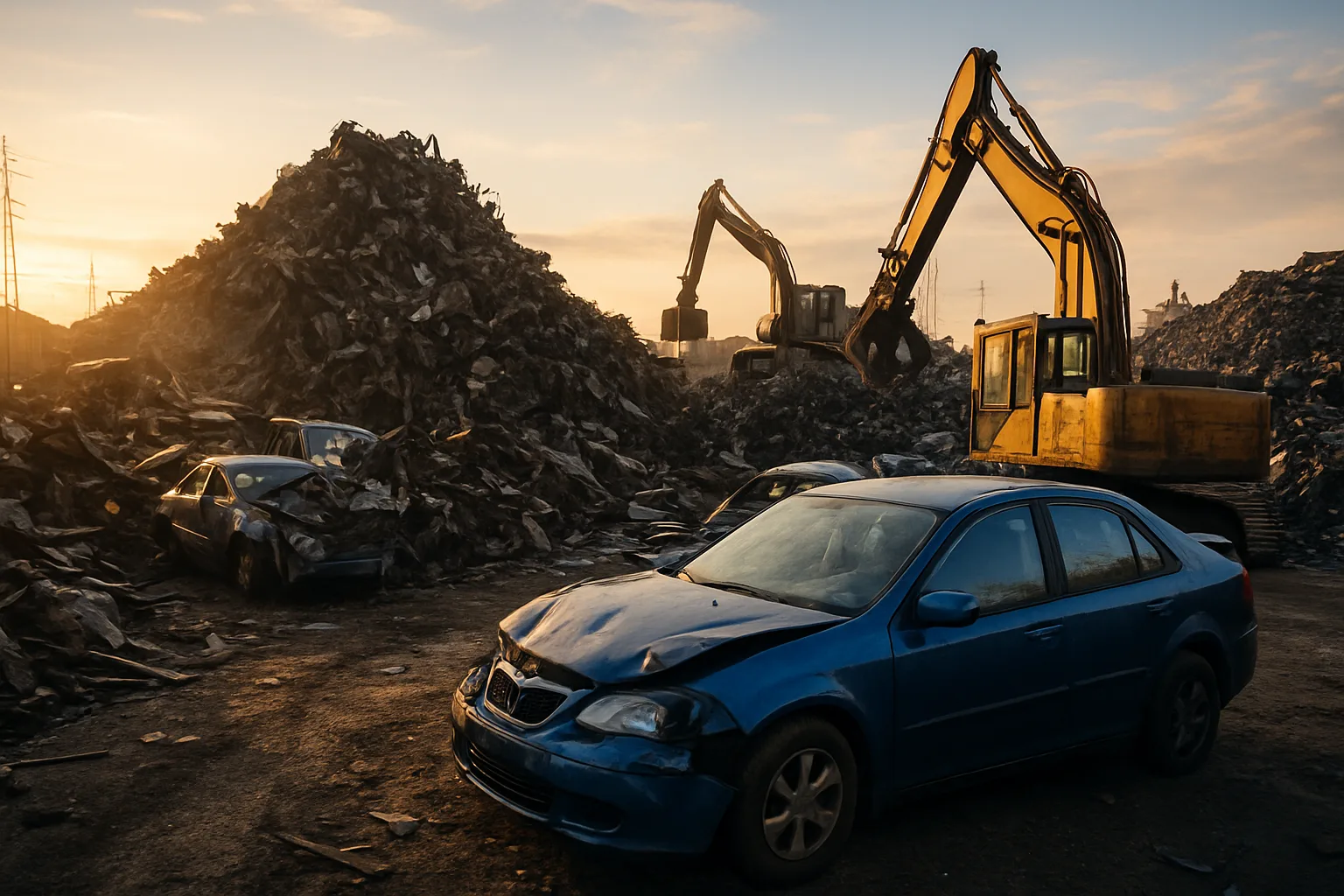
Your car got hit. The repair estimate came back higher than the car is worth. Now what? If you're sitting on a damaged vehicle in Charlottetown or anywhere across Prince Edward Island, you're not out of options — you're actually closer to cash than you think. Finding junk car buyers near me Charlottetown is the first step, and this guide walks you through every step after that.
Accident-damaged vehicles still have real value. The metal, the engine components, the catalytic converter, the transmission — buyers want these parts. The question isn't whether your wrecked car is worth anything. The question is whether you're getting a fair price for it.
---What Happens to a Car's Value After an Accident?
A collision doesn't wipe out value — it shifts where that value lives. A drivable car's worth is tied to its condition, mileage, and market demand. An accident-damaged car's worth shifts to its salvage and scrap value: the raw metal, the reusable parts, and the recyclable components underneath.
Here's what buyers are actually looking at when they assess your wrecked vehicle:
- Gross vehicle weight: Heavier vehicles yield more scrap metal by the tonne.
- Catalytic converter: Contains platinum, palladium, and rhodium — precious metals with real market value. Even on a totalled car, the cat is worth money. Platforms that run a catalytic converter auction can help surface competitive bids on that component specifically.
- Engine and drivetrain: Rebuildable cores from a wrecked car are often sold to rebuilders or parts yards.
- Non-ferrous metals: Copper wiring, aluminum radiators, and brass fittings all carry separate value.
- Battery: EV or hybrid batteries from accident-damaged vehicles are increasingly sought after in the recycling chain.
The accident damage matters less than you think — especially to a scrap buyer. They're not driving the car home. They're dismantling it. So the dents, the crumpled hood, the deployed airbags? Those factors affect the resale value. They barely move the needle on scrap and salvage value.
---Old Way vs. SMASH Way: How to Actually Get a Fair Price
Most people call one buyer, get one number, and take it. That's the old way. One buyer, one offer, no competition. You have zero leverage and zero visibility into whether that number reflects the actual market.
The better approach: put your vehicle in front of multiple vetted buyers and let them compete. That's exactly what platforms like compare scrap metal bids from Canadian buyers are built to do. When buyers know they're competing, the dynamic changes. You're not guessing your price — the market tells you what your car is worth.
Here's the direct comparison:
- Old way: One phone call. One offer. Take it or leave it. No documentation. No paper trail.
- SMASH way: Documented inventory, photo documentation, vetted buyer pool, auction format, auto-invoicing. Competition can help reveal the market. More buyers means better price discovery.
If your vehicle has a salvageable catalytic converter, SMASH's catalytic converter auction format is particularly worth knowing about. Cats from common makes and models have meaningful value — and when that component is listed with serial tracking and proper documentation, buyers bid with confidence. Documented inventory gives buyers more confidence, and that confidence shows up in the offers.
---Step-by-Step: How to Scrap an Accident-Damaged Car in Prince Edward Island
Whether you're in Charlottetown or a smaller community on Prince Edward Island, the process for scrapping a wrecked car follows the same general path. Here's how to do it right:
- Pull the paperwork together. You need the vehicle title (ownership). No title means complications. If your car was totalled by insurance and they've already paid out, confirm who holds the title before you proceed. In some cases, the insurer takes ownership of the salvage vehicle — you need clarity on this before listing it anywhere.
- Cancel your insurance and deregister the plates. Once you commit to scrapping, cancel your policy. In PEI, you return your plates to Access PEI and get a refund on the remaining registration period. Don't leave that money on the table.
- Remove personal items and any aftermarket parts you own. Dash cams, custom rims, upgraded stereo systems — take them out before the buyer arrives. Once the car is picked up, you're not getting them back.
- Document the vehicle thoroughly. Photos of the damage, photos of the VIN plate, photos of the catalytic converter location if it's intact. Documented inventory gives buyers more confidence — and that directly impacts what they're willing to offer.
- Get multiple offers before accepting one. This is the step most people skip. Use a platform like SMASH to expose your vehicle to a vetted buyer pool rather than calling a single local yard and accepting whatever number comes back first.
- Confirm pickup logistics and payment method. Reputable buyers will arrange towing at no extra cost and pay you before or at the time of pickup — not after. Get clarity on this upfront.
- Get your certificate of destruction or bill of lading. This is your paper trail. It confirms the vehicle was legally transferred and scrapped. Keep it. You may need it if any issues come up later with registration or insurance.
If any of these steps feel unfamiliar, read car selling tips for straightforward advice on navigating the process without getting shortchanged.
---What Affects Your Payout When You Sell a Scrap Car After an Accident?
Not all wrecked cars pay out the same. Several factors determine where your offer lands, and understanding them helps you negotiate from a stronger position.
Make and model: High-volume vehicles — trucks, SUVs, popular sedans — have more active parts markets. A wrecked F-150 and a wrecked compact from the same year won't generate the same buyer interest, because the demand for parts and metal volume is different.
Age of the vehicle: Older vehicles lean heavier on scrap metal value because parts availability is less critical. Newer vehicles may attract salvage buyers specifically for parts or rebuildable cores.
Engine condition post-accident: If the engine ran before the accident and the damage was structural rather than mechanical, that's worth stating clearly. A running engine — even in a totalled car — is a meaningful variable.
Catalytic converter status: Is it still on the car, or was it damaged or removed? The cat is one of the highest-value components per pound in a scrap vehicle. If it's intact, document it with photos and serial tracking. If you're listing through a platform that handles a catalytic converter auction, that single component can represent a meaningful portion of your total payout.
Current scrap metal market conditions: Ferrous and non-ferrous prices fluctuate based on global demand, shipping costs, and foundry activity. Your payout is partly a function of timing. Disclaimer: Scrap metal prices fluctuate — always check current rates before committing to an offer.
Location and towing logistics: Being in Charlottetown versus a remote rural area affects the buyer's transport cost, which can factor into what they're willing to pay. Urban yards with shorter haul distances often reflect better net offers.
---Why Documented Inventory Changes the Game for Accident Vehicles
This is the detail most private sellers overlook entirely. When a buyer can't see the car in person — which is increasingly common in a competitive auction environment — they're pricing in risk. Unknown condition means conservative offers. Uncertainty costs you money.
Documented inventory flips that dynamic. Photos of the vehicle from multiple angles, VIN lookup confirmation, serial tracking on high-value components like the catalytic converter, a clear description of what's damaged and what isn't — all of this reduces buyer uncertainty. When buyers are confident in what they're bidding on, they bid more aggressively.
SMASH's platform is built around this principle. The inventory tool, VIN lookup, photo documentation, and serial tracking aren't administrative overhead — they're tools that generate real price discovery. When you get a free car valuation, understanding the documentation process is part of getting the number right.
For accident-damaged vehicles specifically, this matters more than for clean cars. A clean car sells itself on condition. A wrecked car sells on information. The more clearly you can tell a buyer what they're getting, the better the offers you'll receive.
---Frequently Asked Questions
Q: Can I sell a car that's been in an accident if I don't have the title?
Selling without a title creates real complications. Most legitimate scrap car buyers near me and licensed recyclers require proof of ownership before completing a transaction. If your title is lost, contact the provincial registry in PEI to request a replacement before proceeding. If insurance took ownership of the vehicle after a total loss payout, you'll need to clarify with them whether the salvage rights transferred back to you.
Q: Do junk car buyers near me Charlottetown offer free towing for wrecked vehicles?
Yes — most reputable buyers include towing at no charge. A car that isn't drivable after an accident isn't unusual for scrap buyers; they pick up non-runners routinely. Confirm the towing arrangement before agreeing to any offer, and make sure the pickup timeline fits your schedule.
Q: How much is a totalled car worth for scrap in Charlottetown?
It depends on the vehicle's weight, the condition of high-value components like the catalytic converter, and current scrap metal market prices. There's no fixed number — offers vary based on competition among buyers and what the market is doing at the time you list. Getting multiple offers is the only way to know if you're being offered a fair price. Prices fluctuate — always verify current rates before accepting an offer.
Q: What's the difference between scrapping a car and selling it to a salvage yard?
A scrap buyer is primarily buying your vehicle for its raw metal weight and recyclable components. A salvage yard is more interested in selling reusable parts, so they may offer more for newer or high-demand vehicles where parts have active resale value. In many cases, the same buyer does both — they dismantle what's sellable and scrap the rest. Either way, documented inventory and competitive bidding improve your outcome.
Q: Is it worth removing the catalytic converter myself before selling the car?
Not without checking local regulations and your buyer's expectations first. Some buyers prefer the cat to be on the vehicle and will factor it into their bid accordingly. Removing it yourself and selling it separately may net more — or it may complicate the transaction if the buyer expected it. Platforms that run a catalytic converter auction process it as part of the full vehicle listing, which keeps everything clean and documented.
---If you've got an accident-damaged vehicle sitting on your property, it's not a write-off — it's an asset you haven't converted yet. The process is straightforward when you know the steps, have your documentation in order, and put your vehicle in front of real competition instead of one cold call. Get cash for your car in Canada — start with a free quote at cashfor-cars.ca and see what your wrecked car is actually worth.
Stay sharp on scrap metal market trends and industry insights — follow SMASH on LinkedIn for regular updates from inside the recycling industry.