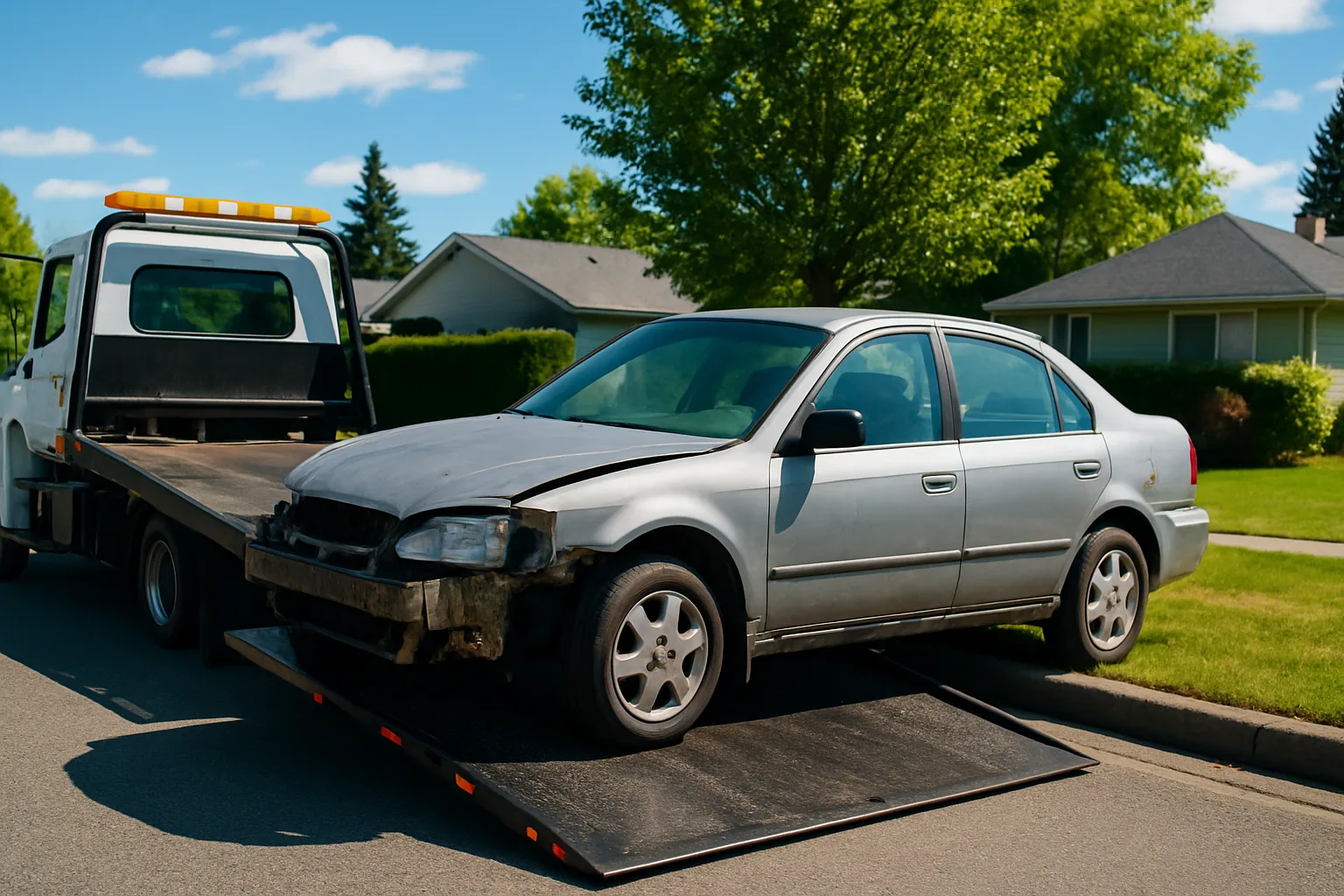
Junkyard, Salvage Yard, or Auto Recycler — What's the Difference and Where Should You Sell Your Car?
Most car owners use these three terms interchangeably. That's a mistake — and it could cost you money. If you're trying to sell my car for cash Abbotsford, knowing the difference between a junkyard, a salvage yard, and a licensed auto recycler puts you in a stronger position before you make a single phone call.
These are three distinct types of businesses. They operate differently, pay differently, and serve different purposes. Understanding which one fits your situation can mean the difference between getting a fair payout and leaving hundreds of dollars on the table.
What Is a Junkyard — and Is It Still a Thing?
The word "junkyard" is mostly outdated, but it still gets used. Traditionally, a junkyard was exactly what it sounds like: a fenced lot full of old, damaged, or abandoned vehicles piled up with little organization. Buyers wandered in, pulled their own parts, and paid a flat fee. Sellers didn't get much — sometimes nothing at all.
True junkyards still exist in parts of British Columbia and across Canada, but they've largely been pushed out by regulation and competition. Environmental rules around fluid disposal, soil contamination, and vehicle deregistration mean that operating a straight-up "junkyard" in 2026 requires the same licensing as any other vehicle dismantler. Most have either upgraded their operations or shut down.
What you might think of as a junkyard today is usually one of the following two things.
Salvage Yards: Parts First, Scrap Second
A salvage yard focuses on extracting value from vehicles through usable parts. They buy cars — running or not — strip them for components like engines, transmissions, doors, catalytic converters, and electronics, then sell those parts to repair shops or individual buyers at a discount compared to new OEM pricing.
If your car still has valuable parts intact, a salvage yard might offer you more than a scrap price. The catch: they're doing the math on what they can extract and sell. They'll factor in whether your model has high parts demand, whether the parts are damaged, and how much labour it takes to pull them. That calculation doesn't always work in your favour.
Here's what affects a salvage yard's offer on your vehicle:
- Make and model demand — High-volume vehicles like Ford F-150s or Honda Civics have consistent parts demand.
- Condition of specific components — A working engine in a written-off car still has value.
- Year — Older vehicles with discontinued parts can actually be worth more to a salvage operation.
- Catalytic converter content — Cats are still among the highest-value components on most vehicles.
The downside of selling to a salvage yard is that the process can be slow. They may want to inspect the vehicle in person, negotiate over specific parts, or lowball you on the assumption you have no other options. If you're in Abbotsford and need a fast, straightforward transaction, this route can drag on longer than it should.
Auto Recyclers: The Professional Version of Both
A licensed auto recycler does what a salvage yard does — but with more structure, more accountability, and usually better compliance. In British Columbia, auto recyclers must meet specific provincial environmental standards. That includes proper fluid drainage (oil, coolant, brake fluid, refrigerants), battery disposal, and deregistration of the vehicle with ICBC so you're no longer liable for it.
Auto recyclers tend to offer more transparent pricing. They document the vehicle, track parts inventory, and often use software to manage their operations — including scrap metal inventory management for the steel, aluminum, and non-ferrous metals that come off vehicles after usable parts are removed. What's left after parts extraction goes to a metal processor or a smelter.
If you want to get cash for your car in Canada with a clean transaction and no liability headaches afterward, a licensed auto recycler is usually your best option. They handle the paperwork. They take the vehicle off your name. You get paid.
That said, even licensed recyclers vary significantly in what they pay. One buyer quoting you on your Abbotsford driveway is one data point. That's not a market price — it's one offer from one buyer who has every incentive to pay you less.
Why the Distinction Matters When You're Selling in Abbotsford
Abbotsford sits at the eastern edge of Metro Vancouver — close enough to benefit from a dense buyer network, but far enough that some sellers end up dealing with whoever shows up first rather than shopping their vehicle properly. That's exactly the problem.
The Fraser Valley has a solid number of salvage and recycling operations, but their offers can vary significantly depending on current metal prices, local parts demand, and how busy they are that week. A yard that's already flush with a certain model may lowball you. A yard running short on specific parts might pay a premium. You won't know unless you get multiple quotes.
Platforms like SMASH help solve this directly. Instead of calling three yards and comparing numbers you wrote down on a napkin, SMASH puts your vehicle information in front of vetted buyers who compete for it. More buyers means better price discovery — that's not a sales pitch, that's how markets work. You can get a free car valuation before you commit to anything, so you walk into every conversation knowing roughly where the floor is.
If you're also curious how Abbotsford scrap metal services work beyond just vehicles — aluminum, copper, steel from car components — it's worth understanding that the metal market and the parts market move independently. Your car has value in both.
What's Your Scrap Car Actually Worth in 2026?
This is the question every seller wants answered upfront. The honest answer: it depends on a few variables that change weekly.
Steel prices fluctuate based on global demand. Non-ferrous metals like aluminum and copper move even faster. The catalytic converter market — which tracks platinum, palladium, and rhodium pricing — can swing significantly in a short period. A car worth one number in June might get a different offer in August.
General factors that determine your scrap car's value include:
- Vehicle weight — Heavier vehicles yield more steel tonnage. A full-size pickup contributes significantly more to a scrap price than a compact sedan.
- Catalytic converter condition and type — Not all cats are equal. Hybrid vehicles often carry higher-value converters.
- Non-ferrous content — Aluminum wheels, copper wiring, and radiators all add up.
- Completeness — A stripped shell pays less than a complete vehicle. If the converter has been cut out or the battery is missing, expect a deduction.
- Location and towing distance — Buyers factor in pickup cost. Being accessible in Abbotsford helps, but remote rural locations may see deductions.
Disclaimer: Scrap metal and vehicle prices fluctuate based on market conditions. Always check current rates before accepting an offer. The figures above are general context, not guaranteed prices.
SMASH connects Canadian sellers with buyers who are actively quoting based on live market conditions — not a price list from last quarter. When you compare scrap metal bids from Canadian buyers, you see what the actual market is paying right now, not what one yard decides to tell you.
How to Sell Your Car for Cash in Abbotsford Without Getting Burned
Whether you're dealing with a salvage yard, an auto recycler, or an online buyer, the process should follow a few non-negotiable steps. Skipping any of these is where sellers lose money or end up with ongoing liability for a car they no longer own.
Step 1: Document the vehicle before anyone touches it. Take photos of the exterior, interior, engine bay, and undercarriage. Note the VIN, mileage, and condition of key components — especially the catalytic converter. This protects you if there's a dispute about what the car contained when it was picked up.
Step 2: Get multiple quotes. Never accept the first offer. A single buyer is not a market. Get at least two or three, and make sure you're comparing apples to apples — some quotes include towing, some don't.
Step 3: Confirm the buyer handles deregistration. In British Columbia, your car needs to be properly deregistered with ICBC so you stop being the registered owner. If a buyer skips this step, you could face liability for the vehicle long after it's gone.
Step 4: Get your payment confirmed in writing before handing over the keys. Cash, e-transfer, or certified payment are all fine — verbal agreements are not.
For practical guidance on every step of this process, read car selling tips from people who have been through it.
Frequently Asked Questions
Q: What's the fastest way to sell my junk car in Abbotsford?
The fastest route is to get an online quote, confirm pickup logistics, and have your documents ready. Platforms that connect you with multiple vetted buyers simultaneously — like SMASH — can compress what used to be a week-long process into 24 to 48 hours. Have your VIN, registration, and photos of the car on hand before you reach out.
Q: Do I need a title to sell my car for cash in Abbotsford?
In British Columbia, you'll need to be the registered owner or have authorization to sell the vehicle. Your ICBC registration documents establish ownership. If the title is lost or the car is registered to a deceased family member, a licensed auto recycler or buyer can often guide you through the process — but expect it to take a bit longer.
Q: How much is my scrap car worth in Abbotsford right now?
Vehicle scrap value is driven by weight, metal content, and current commodity prices — all of which change regularly. A standard passenger car might yield a different price in August than it would in February. Get current quotes from multiple buyers rather than relying on any fixed number. Prices fluctuate — always verify before accepting an offer.
Q: Is there a difference between selling to a salvage yard and an auto recycler in BC?
Yes. Salvage yards prioritize parts resale and may not handle full deregistration. Licensed auto recyclers in British Columbia are required to meet provincial environmental standards, handle fluid disposal, and typically manage the ICBC deregistration process. For most private sellers, a licensed auto recycler offers a cleaner, more accountable transaction.
Q: Does the condition of my car matter if I'm selling it for scrap?
Yes, but maybe less than you think. A non-running, damaged, or high-mileage car can still have significant scrap and parts value. What hurts your offer is missing components — especially a removed catalytic converter, stripped interior, or drained fluids. Sell the car as complete as possible to maximize your return.
You don't need to guess which kind of buyer to call or whether you're getting a fair price. If you're ready to sell my car for cash Abbotsford, start by knowing what you have, documenting it properly, and letting multiple buyers compete for it. That's how you get a real market price — not a lowball offer from whoever picked up the phone first. Head to cashfor-cars.ca to get a free quote and find out what your car is actually worth today.
Follow SMASH on LinkedIn for scrap metal market updates, pricing insights, and industry news that helps Canadian sellers stay informed.