Most people have no idea what actually happens after they call a junk car buyer. The car disappears, cash shows up — but the middle part is a mystery. If you're sitting on a dead vehicle in Burnaby and wondering whether the process is complicated, here's the honest breakdown: it's not. But knowing the steps makes the whole thing faster and puts more money in your pocket.
This is how junk car removal actually works — from first contact to final payment — told through the lens of what real sellers experience. If you've been putting this off, you won't after reading this.
Step 1 — You Make the Call (or Fill Out the Form)
Everything starts with one question: what's the car worth? The answer depends on a few things — the year, make, model, condition, and whether it runs. You don't need a mechanic's report. You don't need to know every problem. You just need to give an honest description of what you've got sitting in the driveway.
Services that get cash for your car in Canada typically ask for this basic info upfront so they can give you a real number without wasting your time. A 2010 Honda Civic with a blown engine is worth something different than a 2004 Ford F-150 with a seized transmission and four flat tires. The more accurate your description, the more accurate your quote. When you're ready, you can get a free car valuation without any commitment — just a number you can say yes or no to.
What to have ready when you call or submit a form:
- Year, make, and model of the vehicle
- Current condition — does it start? Does it drive?
- Location (city and postal code)
- Whether you have the title or ownership documents
- Any major known damage or missing parts
Step 2 — You Get a Quote, and Here's How It's Calculated
This is where most sellers feel like they're in the dark. You've probably wondered whether the buyer is lowballing you or whether the number is actually fair. Here's what goes into a junk car quote: the vehicle's curb weight, the current scrap metal prices today, the condition of salvageable parts, and the cost of towing and processing.
A heavier vehicle — like a full-size truck or an older SUV — generally brings more money because there's more raw steel to work with. Lighter cars bring less. Parts condition matters too. A catalytic converter that's still intact, a working alternator, or a set of decent rims can push the price up meaningfully. The buyer is essentially doing a fast mental inventory of what they can resell versus what goes straight to the crusher.
One important note: if you've found quotes online that promise sky-high prices without seeing the vehicle, be cautious. Legitimate buyers give you a firm number based on real information — and they stand behind it when the truck shows up. Platforms like the SMASH Recycling auction platform bring competition and transparency to the scrap metal side of this equation, which ultimately shapes what buyers are willing to pay sellers like you.
Step 3 — Pickup Is Scheduled (Usually Fast)
Once you've agreed on a price, pickup gets scheduled. In most cases, same-day or next-day pickup is available — especially in urban areas like Burnaby, where buyers operate regularly and have routes running through British Columbia's Lower Mainland.
You don't need to prep the car. You don't need to clean it out. But there are a few things worth doing before the truck arrives:
- Remove your personal belongings. Check under seats, in the trunk, and in the glovebox. People forget wallets, chargers, registration documents, and sometimes cash itself.
- Pull your license plates. In British Columbia, plates belong to the vehicle owner — not the vehicle. Remove them before the car leaves. You'll need to return them to ICBC or transfer them.
- Cancel your insurance. Once the car is picked up, you no longer need coverage. Contact ICBC or your broker to cancel or transfer your policy. You may be owed a refund.
- Drain the gas if you can. Some sellers siphon out remaining fuel. It's not required, but it's a smart move if there's a meaningful amount left in the tank.
- Gather your paperwork. The title or ownership document is the most important piece. In British Columbia, you'll sign over the registration at the time of pickup.
The whole pre-pickup checklist takes maybe 20 minutes. Most of the work is just walking around the vehicle one last time.
Step 4 — The Tow Truck Arrives and You Get Paid
This is the step people worry about most — and it's almost always the easiest part. The driver shows up, confirms the vehicle matches what was described, and you sign over the title. In exchange, you receive payment on the spot.
Cash is common. Bank transfers and certified cheques are also standard depending on the buyer. What you should never accept is a promise to pay later. Legitimate junk car buyers in Canada pay at the time of pickup — full stop. If a buyer asks you to release the vehicle and collect payment later, walk away.
For Burnaby sellers, the logistics are straightforward. The Lower Mainland has strong buyer activity and competitive towing infrastructure. You're not waiting a week for someone to drive from out of town. The market is active, and that works in your favor. Sellers across British Columbia benefit from this same dynamic — more buyer activity generally means better price discovery.
If you want to understand how auction-based competition affects what scrap buyers pay — and by extension, what they offer sellers — read car selling tips that break down the scrap side of the transaction in plain language.
Step 5 — What Happens to the Car After It Leaves
Here's the part most sellers never think about — and it's actually worth knowing. After pickup, the vehicle goes one of a few directions depending on its condition.
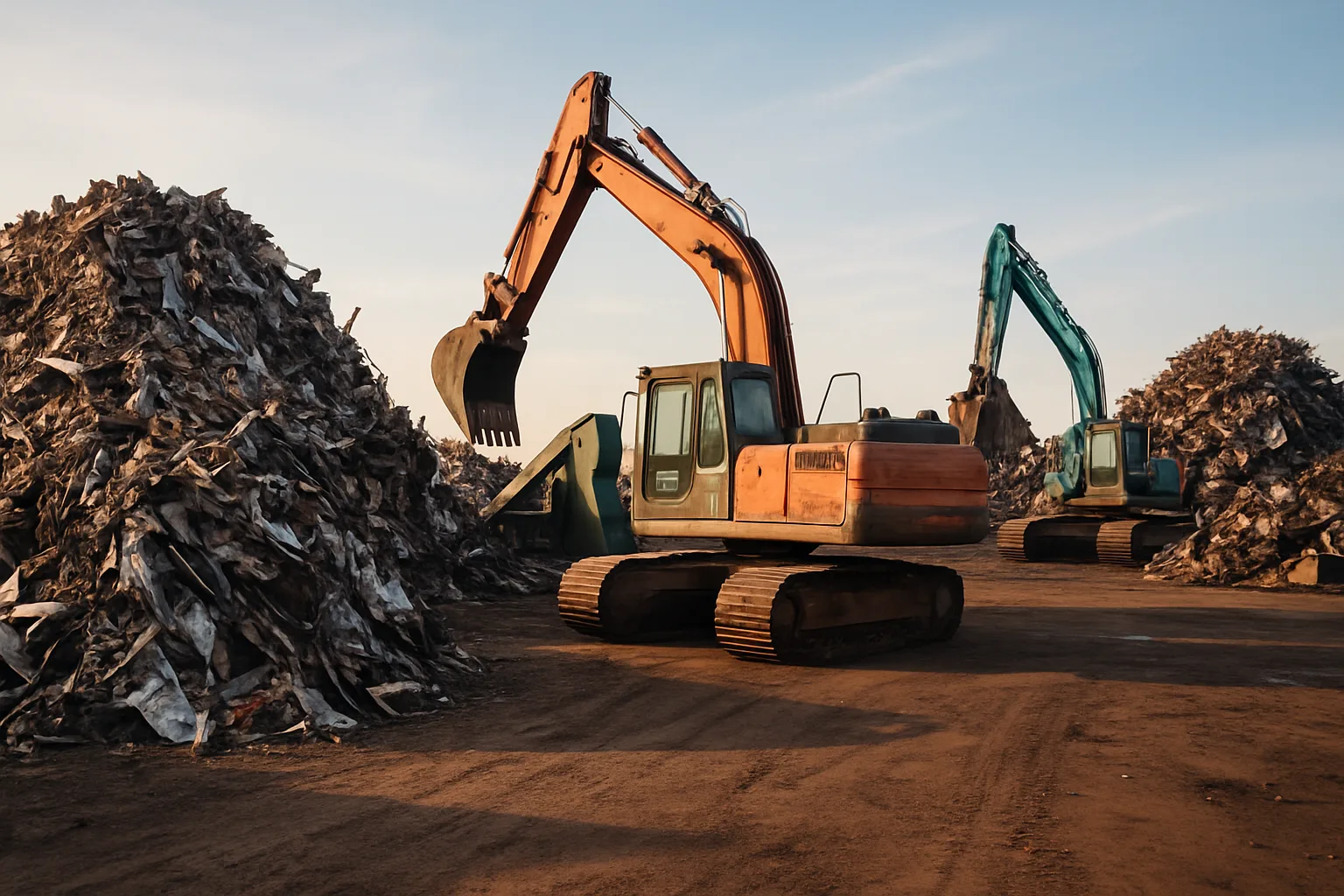
If the car has salvageable value, it goes to an auto dismantler first. Parts with resale potential — engines, transmissions, doors, hoods, electronics, catalytic converters — get pulled and catalogued. What's left after parts removal is a stripped shell that goes to the scrap yard. There, the metal gets shredded, sorted, and eventually sold to steel mills as raw material.
The economics of this chain are real. Catalytic converters alone contain platinum, palladium, and rhodium — precious metals that hold significant value even in a non-running vehicle. That's one reason why even a car that hasn't moved in three years can still bring a meaningful cash offer. You're not just selling dead weight. You're selling material that still has a market.
This is also where SMASH plays a role on the back end. SMASH connects scrap yards with vetted metal buyers through a competitive auction process — meaning the yards buying your car are competing for the material they resell. That competition is part of what keeps offers honest. When metal buyers compete, the pricing signal travels back through the chain to the seller.
What About Salvage Title Vehicles?
A common question from sellers: how much is my salvage title car worth compared to a clean-title vehicle? The honest answer is that salvage title cars typically bring less on the private market — but for scrap and junk buyers, the title type matters far less than you'd expect.
Junk buyers aren't reselling the car as a driveable vehicle. They're buying the metal, the parts, and the raw materials. A salvage title doesn't change what's in the catalytic converter. It doesn't change the weight of the steel frame. For scrap purposes, a salvage title vehicle and a clean-title vehicle of the same make, model, and condition will often bring very similar offers.
What does matter: whether you can legally sign over ownership. In British Columbia, even a salvage-titled vehicle needs proper documentation to transfer. Make sure your paperwork is in order before pickup — it makes the whole process smoother and avoids delays at the time of transaction.
If you've ever searched sell car for scrap northern ireland or similar terms and landed here by accident — welcome. The process described above is specific to Canada, but the fundamentals are universal: honest description, competitive offer, clean title transfer, payment at pickup.
Frequently Asked Questions
Q: How do I get cash for cars in Burnaby if my car doesn't run?
Non-running vehicles are picked up regularly in Burnaby. Most junk car buyers include free towing as part of the service. As long as you have the title and the vehicle is accessible (not buried in a garage), a non-runner is no problem.
Q: How long does the whole junk car removal process take?
From first contact to cash in hand, most sellers complete the process in one to two days. Same-day pickup is often available in Burnaby and across the Lower Mainland. The quote itself usually takes less than 10 minutes.
Q: Do I need a title to sell my junk car in British Columbia?
Yes. In British Columbia, you need to transfer ownership through ICBC. The vehicle registration document (or title) is required to complete a legal sale. If you've lost yours, contact ICBC to obtain a replacement before scheduling pickup.
Q: We buy junk cars in Burnaby — how do I know I'm getting a fair price?
The best way to protect yourself is to get two or three quotes before committing. Legitimate buyers will give you a firm number upfront based on your vehicle description. If a buyer can't give you a price until they see the car, ask them to put the offer in writing at the time of inspection before you sign anything.
Q: Does SMASH help individual car sellers, or just scrap yards?
SMASH operates primarily as a B2B auction platform connecting scrap yards with metal buyers. For individual vehicle sellers, the platform works indirectly — the competition SMASH creates among metal buyers keeps the whole supply chain pricing honest, which benefits sellers at every level. To sell your individual vehicle, start at cashfor-cars.ca.
If you've got a vehicle sitting in Burnaby — dead, damaged, or just done — there's no reason to let it keep depreciating in your driveway. The process is straightforward, pickup is fast, and payment happens on the spot. When you're ready to move it, get cash for your car in Canada with a free quote at cashfor-cars.ca — no obligation, no runaround.
Stay current on scrap metal market trends and industry news by following SMASH on LinkedIn: follow SMASH on LinkedIn for regular updates that affect what your scrap is worth.