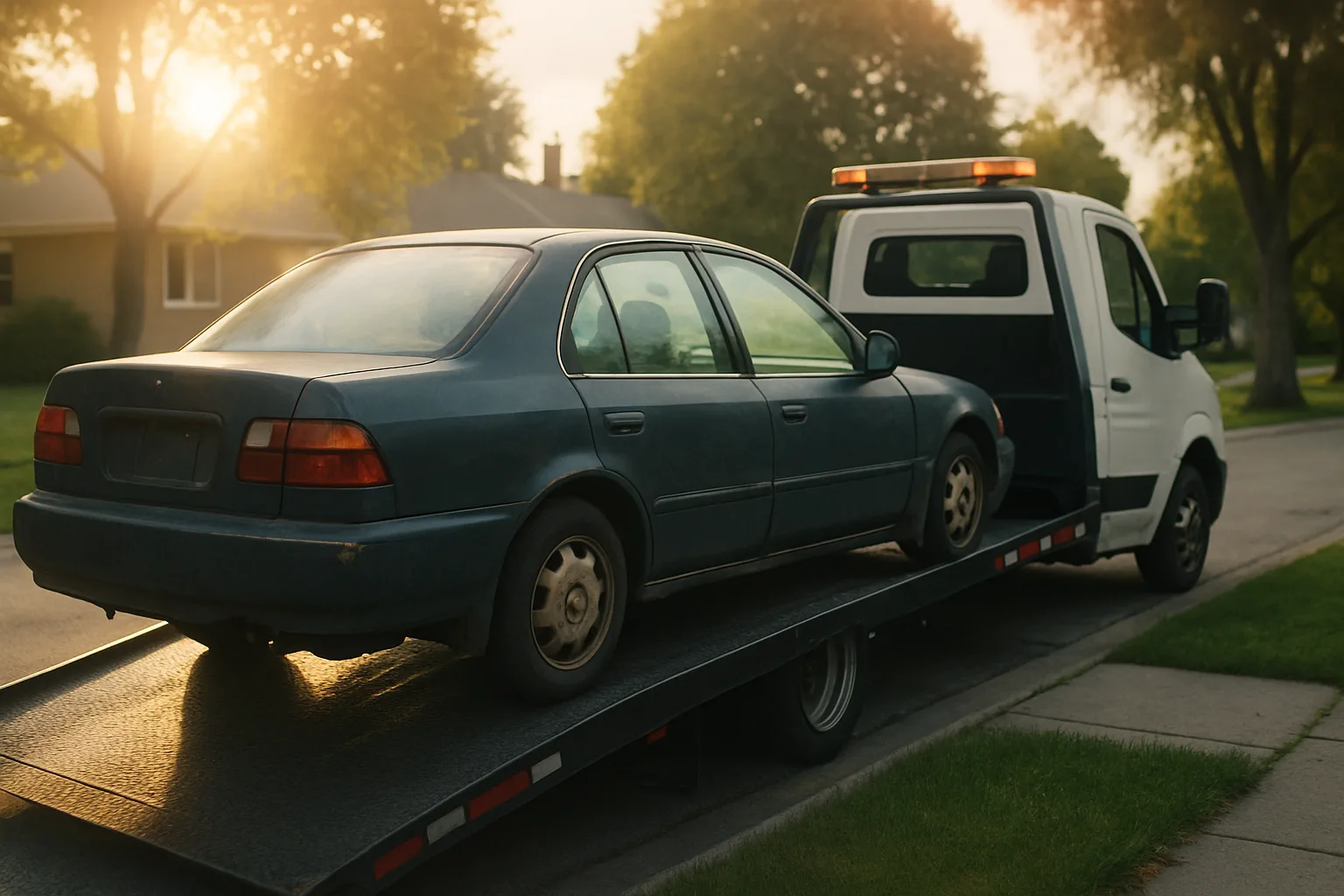
Why Your Neighbor Got More for Their Scrap Car Than You Did
Two cars. Same year. Same neighborhood in Montreal. One owner walks away with $400. The other gets $1,100. What's the difference? Make, model, condition — and who's buying. If you want to sell my car for cash Montreal and actually understand what you're leaving on the table, this breakdown is for you.
Scrap car prices aren't random. They follow logic — metal weight, parts demand, catalytic converter content, and current commodity markets. Once you understand the variables, you stop guessing and start negotiating from a position of knowledge. That's what this report covers.
The Biggest Factor: What Your Car Actually Weighs
Steel is the foundation of every scrap car price. A typical passenger vehicle contains between 800 and 1,000 kilograms of ferrous metal. Trucks and full-size SUVs can push past 1,500 kg. That weight difference alone can swing your payout by hundreds of dollars before anyone even looks at your car's condition.
This is why a 2009 Ford F-150 almost always fetches more as a scrapper than a 2009 Honda Civic — not because of brand loyalty, but because of raw tonnage. Scrappers pay by the pound. Heavier vehicles mean more metal, and more metal means more money when that load hits the shredder.
- Compact cars (Civic, Corolla, Fit): Lighter builds, lower base scrap weight
- Midsize sedans (Accord, Camry, Malibu): Mid-range payout potential
- Full-size trucks and SUVs (F-150, Silverado, Tahoe): Higher weight, stronger scrap floor price
- Minivans and cargo vans: Often undervalued but carry solid steel weight
Keep in mind: scrap metal prices fluctuate with global commodity markets. What a shredded tonne fetches today may differ from what it fetches next month. Always get a free car valuation before you commit to any offer — because yesterday's quote may not reflect today's market.
Make and Model: Parts Demand Changes Everything
A car isn't just a pile of steel. It's an engine, a transmission, a catalytic converter, an alternator, and dozens of components that have real resale value in the used parts market. When a specific make and model is popular on the road, demand for its parts stays strong — and that demand raises your scrap car's floor price.
Buyers who run Montreal scrap metal services know exactly which vehicles move quickly and which ones sit. A Honda CR-V or Toyota RAV4 with a blown engine still has a valuable transmission, intact airbag modules, and a catalytic converter worth stripping. A discontinued model with no local parts demand? That buyer is pricing it purely on steel weight — full stop.
Here's what drives parts-based value:
- Popular models with high registration numbers — more cars on the road means more people searching for used parts
- Vehicles with expensive OEM components — luxury brands (BMW, Mercedes, Lexus) have high-cost parts that retain secondary market value
- Recent model year discontinued vehicles — when dealers stop stocking parts, used supply becomes valuable
- Trucks and work vehicles — commercial-grade components wear out faster, driving consistent parts demand
If you're trying to sell my junk car Montreal, knowing your make and model's parts demand gives you leverage. Don't accept the first number someone throws out. Competition between buyers — not guesswork — reveals the actual market price for your specific vehicle.
Condition: The Variable Sellers Underestimate Most
Most people assume a non-running car is worth almost nothing. That's wrong. Condition matters, but not always in the way you'd expect. The frame, the drivetrain, and especially the catalytic converter can hold significant value even when the engine is seized, the body is rusted through, or the car has been sitting in a Quebec winter for three years.
What actually affects your payout when it comes to condition:
- Does the car run or start? A running vehicle opens the door to retail or wholesale resale — not just scrap. That can dramatically change the offer.
- Is the catalytic converter intact? Cats contain platinum, palladium, and rhodium. A missing or stolen cat can cost you $150 to $500+ depending on the vehicle. Buyers check this first.
- How complete is the vehicle? Missing doors, a stripped interior, or a pulled engine all reduce value. A complete car is worth more than a half-parted-out shell.
- Is there flood or fire damage? Water-damaged or burned vehicles have compromised metal integrity and require more processing — which lowers the offer.
- How much fuel is in the tank? Fluids must be drained before shredding. Labor cost gets factored into your offer.
The bottom line: honest condition reporting gets you a better offer, faster. Hiding damage wastes everyone's time and often results in a revised (lower) offer when the buyer shows up. Be upfront, and platforms like SMASH can help match you with buyers who price your vehicle accurately from the start.
No Title, No Keys — What Happens to Your Payout?
Missing paperwork is one of the most common situations sellers ask about. Many cars sitting in Montreal driveways have been there so long the title is lost, the keys are gone, or both. The good news: this doesn't automatically kill your deal, but it does affect who will buy and for how much.
For cash for cars no title no keys situations, here's the realistic picture in Quebec:
- No keys: Usually not a dealbreaker for scrap buyers. Tow trucks don't need them. Expect a small deduction for loading complexity.
- No title (ownership documents): More complicated. Quebec requires a valid registration or ownership document to legally transfer a vehicle. Some buyers operate in a cash for parts only model when paperwork is incomplete — which typically means lower payouts.
- Both missing: You're largely limited to buyers who process vehicles for parts and scrap without requiring retail-ready documentation. These buyers exist, but your negotiating position is weaker.
If you're in this situation, don't just take the first offer. Multiple buyers price missing-document vehicles differently. That's exactly where a find the best price for your scrap in Canada approach — getting competitive bids rather than one cold call — shows its value. SMASH connects sellers with vetted buyers who bid transparently, so you're not guessing what your car is worth.
Why Montreal Sellers Face Unique Market Conditions
Montreal's scrap car market isn't the same as Vancouver's or Calgary's. Quebec has its own vehicle inspection requirements, registration rules, and seasonal patterns that affect both supply and demand for scrap vehicles.
Winter in Montreal is brutal on vehicles. Salt corrosion accelerates frame rust, damages undercarriages, and degrades brake lines faster than in milder climates. This means Montreal yards see a higher volume of heavily rusted vehicles — which can compress prices when supply is high. Conversely, spring and early summer tend to bring a surge of sellers clearing out winter casualties, which means buyers get competitive and prices can firm up.
Local demand matters too. Quebec's active recycling infrastructure and proximity to steel processing facilities means buyers in the greater Montreal area are regularly moving metal. That's a positive for sellers — there are real, active buyers in this market, not just brokers reselling your lead to someone in another province.
Understanding these seasonal and regional dynamics helps you time your sale. If you can wait until buyer demand tightens, you may see stronger offers. If you need to move fast, knowing that competition exists gives you confidence to push back on a lowball offer. Platforms like SMASH exist specifically to surface that competition, so you stop relying on one phone call and one number.
How to Get the Most Accurate Price Before You Sell
The old process: call one buyer, get one number, take it or leave it. That's how sellers consistently leave money behind. The better approach is documented, competitive, and transparent.
Before you get cash for your car in Canada, do this:
- Know your vehicle's weight class. Look up the curb weight. It's the best proxy for base scrap value before anything else is considered.
- Check the catalytic converter status. Is it there? Is it OEM or aftermarket? This single component can significantly affect your offer.
- Document the condition honestly. Photos of the body, undercarriage, interior, and engine bay. Good documentation leads to accurate offers and fewer surprises at pickup.
- Know your paperwork situation. Have your Quebec registration or ownership papers ready. If they're missing, know that upfront so you can target the right buyers.
- Get multiple offers. This is non-negotiable. One offer is not a market price. Two or three offers reveal the actual range buyers are working in.
For anyone serious about maximizing their payout, read car selling tips before you commit to anything. Small decisions — like whether to pull parts yourself or sell complete — can move your number meaningfully in either direction.
When you're ready, cashfor-cars.ca makes it straightforward. Get your quote, understand your options, and sell on your terms. No subscription, no pressure, no guessing.
Frequently Asked Questions
Q: How much can I get if I sell my car for cash in Montreal?
Scrap car values in Montreal vary significantly based on vehicle weight, make, model, condition, and current commodity prices. A small compact in rough shape might bring a few hundred dollars, while a complete full-size truck or SUV in better condition can yield considerably more. Always get multiple quotes — one offer is not a market price.
Q: Can I sell my junk car in Montreal without a title or keys?
Yes, but with limitations. Quebec buyers generally prefer valid registration documents to process a legal transfer. Missing keys are rarely a problem for scrap buyers. Missing ownership papers may limit you to buyers working in a parts-only or scrap-only model, which can reduce your payout. Be upfront about what paperwork you have before any buyer commits.
Q: Does the make and model of my car really affect the scrap price in Quebec?
Absolutely. High-demand models — particularly popular trucks and SUVs with strong parts markets — consistently command better offers than discontinued or low-volume models. Buyers factor in parts resale value alongside raw metal weight, and popular makes generate stronger competition among buyers.
Q: What happens to my catalytic converter when I scrap a car in Montreal?
Catalytic converters contain precious metals (platinum, palladium, rhodium) and are one of the highest-value components on a scrap vehicle. Most buyers price them separately or factor their presence heavily into the total offer. A missing cat — increasingly common due to theft — will reduce your payout, sometimes significantly depending on the vehicle.
Q: How do I know if I'm getting a fair price for my scrap car?
The only way to know is competition. A single quote from a single buyer tells you what one buyer is willing to pay — not what the market will actually bear. Getting two or three competing offers, ideally through a platform that connects you with vetted buyers, gives you real price discovery. That's the difference between guessing and knowing.
Ready to stop guessing what your car is worth? Get cash for your car in Canada — get a free quote at cashfor-cars.ca and find out what buyers in your market are actually willing to pay today.
Scrap metal and used vehicle prices fluctuate based on global commodity markets, local demand, and seasonal conditions. Always verify current rates before finalizing any sale.
Stay sharp on scrap metal market movements — follow SMASH on LinkedIn for regular industry updates, price trend insights, and scrap market news across North America.