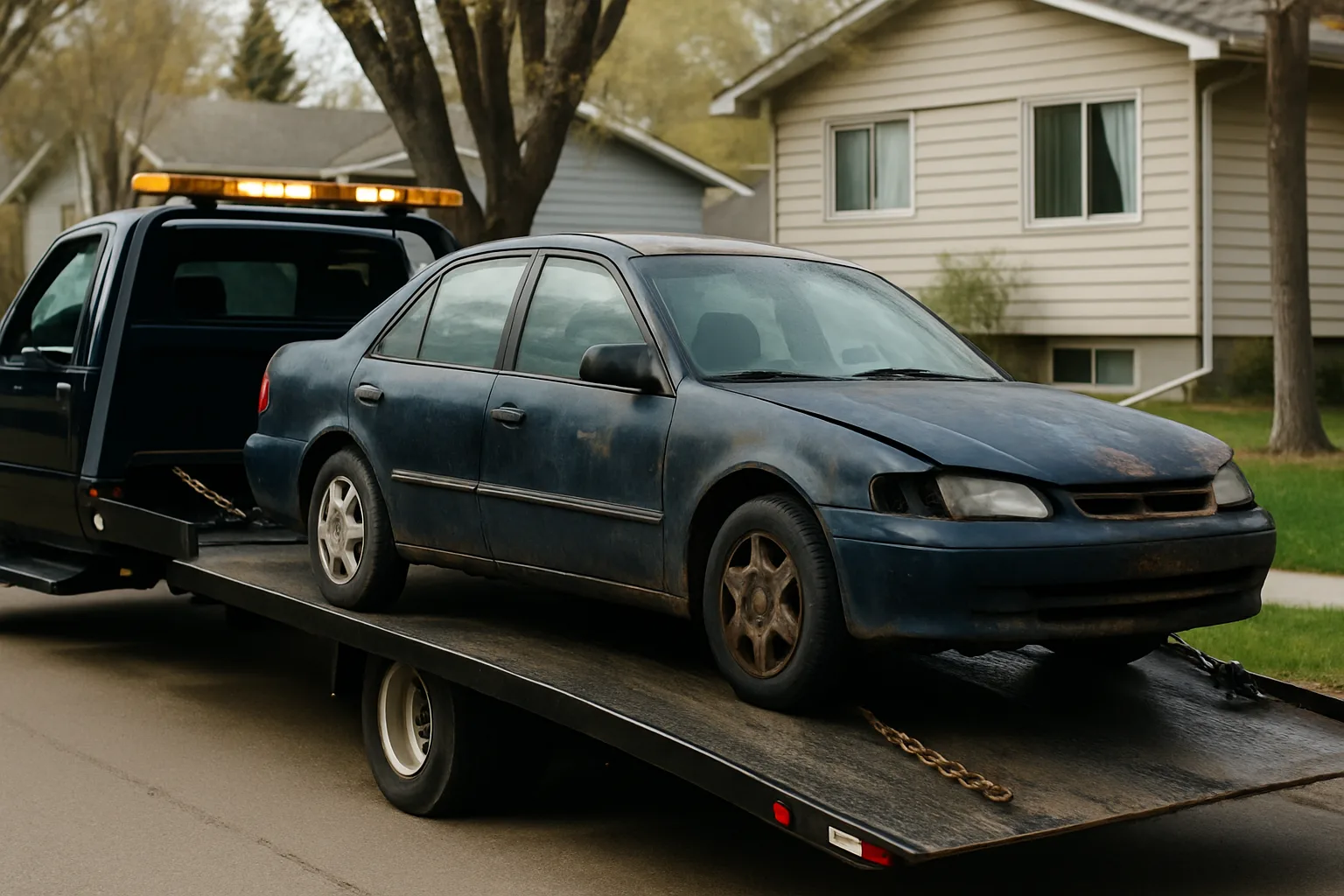
Your Flood or Fire-Damaged Car Isn't Worthless — Here's What It's Actually Worth
A flooded basement or a garage fire can happen in minutes. What takes longer is figuring out what to do with the vehicle left behind. If your car took on water during a Saskatchewan spring flood or got caught in a fire, you're probably being told it's a write-off. That's partly true. But write-off doesn't mean worthless — and if you're trying to get cash for your car in Canada, there's more money on the table than most owners realize.
This week's roundup covers everything you need to know about selling a flood-damaged or fire-damaged vehicle in 2026 — what it's worth, how the process works, and why Regina sellers are leaving money behind by going with the first offer they find.
What Happens to a Car After Flood or Fire Damage?
Let's be direct about what you're dealing with. A flood-damaged vehicle — especially one that took on water past the floor pans — almost always gets written off by insurance. The ECU, wiring harness, sensors, and airbag modules get compromised fast. Mold sets in within 24 to 48 hours. If the water reached the engine bay, you're looking at hydrolocked cylinders, rusted bearings, and a repair bill that outweighs the car's value.
Fire damage is its own category. An engine fire that gets caught early might leave the drivetrain intact but destroy the hood, wiring, and intake. A full cabin fire means melted plastics, destroyed safety systems, and a structurally suspect frame. In either case, the vehicle is not going back on the road without a rebuild that rarely makes financial sense.
But here's what most car owners in Regina don't know: the scrap and salvage market doesn't care about the story — it cares about the parts and the metal. A flooded SUV still has a catalytic converter, steel frame, aluminum wheels, copper wiring, and in some cases, a usable transmission or rear axle assembly. That value doesn't evaporate just because the upholstery is ruined.
How Scrap Value Is Calculated on a Damaged Vehicle
When a buyer looks at a flood or fire-damaged car, they're running two parallel calculations: parts value and scrap metal value. The final offer you get depends on which path makes more sense for that specific vehicle.
Here's what goes into the math:
- Catalytic converter: Still one of the highest-value components on most vehicles. Platinum, palladium, and rhodium content determines the payout. A fire-damaged cat is often still recoverable. Platforms like smashrecycling.ca use VIN lookup and serial tracking to get accurate converter valuations — which means buyers bid with confidence and sellers see better price discovery.
- Ferrous steel: The body, frame, and structural components all have scrap weight behind them. A mid-size sedan runs roughly 1,200 to 1,500 lbs of steel. A full-size truck can push 2,500 lbs or more.
- Non-ferrous metals: Aluminum wheels, copper wiring, radiators, and AC condensers add up. These materials fetch more per pound than steel and are recovered regardless of fire or water damage in most cases.
- Drivetrain components: Depending on what the damage spared, engines, transmissions, and differentials may have salvage value beyond scrap weight.
- Condition of the title: A branded title — flood, salvage, or fire — affects resale but doesn't eliminate scrap value. More on this below.
The bottom line: don't guess at what your vehicle is worth. Get competing offers. One buyer's low bid doesn't set the floor — competition does.
Selling a Damaged Car in Saskatchewan: What You Need to Know in 2026
Saskatchewan has its own rules around salvage and branded titles, and 2026 hasn't changed the fundamentals. If your vehicle was written off by SGI or your insurer, it will carry a branded title — typically a salvage or irreparable brand depending on the extent of the damage.
An irreparable brand means the vehicle cannot be licensed for road use again. It can only be sold for parts or scrap. A salvage brand means it can potentially be rebuilt and re-inspected, though flood and fire vehicles often don't make the cut.
What does this mean for sellers in Regina? A few things:
- You can sell a branded title vehicle. Scrap buyers and salvage yards buy them regularly.
- You need to transfer the title properly. Keep your documentation clean — it protects you after the sale.
- If you no longer have the title (lost in the fire, for example), SGI can issue a replacement. Don't let a missing title stop you from moving forward.
- Free scrap car pickup Regina services handle this paperwork daily. The process is more straightforward than most people expect.
If you're unsure about your title status, the right move is to contact a local buyer who knows Saskatchewan salvage rules — not a national call center reading from a script.
Why a Single Offer Is the Wrong Move for Damaged Vehicles
Here's where most sellers in Regina lose money. They call one junk car buyer, accept the first number they hear, and move on. With a damaged vehicle, that approach is especially costly — because the spread between the lowest and highest offer on a flood or fire car can be substantial.
Why? Because different buyers have different uses for the vehicle. A salvage yard focused on parts will value it differently than a straight scrap buyer. A buyer running a catalytic converter auction will outbid both of them on the right vehicle. When you only call one number, you get one data point. That's not a market price — it's a guess.
This is exactly the gap that SMASH addresses. SMASH connects sellers with vetted buyers who compete for your load — whether that's a single flood car or a batch of write-offs from a fleet operator. When buyers compete, you see what the market actually pays. Not what one buyer feels like offering on a Tuesday morning.
For sellers ready to get a free car valuation, the process starts with documenting what you have — VIN, condition photos, known damage — and letting buyers come to you with real numbers.
The Weekly Market Recap: What's Moving This Week (July 26, 2026)
Scrap metal markets have been moving through the summer with the usual volatility tied to steel mill demand and non-ferrous spot prices. A few things worth noting this week for sellers in Saskatchewan:
- Catalytic converter values remain active for late-model vehicles. Palladium and rhodium prices have held relatively steady through July. If your flood or fire vehicle has a functioning cat, that's still one of your highest-value items — and it's worth documenting carefully before any sale.
- Steel scrap demand from regional processors is consistent heading into the late summer period. Full-size trucks and SUVs — common in Saskatchewan — represent solid scrap weight.
- Aluminum and copper continue to command a premium over ferrous. If your vehicle has aluminum body panels, wheels, or significant wiring, make sure your buyer is accounting for that in the offer.
- Insurance write-offs are moving through the market at pace. Spring flooding across parts of the prairies pushed a wave of total-loss vehicles into the system. Buyers are active and looking.
Disclaimer: Metal prices fluctuate daily based on global commodity markets. The figures and trends above reflect general market direction as of the publication date. Always check current rates with a qualified buyer before making a decision.
If you want to read car selling tips on timing your sale around market conditions, the cashfor-cars.ca blog is updated regularly with practical guidance for Canadian sellers.
How to Sell Your Flood or Fire Car in Regina Without the Headaches
The process doesn't need to be complicated. Here's the practical playbook for getting the most from a damaged vehicle in Regina this summer:
- Document everything first. Take photos of the full vehicle, the damage, the VIN plate, and any components you know are intact (catalytic converter, wheels, drivetrain). Buyers pay more when they don't have to guess.
- Get your title sorted. If SGI branded it, confirm the brand type. If you lost the title in the fire, request a replacement before listing the vehicle.
- Get multiple offers. Don't stop at one. Use SMASH or connect with multiple buyers to understand what your vehicle is actually worth in the current market.
- Confirm pickup logistics. Free scrap car pickup in Regina is standard from most established buyers. Confirm the timeline and whether they handle the tow — most do.
- Complete the transfer properly. Sign over the title, keep a copy of the bill of sale, and remove your plates before the vehicle leaves. This protects you from any future liability.
Whether you're dealing with a 2019 flooded half-ton or a fire-damaged family sedan, the Regina scrap metal services available through cashfor-cars.ca are built to handle exactly this situation. If you're ready to stop staring at that damaged vehicle and start turning it into cash, the process is simpler than you think.
Get cash for your car in Canada — get a free quote at cashfor-cars.ca and find out what your flood or fire vehicle is actually worth today.
Frequently Asked Questions
Q: Can I sell a flood-damaged car in Regina without a title?
You can sell a vehicle without a title, but you'll need to sort out the paperwork before or during the sale. SGI can issue a replacement title if yours was lost or destroyed. Most reputable buyers will walk you through what's needed — don't let a missing document stop you from getting the process started.
Q: How much is a flood-damaged car worth as scrap in Saskatchewan?
The value depends on the vehicle's weight, the condition of the catalytic converter, and whether any drivetrain or body components have salvage value beyond scrap metal. There's no single number — which is exactly why getting multiple offers matters. Competition between buyers is what reveals the real market price, not a single cold call.
Q: Does free scrap car pickup apply to fire-damaged vehicles in Regina?
Yes. Most buyers offering free scrap car pickup in Regina handle fire and flood-damaged vehicles regularly — including vehicles that don't run or have significant structural damage. Confirm with your buyer that they have the right equipment for the condition of your vehicle, but in most cases, a flatbed or tow truck takes care of it.
Q: Will the catalytic converter on my flood-damaged car still have value?
In most cases, yes. Water damage typically doesn't destroy the precious metal content inside a catalytic converter — the platinum, palladium, and rhodium are what buyers are paying for. SMASH uses VIN lookup and serial tracking to accurately assess converter value, which helps ensure sellers get a fair number rather than a lowball guess.
Q: How long does the process take to sell a damaged car in Regina?
Once you have your documentation in order and accept an offer, most sellers in Saskatchewan complete the process within one to three business days. Pickup is typically scheduled quickly, especially during active buying periods like the current summer market. The fastest sellers are the ones who have their title, photos, and VIN ready from the start.
Follow SMASH on LinkedIn for weekly scrap metal market updates, industry insights, and auction news: linkedin.com/company/scrap-metal-auction-sales-hub