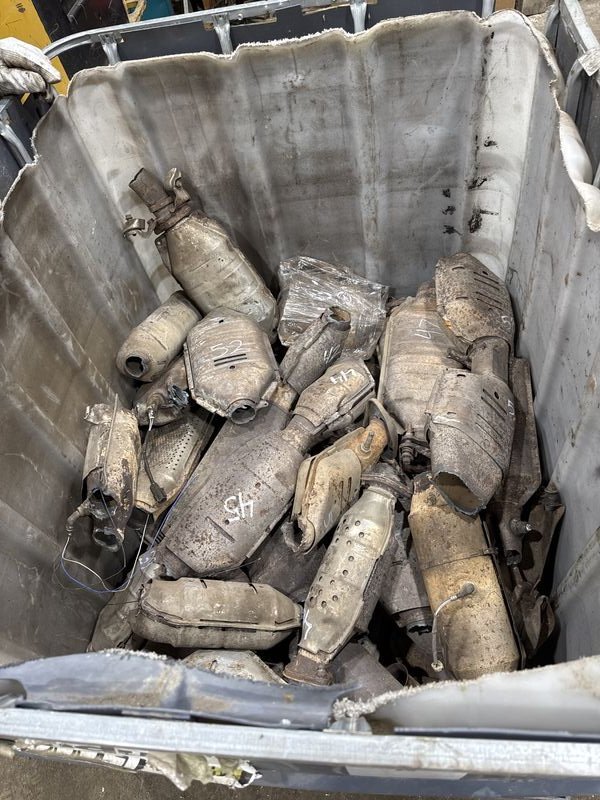
Catalytic Converter Theft Is Still Surging — Here's What It Means for Your Scrap Car's Value
Catalytic converter theft hasn't slowed down. In fact, across British Columbia and the rest of Canada, theft rings are more organized than ever in 2026 — and the ripple effect hits everyone from daily drivers to people trying to get cash for their car in Canada. If you've got an old vehicle sitting in your driveway in Coquitlam, understanding how converter theft affects scrap car values could put more money in your pocket.
This isn't a scare piece. It's a practical breakdown of what's happening in the market, why it matters, and how to make sure you're not leaving cash on the table when you go to sell your junk car.
Why Catalytic Converters Are Still a Prime Target in 2026
The short answer: platinum, palladium, and rhodium. These precious metals sit inside every catalytic converter, and they're worth serious money. Thieves can remove a converter with a battery-powered saw in under two minutes. It happens in parking lots, driveways, and right on the street — Coquitlam included.
The vehicles most targeted include:
- Toyota Prius — high precious metal content, easy undercarriage access
- Honda Element — sits high off the ground, simple to get under
- Ford F-Series trucks — dual converters on many configurations
- Toyota Tacoma and 4Runner — common in British Columbia, frequently targeted
- Older minivans and SUVs — less likely to have anti-theft protection
Legislation across several Canadian provinces has tightened the rules around how recyclers can purchase catalytic converters. Scrap yards now face stricter ID and documentation requirements when buying converters separately. That's made the grey market harder to operate in — but it hasn't stopped theft. It's just shifted how stolen converters move through the system.
How Catalytic Converter Theft Affects Scrap Car Values — and the sell my junk car for cash Market
Here's the part most car owners don't think about: when a vehicle gets stripped of its catalytic converter before it reaches the recycler, it loses a meaningful chunk of its scrap value. The converter is often one of the highest-value components on an older vehicle. A missing cat doesn't just reduce what the recycler gets — it reduces what they'll offer you.
If you're sitting on an older vehicle that's already been victimized by converter theft — or if you're worried it could be targeted — your best move is to sell fast and sell smart. Waiting costs you in two ways:
- Risk of theft: Every week it sits in the driveway is another opportunity for someone to crawl underneath it.
- Market fluctuation: Precious metal prices tied to converter values move constantly. What a converter is worth today may not be what it's worth next month.
On the flip side, if your vehicle still has its converter intact, that works in your favor. A documented, complete vehicle is worth more to a legitimate buyer than a stripped one. Platforms like the SMASH Recycling auction platform create competitive bidding environments that help reveal true market value for complete vehicles — including what intact converters contribute to the overall lot value.
What Tighter Regulations Mean for Scrap Metal Recycling in Canada
Across Canada, regulators have been cracking down on the secondary market for catalytic converters. In British Columbia, scrap dealers are now required to collect detailed seller information, photograph the converter at point of purchase, and cross-reference vehicle identification where possible. Legitimate recyclers welcome this — it protects them from liability and keeps bad actors out of their yards.
What it means for you as a car owner trying to sell my junk car for cash:
- Reputable buyers will ask for ID and documentation — that's a good sign, not a red flag.
- If a buyer doesn't ask questions, walk away. They may be operating outside the rules.
- Selling your whole car to a vetted buyer is cleaner, faster, and lower-risk than trying to sell parts individually.
Scrap metal recycling in Canada is becoming more transparent by design. Regulations are pushing the industry toward documentation, traceability, and accountability. For legitimate sellers, that's a net positive — it filters out shady operators and creates a more level playing field.
SMASH operates within this framework. The platform is built around vetted buyers and documented transactions, which means sellers aren't guessing who they're dealing with or whether the offer they get is legitimate.
How to Protect Your Scrap Car's Value Before You Sell
Whether you're in Coquitlam or anywhere else in Canada, here are practical steps to protect what your vehicle is worth before you hand over the keys.
1. Don't Let It Sit
An unregistered, uninsured vehicle parked on the street or in a visible driveway is a target. The longer it sits, the more exposure it has. Move it into a garage if possible, or get it sold quickly.
2. Document What's There
Take clear photos of your vehicle's undercarriage, including the converter location. Note the VIN. If something gets stolen before you sell, you'll need that documentation. If nothing gets stolen, it still helps you when negotiating — you can demonstrate the vehicle is complete.
3. Know What Your Vehicle Has
Not all catalytic converters are equal. A Prius converter contains more precious metals than a standard sedan. Knowing your vehicle's converter type gives you negotiating context when you get a free car valuation.
4. Use a Legitimate Buyer
This is non-negotiable. Scrap metal recycling in Canada is regulated, and buyers who cut corners put you at legal risk too. Stick with vetted buyers who operate transparently, collect proper documentation, and give you a receipt.
5. Don't Strip It Yourself
Unless you're a licensed recycler or working with one, removing and separately selling a catalytic converter from a vehicle you own can land you in legal grey areas — especially in provinces where proof-of-ownership requirements for converter sales have tightened. Sell the whole car. Let the licensed recycler handle the rest.
We Buy Junk Cars in Coquitlam — Here's What the Process Actually Looks Like
If you've never sold a scrap car before, the process probably seems more complicated than it is. Here's the honest version of how it works when you sell to a legitimate junk car buyer in Canada.
Step 1 — Get a quote. You provide basic information: year, make, model, condition, and whether major components (including the catalytic converter) are intact. The more accurate your info, the more accurate your quote.
Step 2 — Confirm pickup. Most reputable buyers offering free junk car removal will schedule a pickup within a few business days. You don't tow it. They come to you.
Step 3 — Paperwork and payment. You'll sign over the title or ownership documents and receive payment — usually same-day. Cash, e-transfer, or cheque depending on the buyer.
Step 4 — The vehicle goes to a licensed recycler. From there, it's dismantled properly. Fluids drained, parts catalogued, metals separated and sold through legitimate channels — including through auction platforms like SMASH, which connect recyclers with vetted buyers competing for loads.
For car owners in Coquitlam looking to move a vehicle fast, the process is straightforward — but only when you're working with the right buyer. Don't accept the first number you hear. Competition produces better prices. That's true whether you're a scrap yard selling a load of non-ferrous or a car owner selling a single Camry.
If you're ready to get rid of your vehicle and want to know what it's actually worth, read car selling tips from people who deal in this market every day — then get your quote.
The Bottom Line on Catalytic Converter Theft and Scrap Car Value
Catalytic converter theft is a real market force — not just a crime statistic. It affects what your scrap car is worth, how quickly it depreciates when left sitting, and what buyers will offer you for a complete versus stripped vehicle. In a city like Coquitlam, where truck and SUV ownership is high and theft rings operate regionally, this is especially relevant.
The takeaway is simple: if you have an older vehicle you're not driving, the smartest move is to sell it now — intact, documented, and to a legitimate buyer. Don't gamble on the converter still being there in three months. Don't accept a lowball offer from a buyer who won't put it in writing. And don't try to navigate a market that's getting more regulated every year without someone who knows what they're doing.
If your vehicle is sitting in Coquitlam or anywhere in British Columbia and you want to know what it's worth, now's the time to find out. Get cash for your car in Canada — it starts with a free, no-pressure quote at cashfor-cars.ca.
Frequently Asked Questions
Q: Does a missing catalytic converter reduce what I get for my scrap car in Coquitlam?
Yes, it typically does. Catalytic converters contain precious metals that contribute to a vehicle's overall scrap value. A vehicle with its converter intact is worth more than one that's been stripped. If yours has already been stolen, disclose that upfront — a reputable buyer will still make you an offer based on the remaining vehicle value.
Q: Is it legal to sell my junk car for cash in British Columbia?
Yes, selling a privately owned scrap vehicle is legal in British Columbia. You'll need to sign over your vehicle ownership documents (the "Transfer/Tax Form" in BC), and the buyer will need to be a licensed recycler or dealer. Keep a copy of all paperwork for your records.
Q: How long does free junk car removal take in Coquitlam?
Most reputable junk car buyers offering free removal can schedule pickup within 1 to 5 business days, depending on location and demand. Some buyers offer same-day or next-day service. Confirm pickup timing and payment method before you commit to any buyer.
Q: What documents do I need to sell my scrap car in Canada?
At minimum, you'll need proof of ownership — in British Columbia, that's your vehicle registration or the Transfer/Tax Form (APV9T). Some buyers may also ask for photo ID. If the vehicle has a lien, you'll need to resolve that before the sale can proceed.
Q: How does SMASH help with scrap car sales?
SMASH is an auction platform that connects scrap yards and recyclers with vetted buyers across North America. When recyclers use platforms like SMASH to sell processed scrap loads — including metals from vehicles like yours — competitive bidding helps ensure market-reflective prices. That efficiency can translate to better offers upstream for car sellers working with SMASH-connected recyclers.
Stay current on scrap metal market trends, industry news, and catalytic converter regulations by following SMASH on LinkedIn: linkedin.com/company/scrap-metal-auction-sales-hub