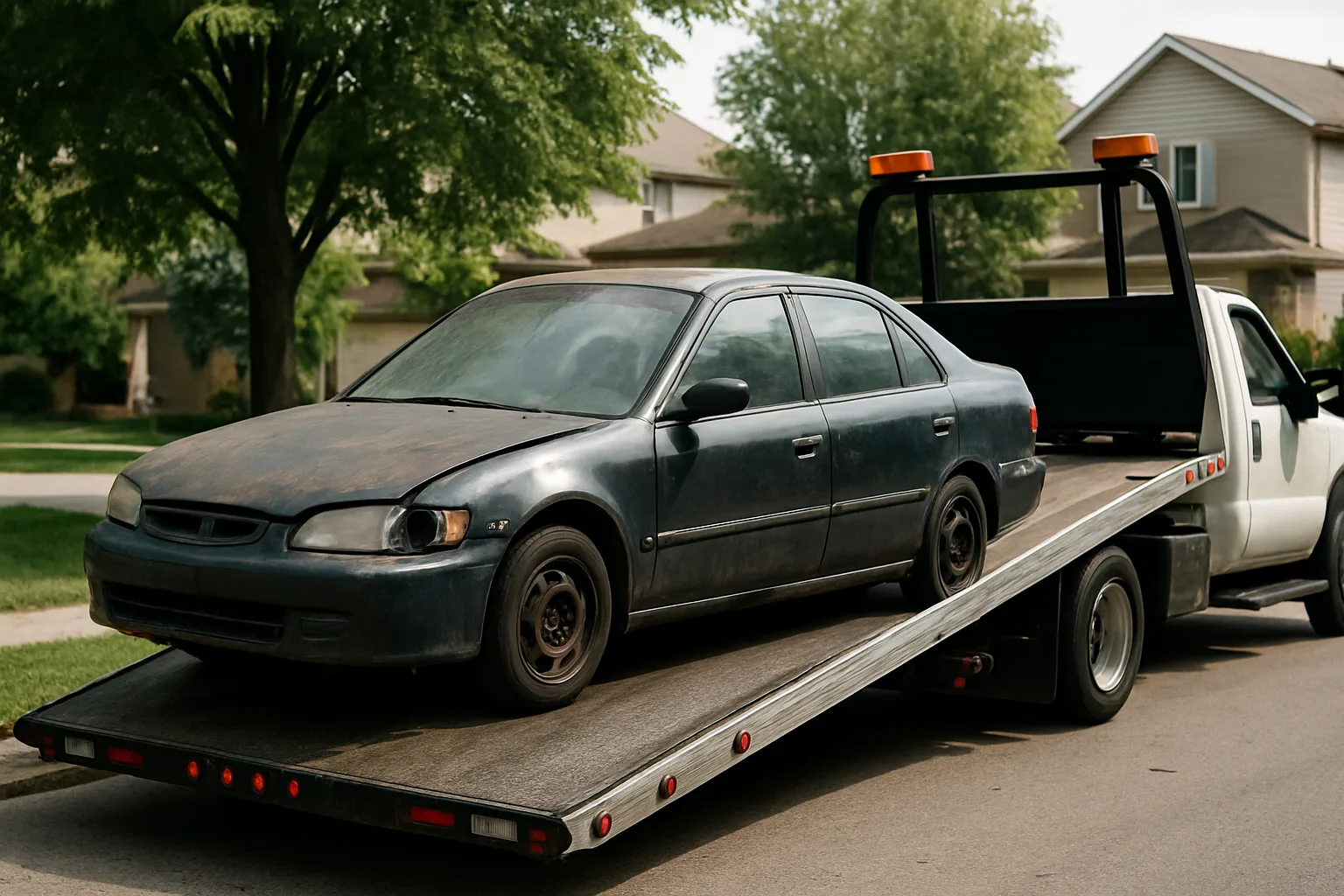
Your car survived a flood or a fire — but just barely. Now it sits in your driveway, undriveable, uninsurable, and dropping in value every single day. Here's what most car owners don't know: a damaged vehicle still has real cash value, and you don't have to wait for an insurance payout to see any of it.
If you're trying to sell my car fast Kitchener after a flood or fire event, this guide breaks down exactly what to expect — what your car is worth, what paperwork you need, and how platforms like Canada's B2B scrap recycling marketplace are changing the way damaged vehicles move through the recycling chain.
What Happens to a Car's Value After Flood or Fire Damage?
Flood and fire damage hit a vehicle's value hard — fast. A car that books at $8,000 before a flood can drop to scrap value overnight. The engine compartment fills with sediment. Electrical systems corrode. The frame warps from heat. Buyers at the retail level walk away, and dealerships won't touch it.
But here's the thing: the vehicle isn't worthless. The catalytic converter still contains platinum, palladium, and rhodium. The alternator, starter motor, and copper wiring still have metal value. The steel frame and body panels still weigh what they weigh. Scrap metal recycling Canada-wide processes thousands of flood and fire vehicles every year — and the metal value is real, even when the car itself is done.
What affects the final payout on a damaged vehicle:
- Current scrap metal prices — steel, aluminum, and non-ferrous metal markets fluctuate daily
- Vehicle weight and make — heavier trucks and SUVs typically return more at scrap
- Extent of damage — partial fire damage vs. total loss affects salvageable part value
- Catalytic converter condition — even a fire-damaged cat can have precious metal value
- Location and transport costs — getting the car from your driveway in Kitchener to a yard adds up
Cash for Junk Cars Kitchener: Does Flood or Fire Damage Disqualify You?
Short answer: no. Junk car buyers and scrap yards across Kitchener and the broader Ontario market buy flood and fire vehicles regularly. The condition threshold for scrap is much lower than you think. If the car has metal — and all cars have metal — it has value.
That said, not all buyers treat damaged vehicles the same way. Some will lowball you hard because they know you're stuck. Others won't pick up vehicles without a complete set of documents. That's why it pays to understand the landscape before you make a single call.
What cash for junk cars Kitchener buyers typically look for in a damaged vehicle:
- Vehicle identification number (VIN) — traceable, not reported as stolen
- Proof of ownership — even if the title is damaged or missing (more on that below)
- Basic vehicle specs — year, make, model, approximate weight
- Photos of the damage — honest documentation speeds up the quote process significantly
- Current location and access — is the car driveable, on a trailer, or stuck in mud?
Platforms like SMASH connect scrap sellers and buyers with verified documentation requirements built into the process. That transparency means fewer deals that fall apart at pickup — which matters when you're dealing with an already stressful situation.
Cash for Cars No Title No Registration — What Are Your Options in Canada?
This one comes up constantly with flood and fire vehicles. The title was in the glovebox. The registration was in the console. Both are now waterlogged pulp, or ash. Does that kill your ability to sell?
In Ontario and across most of Canada, you have legitimate options. The most direct route is a replacement ownership document through ServiceOntario. You'll need to prove your identity and your connection to the vehicle using the VIN. If the vehicle is paid off and registered in your name, the process is straightforward — though it takes time. If you're on a tight timeline and need cash for cars no title no registration, here's what buyers typically accept as alternatives:
- Statutory declaration — a sworn statement before a notary confirming ownership
- Insurance documentation — your insurer's file will reference the VIN and confirm your name as the insured
- Bill of sale from your original purchase — if you have a digital copy, this supports your claim
- Lien release letter — if the vehicle was financed, you'll need confirmation the lien is discharged
Reputable buyers in Canada won't purchase a vehicle with zero documentation — and you shouldn't want them to. Proper paperwork protects you from future liability, especially with a write-off vehicle. Take the extra day or two to get a replacement document. It will not slow down your payout significantly, and it protects you legally once the vehicle leaves your property.
The Scrap Metal Recycling Process for Damaged Vehicles in Canada
Once your vehicle reaches a licensed recycling facility, it goes through a structured process. Understanding this helps you set realistic price expectations and ask better questions when you're getting quotes.
Here's the basic flow for a flood or fire-damaged vehicle entering the scrap metal recycling Canada pipeline:
- Fluid removal and depollution — coolant, oil, brake fluid, and refrigerants are drained and disposed of according to provincial environmental regulations
- Parts assessment — salvageable components (alternators, starters, catalytic converters, usable body panels) are pulled before crushing
- Crushing and shredding — the vehicle shell is flattened and shredded into ferrous and non-ferrous fractions
- Metal sorting and sale — steel goes to steel mills, aluminum and copper are separated and sold to non-ferrous processors
The buyer's price to you reflects what the facility expects to recover from that process, minus their operating costs. More buyers competing for your load means better price discovery — which is exactly the principle behind how SMASH operates in the B2B space. Competition surfaces the real market. That's true whether you're selling a single scrap car or moving a yard full of crushed non-ferrous.
If you're in the Kitchener area and want a no-guesswork quote, you can get a free car valuation and know exactly where you stand before you commit to anything.
How to Sell a Flood or Fire Vehicle Fast — Without Getting Lowballed
Speed and price don't have to be opposites. The sellers who get lowballed are the ones who call a single buyer, take the first number, and sign over their vehicle without a second look. Don't be that seller.
Here's a practical approach to selling your damaged vehicle quickly while protecting your payout:
- Get at least three quotes — prices vary more than you'd expect between buyers, even in the same city
- Document everything before they arrive — take photos, note the VIN, list known damage clearly
- Ask what they pay for the catalytic converter separately — some buyers bundle it in; others price it out. Know the difference.
- Confirm pickup logistics in writing — who brings the tow truck? Who pays for it? When?
- Get paid before or at time of pickup — e-transfer, certified cheque, or cash. No IOUs on junk car sales.
The local scrap and Kitchener scrap metal services market has active buyers — but they're not all equal. Some are licensed, vetted, and transparent. Others are not. Knowing the difference protects you.
Platforms like SMASH bring structure to this process by vetting buyers before they ever bid on a load. That matters for individual sellers too — because the buyers who operate professionally in the B2B recycling space are typically the same ones offering fair, competitive quotes at the retail end.
What to Do Right Now If You Have a Damaged Vehicle in Kitchener or Ontario
Don't let the car sit. Flood-damaged vehicles deteriorate fast — mold sets in within days, and corrosion accelerates after water exposure. Fire-damaged vehicles are a similar story: continued weather exposure degrades metal value, and the longer it sits, the more you lose. Act inside your first week if you can.
Your immediate checklist:
- Contact your insurance company and file or close your claim — do not hold up the sale waiting for a settlement you may never see
- Locate or replace your ownership documents through ServiceOntario
- Take clear photos of the vehicle from all angles — include close-ups of the damage
- Get quotes from multiple buyers — include licensed scrap yards, junk car platforms, and online buyers
- Confirm the buyer is licensed to handle end-of-life vehicles in Ontario
You've already dealt with enough stress. The sale itself should be straightforward. If you're ready to move forward and get cash for your car in Canada, the process is faster than most people expect — especially with buyers who handle flood and fire vehicles regularly.
Note: Scrap metal prices fluctuate based on market conditions. Always check current rates before finalizing any sale. Prices referenced in quotes are valid for a limited window — confirm at the time of pickup.
Frequently Asked Questions
Q: Can I sell my flood-damaged car for cash in Kitchener without a title?
Yes, in most cases. Ontario buyers will work with alternative proof of ownership — including a statutory declaration, insurance documents, or a bill of sale. Contact ServiceOntario to replace a damaged or destroyed title if you have time. A replacement document gives you more leverage with buyers and protects you legally after the sale.
Q: How much is a flood-damaged or fire-damaged car worth for scrap in Canada?
It depends on the vehicle's weight, make, the current scrap metal market, and what salvageable components remain. Heavier vehicles — trucks and SUVs — typically return more than smaller sedans. Catalytic converters, copper wiring, and aluminum parts all add to the base scrap value. Get multiple quotes to understand the real range — don't take the first number you're offered.
Q: How fast can I sell my car in Kitchener after flood or fire damage?
Many buyers can arrange pickup within 24 to 72 hours of a confirmed quote. Same-day pickups exist but depend on logistics and documentation being ready. Having your paperwork sorted in advance — even a basic statutory declaration — removes the most common delay in the process.
Q: Do scrap car buyers in Ontario accept vehicles with no registration?
Most licensed buyers require some form of ownership verification. Registration alone is typically not sufficient — buyers want proof you own the vehicle outright. If your registration was destroyed in the flood or fire, focus on replacing the ownership certificate through ServiceOntario, or prepare a statutory declaration with a notary.
Q: Is it better to sell a damaged car for parts or as a whole vehicle for scrap?
For most flood and fire vehicles, selling as a whole unit to a licensed recycler is faster and less hassle. Parting out a vehicle takes time, storage space, and knowledge of what parts are actually sellable. Unless you have a high-value component — like a low-mileage catalytic converter or a rare powertrain part — the convenience of a single scrap sale usually wins. If you want to read car selling tips that break down the numbers, there's more detail on that trade-off in the blog.
You've got a damaged car and you need it gone. The market in Kitchener and across Ontario is active — buyers are out there, and your vehicle has real value. Get cash for your car in Canada with a free quote at cashfor-cars.ca and find out exactly what your flood or fire vehicle is worth before you commit to anything.
Follow SMASH on LinkedIn for ongoing industry updates, scrap metal market insights, and news affecting recyclers and sellers across North America.
```