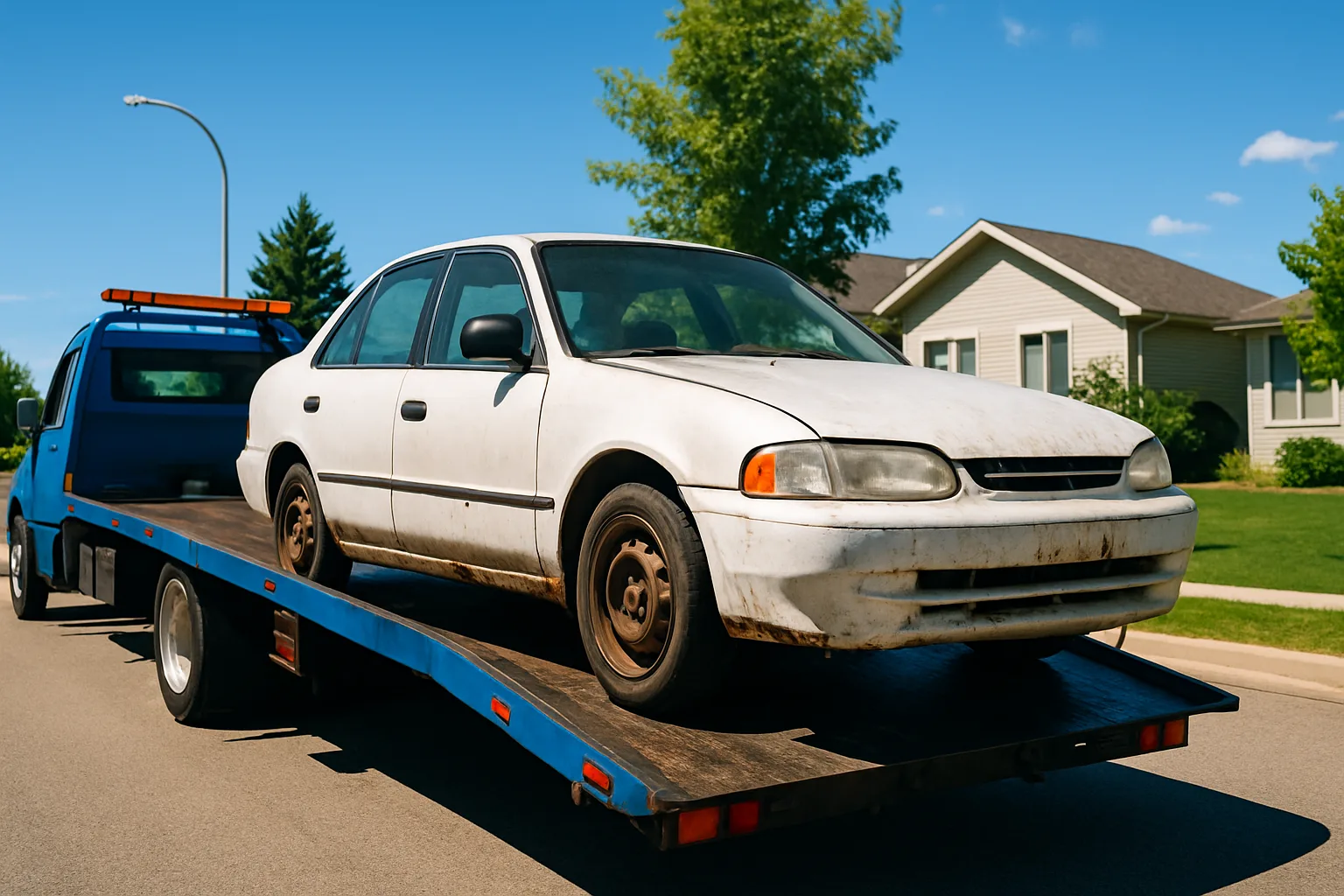
That rusted pickup sitting in your driveway isn't just an eyesore — it's worth money. Thousands of car owners across Alberta let salvage vehicles collect dust because they don't know how the process works. If you've been searching for cash for cars Fort McMurray and wondering where to even start, this guide breaks it down step by step. No guesswork. No surprises.
Junk car removal sounds complicated. It isn't. The process is straightforward when you know what to expect, and platforms like SMASH are changing how sellers connect with vetted buyers — so you stop leaving money on the table before you've even made a phone call.
---Step 1: Figure Out What Your Junk Car Is Actually Worth
Most people underestimate their vehicle's value. Even a non-running, collision-damaged car has recoverable value in its steel, aluminum, copper wiring, catalytic converter, and reusable parts. Before you accept the first offer that lands in your inbox, you need a baseline.
Your car's scrap value depends on several factors:
- Curb weight: Heavier vehicles — full-size trucks, SUVs, vans — carry more ferrous metal and typically command higher scrap payouts.
- Current scrap metal prices: Steel and aluminum prices shift week to week. What your neighbour got six months ago isn't what you'll get today. Always check current rates before accepting a quote.
- Condition of high-value components: A functioning catalytic converter, a salvageable engine, or intact non-ferrous parts can significantly increase what buyers will pay.
- Vehicle age and make: Some older North American models carry valuable cores that buyers actively hunt for.
If you want to understand your vehicle's ballpark value before talking to anyone, a scrap car value calculator Ontario free search will surface tools that use weight estimates and current regional metal pricing to give you a rough number. These tools won't replace a real quote, but they'll stop you from being lowballed. You can also get a free car valuation through cashfor-cars.ca to get a number grounded in actual market conditions.
Price disclaimer: Scrap metal prices fluctuate based on global commodity markets. Always verify current rates before finalizing any sale.
---Step 2: Gather Your Vehicle Documents Before Anyone Shows Up
This is the step most people skip — and it slows everything down. Before you book a pickup or accept a quote, locate your paperwork. Missing documentation can delay your payout or give a buyer leverage to renegotiate the price at the last minute.
Here's what you'll typically need:
- Certificate of Title: Proof you own the vehicle. In Alberta, this is your vehicle registration or title document issued through Alberta Transportation.
- Government-issued ID: Standard requirement for any vehicle sale transaction.
- Bill of Sale (if required by the buyer): Some buyers and recyclers require a signed bill of sale, especially for salvage or deregistered vehicles.
- Release of Liability: Once the car leaves your property, you want documentation proving the transfer of ownership. This protects you from parking tickets, insurance claims, or liability issues down the road.
If you've lost your title, Alberta has a process for obtaining a replacement through the province's vehicle registry. It takes time, so start that process early rather than scrambling once a buyer is already at your door.
---Step 3: Get Multiple Quotes — Not Just One
This is where most Fort McMurray sellers lose money. They call one buyer, hear a number that sounds reasonable, and take it. That's the old way. One call, one price, no competition.
The problem: you have no idea if that number is fair. You're not getting price discovery — you're getting whatever a single buyer feels like offering that day.
The better approach is to get your vehicle in front of multiple vetted buyers at once. That's exactly what platforms like SMASH do — they put your load or vehicle in front of a competitive buyer network, so the market sets the price rather than a single operator with no incentive to be generous.
When you're collecting quotes, keep track of:
- Whether the quote includes free towing or deducts a tow fee
- Whether it's a flat rate or weight-based payout
- How quickly the buyer can arrange pickup
- What payment method they use — cash, e-transfer, cheque
Don't accept verbal commitments as final. Get the offer in writing before you agree to anything. A buyer who won't put a number in writing isn't a buyer you want to work with.
---Step 4: Schedule Pickup — What to Expect on the Day
Once you've accepted an offer, pickup scheduling is usually fast. Most reputable junk car buyers operating in Fort McMurray and across Alberta can arrange towing within one to three business days. Some offer same-day pickup depending on their schedule and your location.
Here's what a typical pickup day looks like:
- The tow truck arrives at your address. You don't need to do anything except have the car accessible — driveway, street, or yard.
- The driver inspects the vehicle. They'll verify it matches what you described. If you said the engine is seized and it is, you're fine. If the condition is different from what you described, expect a renegotiation conversation.
- You hand over the keys and paperwork. Title transfer happens at this point. Sign the bill of sale if required.
- You receive payment. Depending on the buyer, this is cash on the spot, an e-transfer, or a cheque. Clarify payment method before pickup day — not during it.
- The vehicle gets loaded and leaves. That's it. Your driveway is clear.
One thing worth doing before the truck arrives: remove any personal belongings from the vehicle. Check the glove box, under seats, trunk, and any storage compartments. Once the car is gone, getting back inside it isn't an option.
---What Happens to Your Car After It Leaves Your Property
Understanding what happens downstream can help you ask better questions — and get a better price. After a scrap car gets hauled away, here's the typical flow:
First, fluids are drained and handled as hazardous waste — oil, coolant, transmission fluid, brake fluid. Reputable recyclers do this compliantly. If a buyer can't tell you how they handle fluids, that's a red flag.
Next, salvageable components get pulled and inventoried. Catalytic converters, alternators, starters, mirrors, doors, and electronics all have secondary market value. The more of these your vehicle has, the more room there is for a buyer to pay you more.
What's left — the steel body, frame, and structural components — goes to the shredder. That material enters the ferrous scrap market, where it's weighed, graded, and sold to mills. Scrap metal prices today directly influence what you get paid at the front end of this chain. When steel prices are up, buyers have more room. When they're down, margins tighten and offers follow.
That's exactly why checking current market pricing before you sell matters. You can read car selling tips and market updates on the cashfor-cars.ca blog to stay current on what's happening in the Canadian scrap vehicle market.
---How to Maximize Your Payout When You Sell Your Junk Car
Selling a junk car isn't complicated, but a few smart moves can mean a meaningfully better outcome.
Be honest about condition. Inflating the vehicle's condition wastes your time and the buyer's. An experienced buyer will know the moment they see the car. Accurate descriptions build trust and prevent renegotiations at pickup.
Know what you have before you sell it. If your vehicle has a catalytic converter, find out roughly what it contains — palladium, platinum, rhodium all carry real value. Selling a car without knowing what the cat is worth can mean you're giving away money. Searching how much is my salvage car worth with your VIN in hand will surface more specific data.
Time your sale strategically. Scrap metal markets are cyclical. Prices shift based on global steel demand, North American manufacturing output, and seasonal factors. If prices are currently low and you're not in a rush, waiting for a market uptick could improve your payout. If you need the car gone now, get competitive quotes and move.
Use competitive platforms. Instead of calling one local buyer and hoping for the best, get your vehicle in front of multiple buyers simultaneously. This is the core of what SMASH was built to do — and it applies whether you're selling one car or a yard full of inventory. More buyers competing for your vehicle means better price discovery. That's not a promise of a higher price — it's just how competition works.
If you're ready to move, get cash for your car in Canada through cashfor-cars.ca. The process is straightforward, the quotes are real, and there's no subscription or upfront fee.
---Frequently Asked Questions
Q: How much can I get for a junk car in Fort McMurray?
It depends on your vehicle's weight, condition, and current scrap metal prices. Heavier vehicles like full-size trucks and SUVs generally pay out more than smaller passenger cars. Get at least two to three quotes before accepting an offer — prices vary between buyers. Check current market rates before committing, as scrap metal prices fluctuate.
Q: Do I need a title to sell a junk car in Alberta?
In most cases, yes. Proof of ownership is required to legally transfer a vehicle in Alberta. If you've lost your title, you can apply for a replacement through an Alberta Registry agent. Start this process early — it can take time and delays your sale if not handled upfront.
Q: Is there a scrap car value calculator I can use for free?
Yes. Searching for a scrap car value calculator Ontario free or Alberta-specific tools will surface calculators that estimate value based on vehicle weight and regional metal prices. These are estimates — not final offers — but they give you a useful baseline before talking to buyers.
Q: How fast can I get a junk car picked up in Fort McMurray?
Most reputable buyers operating in Fort McMurray and across Alberta can arrange towing within one to three business days of accepting an offer. Some buyers offer same-day or next-day pickup depending on availability. Confirm the timeline when you accept the quote so you're not left waiting without a clear schedule.
Q: Do I get paid before or after the car is towed?
Payment typically happens at pickup — either cash on the spot, e-transfer, or a cheque. Clarify the payment method before the tow truck shows up. Never hand over your title or keys without receiving confirmed payment. If a buyer asks you to hand over the vehicle before payment is processed, that's a red flag.
---If you're sitting on a vehicle you don't need anymore, the process is simpler than most people think. Know what you have, get competitive quotes, have your paperwork ready, and choose a buyer who's transparent about pricing and process. That's it. Head to cashfor-cars.ca and get a free quote — it's the fastest way to turn a parked problem into cash in hand.
Stay current on scrap metal market conditions and industry news by following SMASH on LinkedIn — useful for anyone selling vehicles or scrap in Canada's fast-moving recycling market.