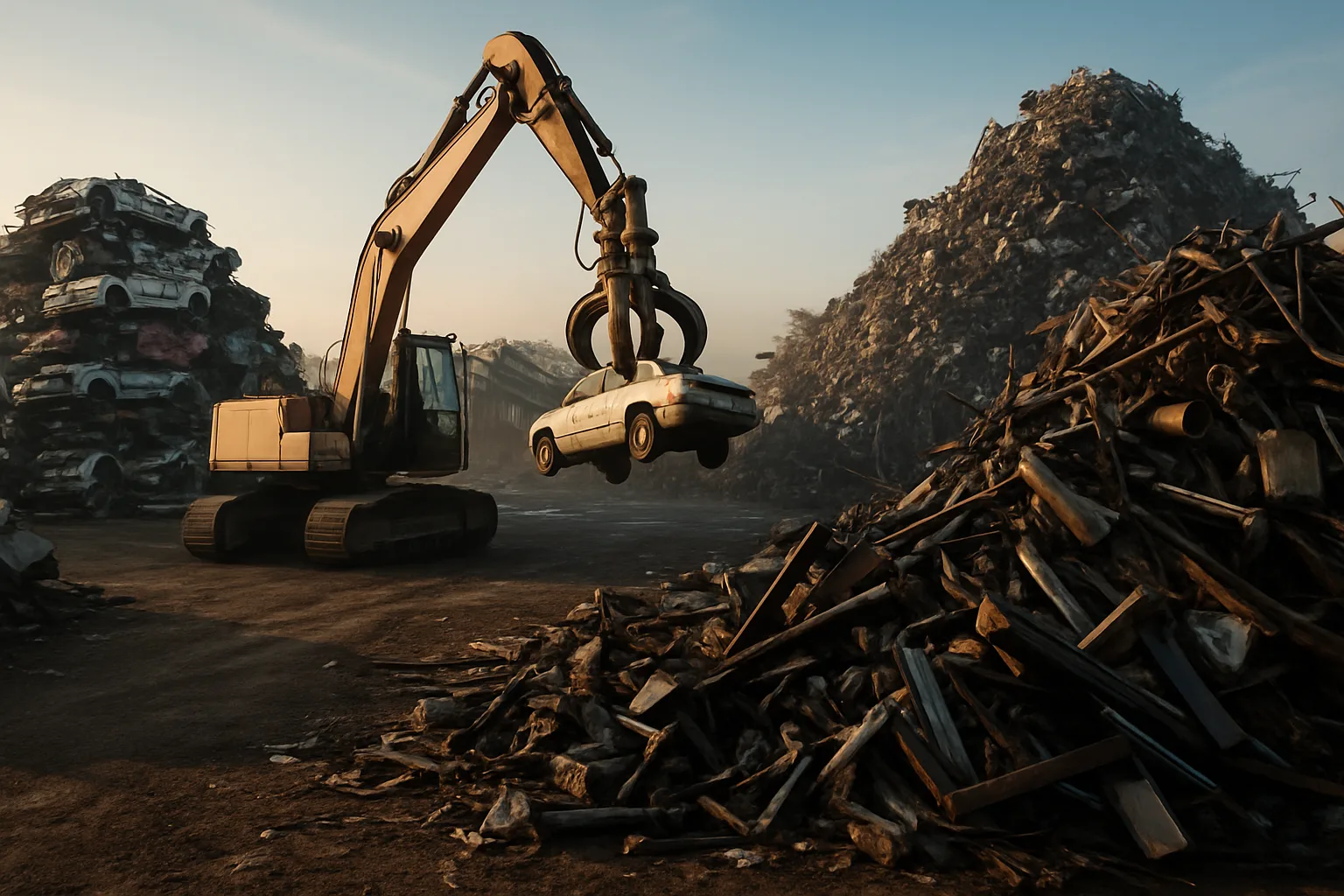
Most cars in Canada will spend their final days sitting in a driveway, bleeding rust onto the pavement. Their owners know they should do something — but they don't know where to start. If you're wondering what your old vehicle is actually worth and how services that we buy junk cars Hamilton owners rely on actually work, this guide walks you through the full picture — from the day a car rolls off the assembly line to the moment it gets crushed into a bale of steel.
Understanding this lifecycle doesn't just satisfy curiosity. It helps you make smarter decisions about timing, pricing, and who to trust when it's time to let your vehicle go.
---Stage One: Manufacturing — Thousands of Parts, Tonnes of Metal
A typical passenger car contains roughly 900 kg to 1,400 kg of steel, depending on the make, model, and year. Add aluminum, copper wiring, lead in the battery, and precious metals in the catalytic converter, and you're looking at a machine that's essentially a mobile metal deposit. Automakers source raw material — some of it recycled scrap from the previous generation of vehicles — press it into body panels, cast it into engine blocks, and assemble it into something that will eventually return to that same raw-material state.
This is the part most drivers never think about: the car you buy new is partly made from cars that were scrapped before it. The recycling loop is built into the industry. When your vehicle eventually reaches the end of its road life, the materials inside it don't disappear — they get reclaimed, reprocessed, and put back into production.
- Steel and iron: Makes up the majority of a vehicle's weight — body, frame, suspension, engine components
- Aluminum: Found in wheels, hoods, engine blocks on newer vehicles
- Copper: Wiring harnesses, motor windings, radiator cores
- Precious metals: Platinum, palladium, and rhodium in catalytic converters
- Lead: Battery, some wheel weights
- Plastic and rubber: Non-recoverable for metal recycling, but managed through specialty streams
Stage Two: Working Life — Depreciation Runs Fast
A new car loses a significant chunk of its value the moment it's driven off the lot. By the time it's five years old, the retail value has dropped substantially. By ten to fifteen years, mechanical wear, rust, and the cost of repairs often exceed what the car is worth on the open market. This is the inflection point — the moment when selling or scrapping starts making more financial sense than keeping the vehicle running.
In Ontario, road salt accelerates that corrosion timeline significantly. Hamilton, in particular, sees vehicles that commute on salt-heavy roads through long winters. Frames rust from the inside out. Brake lines corrode. Fuel lines fail. What looks like a functioning vehicle from the outside may have significant structural compromise underneath. Buyers who know what they're looking for — and scrap yards that assess vehicles for metal value — factor this in immediately.
This is why waiting too long to sell can cost you. A car that was worth a reasonable amount at year ten may be worth considerably less at year thirteen once rust has spread further and more components have failed.
Stage Three: The Decision Point — Repair, Sell, or Scrap?
At some point, every car owner faces the math. When the repair estimate exceeds the vehicle's market value — or when a car has been sitting undriven for more than a season — the calculus tips toward selling or scrapping. In 2026, that decision is easier to make than it's ever been, partly because the options for getting a fair price have improved dramatically.
Here's a simple framework for thinking through the decision:
- Get a realistic market valuation. Not what you paid, not what you wish it was worth — what a buyer will actually pay today. You can get a free car valuation without any commitment.
- Compare repair costs to sale value. If the repair bill is more than 50–60% of what the car would sell for, scrapping is usually the better financial move.
- Consider the non-ferrous content. Catalytic converters, copper wiring, and aluminum components add value beyond basic steel weight. A vehicle with an intact cat may be worth more than you'd expect.
- Factor in carrying costs. Insurance, storage, or just the mental overhead of a car you're not driving — those are real costs.
Platforms like SMASH are changing how scrap buyers and recyclers see vehicle inventory. By bringing competitive bidding to the scrap and recycling space, they make it easier for sellers to understand what their material is actually worth on the open market — rather than accepting a single number from a single buyer with no context.
Stage Four: Scrap Car Removal and What Happens After Pickup
Once you've decided to sell your scrap vehicle, the physical process moves quickly — or it should. Legitimate scrap car removal Hamilton services come to you, handle the towing, and either pay you on the spot or settle payment the same day. You hand over the title, they load the vehicle, and you're done. No negotiations, no delays, no mystery.
What happens after pickup is where it gets interesting from a recycling standpoint. The vehicle typically goes through a depollution process first — fluids drained (coolant, brake fluid, transmission fluid, oil), battery removed, airbags discharged, and tires pulled. Mercury switches and other hazardous components are extracted before anything gets crushed.
After depollution, the car either goes to an auto salvage yard — where usable parts are pulled and resold — or straight to a shredder. The shredder reduces the vehicle to fist-sized fragments in minutes. A downstream sorting process separates steel (which goes to a steel mill), aluminum, copper, and other metals. The residual fluff — foam, plastic, glass fragments — is managed separately.
For Hamilton scrap metal services, this process is well-established. Hamilton has been a steel town for over a century. The infrastructure for processing ferrous and non-ferrous scrap is deeply embedded in the region's industrial base, which is part of why scrap car removal in this area tends to be efficient and professionally handled.
What's Your Scrap Car Actually Worth? Understanding Scrap Car Value Per Ton
This is the question everyone wants answered. The honest answer: it depends. Scrap metal prices fluctuate with global commodity markets, local demand, and the composition of the vehicle itself. Scrap car value per ton for shredded steel is one component — but your vehicle's total value also reflects what else it contains and whether salvageable parts are present.
A rough breakdown of what factors influence scrap car value:
- Vehicle weight: Heavier vehicles (trucks, SUVs, vans) typically return more in raw metal value than small sedans
- Current steel prices: Steel trades on commodity markets — prices shift week to week
- Non-ferrous content: Aluminum, copper, and catalytic converter precious metals can significantly boost total value
- Condition of the cat: Intact catalytic converters with high precious metal content are worth meaningful money. Stolen cats — a growing problem across Ontario — eliminate that value entirely
- Completeness of the vehicle: A stripped shell is worth less than a complete car, all else being equal
- Location: Transportation distance affects what a buyer can actually offer
Disclaimer: Scrap metal and vehicle prices fluctuate with commodity markets. Always check current rates before making decisions. The figures and factors above are general guides, not guaranteed values.
If you want to understand what the market actually looks like before you commit, getting a sell car for scrap quote from a verified buyer is the right move. One quote from one buyer is a data point. Multiple quotes are price discovery. Platforms that connect sellers with vetted buyers — the way SMASH does in the B2B recycling space through Canada's B2B scrap recycling marketplace — reflect how the industry is moving toward transparency and competition over guesswork.
Selling Your Scrap Car Online: What to Expect in 2026
The process of getting a quote, confirming a pickup, and receiving payment has moved substantially online. For car owners in Hamilton and across Ontario, that means you can sell scrap metal online — or at least initiate the process — without making a dozen cold calls to local yards. Most reputable services now allow you to submit vehicle details, photos, and VIN information digitally, get a quote, and schedule pickup within the same business day.
What to have ready when you reach out:
- Year, make, model, and trim
- VIN (Vehicle Identification Number)
- Current condition — does it run? Is it complete?
- Location for pickup (driveway, storage lot, etc.)
- Vehicle title or proof of ownership — required for legal transfer in Ontario
- Photos of the vehicle's current state
Having documentation ready speeds everything up. It also protects you — a buyer who asks for nothing before pickup is a red flag. Legitimate cash for cars Ontario services want title documentation to protect both parties. If you want to get cash for your car in Canada, starting with a clean paper trail is always the right call.
Want to learn more about getting the best value from your vehicle before you sell? Read car selling tips to understand the full process before you commit.
---Frequently Asked Questions
Q: How does 'we buy junk cars Hamilton' actually work — what's the process?
Most Hamilton-based junk car buyers follow a straightforward process: you submit your vehicle details online or by phone, receive a quote, agree on a pickup time, and hand over the title when they collect the car. Payment typically happens at pickup or same day. The whole process usually takes less than 48 hours from first contact to completed transaction.
Q: Do I need a title to sell my scrap car in Hamilton?
Yes. In Ontario, you need to provide proof of ownership (vehicle permit/title) to legally transfer a vehicle. Without it, a reputable buyer won't complete the purchase — and one that does should raise questions. If you've lost your title, ServiceOntario can help you obtain a replacement before you sell.
Q: What affects my scrap car's value the most?
Vehicle weight, the current price of steel, and whether the catalytic converter and non-ferrous metals are intact are the biggest factors. A complete, heavier vehicle in a high-steel-price environment will return more than a stripped shell in a soft market. Getting quotes from multiple buyers gives you the best picture of what your specific car is worth right now.
Q: How long does scrap car removal take in Hamilton?
Most reputable services in Hamilton can schedule pickup within one to three business days of confirming a quote. Same-day pickup is sometimes available depending on location and capacity. Have your vehicle accessible and paperwork ready to avoid delays.
Q: Is there a cost for scrap car removal, or is pickup free?
Most junk car buyers in the Hamilton area offer free towing and removal as part of the transaction — the value of the vehicle covers logistics. If a buyer is quoting you a price and then trying to deduct significant towing fees, get a second opinion. Transparent pricing means no surprise deductions at pickup.
---Every car on the road in Canada is on a one-way journey toward the scrap yard. The only question is whether you time the exit well — or let corrosion and depreciation make the decision for you. If your vehicle is sitting unused, costing you insurance money, and going nowhere, the smartest move is knowing what it's worth and acting on that information. Get cash for your car in Canada with a free quote at cashfor-cars.ca — no pressure, no commitment, just a real number for a real vehicle.
Follow SMASH on LinkedIn for weekly scrap metal market updates, industry insights, and recycling news across North America.