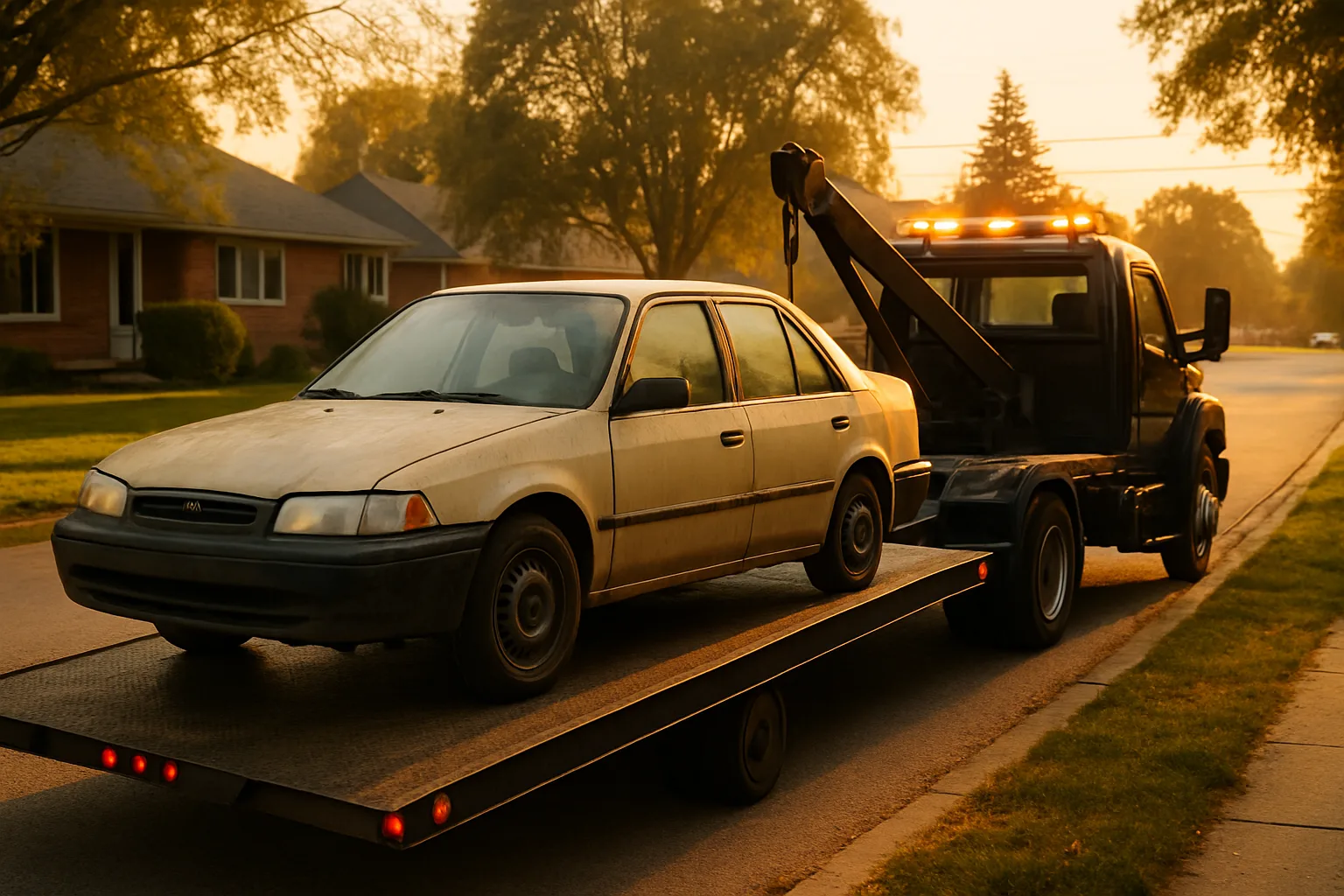
Most people assume their old car just gets crushed and forgotten. The reality is far more interesting — and far more valuable. When you cash for junk cars Etobicoke services properly handle your vehicle, up to 80% of that car gets recycled and re-enters the supply chain. Steel, aluminum, copper, catalytic converters — none of it disappears. It gets sorted, processed, and sold. The question is whether you see any of that value, or whether it all walks out the door with the tow truck.
This guide breaks down exactly what happens to a scrap car after pickup, why eco-friendly disposal matters more in 2026 than it did a decade ago, and how to make sure you're getting a fair return when you sell. Whether you're in Etobicoke, anywhere across Ontario, or beyond — this one's for you.
---Why Eco-Friendly Car Disposal Is a Bigger Deal Than You Think
A single end-of-life vehicle contains fluids, heavy metals, and materials that can cause serious environmental damage if improperly handled. We're talking about engine oil, transmission fluid, brake fluid, antifreeze, and refrigerants — all of which are toxic to soil and groundwater if they leach out of a vehicle sitting in a field or an unlicensed lot. The automotive recycling industry in Canada has tightened its standards significantly, and certified dismantlers now follow strict depollution protocols before any car is crushed or shredded.
Beyond the environmental angle, proper recycling is also good economics. Recycled steel requires significantly less energy to produce than virgin steel. Recycled aluminum uses a fraction of the energy that primary smelting demands. Every ton of scrap metal that gets properly processed is a ton of ore that doesn't need to be mined. When you choose a legitimate buyer over an unlicensed scrapper, you're not just protecting yourself — you're contributing to a cleaner supply chain.
- Fluids drained first: Coolant, oil, brake fluid, and refrigerants are extracted before any dismantling begins.
- Parts harvested: Usable components — engines, transmissions, alternators, doors — are pulled and resold.
- Catalytic converters removed: These contain platinum-group metals and are handled separately due to their high value.
- Tires and batteries recycled: Both have dedicated recycling streams; batteries are especially valuable for lead recovery.
- Body shredded: The remaining shell goes through a shredder, and ferrous and non-ferrous metals are magnetically and optically separated.
The Step-by-Step Recycling Process — From Your Driveway to the Mill
Understanding the process helps you ask better questions when you sell my car for cash Etobicoke. A buyer who can't explain their process or who refuses to give you documentation is a red flag. Here's what a legitimate, eco-certified disposal chain looks like:
- Vehicle assessment and pickup: A licensed buyer evaluates your car — make, model, year, condition, and weight — and gives you a cash offer. Reputable services handle scrap car removal near me requests with same-day or next-day pickup.
- Depollution: At the yard, all hazardous fluids are drained using certified equipment. This step is non-negotiable under provincial environmental regulations in Ontario.
- Parts dismantling: Technicians remove all reusable components. These get catalogued, tested, and either resold locally or listed on wholesale platforms.
- Catalytic converter removal and processing: Cats are logged by serial number, weighed, and sent to certified processors. Platforms like SMASH Recycling — where verified buyers bid on your metal help yards get competitive returns on high-value non-ferrous material like this.
- Hulk flattening and shredding: The depolluted shell gets crushed and fed into an industrial shredder. The output — called shredder fluff — is then processed to separate steel, aluminum, copper, and other materials.
- Commodity sale: Separated metals are bundled and sold to mills and smelters. The price you get for your scrap car is directly influenced by these downstream commodity prices.
Every step in this chain creates value. The more of that value a buyer retains, the more room they have to pay you fairly. When you get cash for your car in Canada through a buyer connected to legitimate downstream buyers, you're more likely to get a price that reflects what your car is actually worth — not just what a single buyer wants to pay.
What Makes a Car Recycler Eco-Friendly? How to Spot the Difference
Not every yard that offers cash for cars Ontario is operating to the same environmental standard. Some are licensed, audited, and compliant. Others are cutting corners — improperly disposing of fluids, stripping cars without documentation, or reselling parts without inspection. Here's how to tell the difference before you hand over your keys.
A certified auto recycler in Ontario will hold a valid business license and comply with provincial environmental rules. They'll give you a signed bill of sale, a receipt for the vehicle, and documentation that the car has been properly transferred out of your name. This matters for your insurance and for avoiding any future liability tied to the vehicle.
Green flags to look for:- They ask for your vehicle identification number (VIN) upfront
- They provide a written offer with a clear breakdown
- They handle title transfer documentation — and will work with you even if you want to sell car for scrap no title (some licensed buyers in Ontario can assist with lost title situations)
- They can confirm how and where your car's materials are processed
- Pickup is professional — uniformed driver, marked vehicle, proper equipment
- Cash-only with no paperwork
- No business address or verifiable contact information
- Price drops dramatically at pickup time
- They can't tell you anything about where the car goes after they take it
Why Selling Scrap Metal Online Gets You a Better Return
Here's what most car owners don't know: the price a yard pays you for your car is partly determined by the price they can get for the metal downstream. If a yard only has one buyer for their shredded steel or their non-ferrous stockpile, they're getting that buyer's price — full stop. If they have multiple buyers competing, the market decides the price. That competition flows upstream, and yards that sell well tend to pay better.
This is exactly the problem that sell scrap metal online platforms were built to solve. SMASH connects yards with a vetted network of buyers across North America. Instead of one phone call to one buyer, yards can run a proper auction — documented inventory, photo verification, competitive bids. More buyers means better price discovery. That's not a marketing line; it's just how markets work.
For car owners in Etobicoke or anywhere across Ontario, this matters because the yards using platforms like SMASH are the ones with the best downstream connections. They're also the ones most likely to give you an accurate, competitive quote on your vehicle — because they know what the metal is actually worth right now, not what it was worth last month.
If you want to dig deeper into how the scrap metal market works before you sell, read car selling tips on the cashfor-cars.ca blog — it covers pricing, timing, and what affects the value of your specific vehicle.
Selling Your Junk Car in Etobicoke: What You Need to Know Before You Call
Etobicoke has no shortage of scrap car buyers — the challenge is finding one that's legitimate, pays fairly, and handles the process cleanly. The western end of Toronto generates a steady stream of end-of-life vehicles, and the competition among buyers can work in your favour if you know how to navigate it.
Before you reach out to any buyer, gather this information:
- Year, make, model, and trim — affects parts value significantly
- Current condition — running vs. non-running, accident history, rust level
- Approximate weight — most passenger cars are between 1,200–1,800 kg
- Title status — have it ready, but ask if they work with no-title situations
- Your location in Etobicoke — pickup logistics affect the final offer
Get at least two or three quotes before you commit. The spread between the lowest and highest offer can be significant — especially for heavier vehicles or those with valuable components still intact. Don't leave money on the table by taking the first call you get. And once you're ready, get a free car valuation to see what your vehicle is worth today.
What Happens to Your Car's Catalytic Converter — And Why It Matters for Your Payout
If your car still has its catalytic converter intact, that's one of the most valuable components on the vehicle. Catalytic converters contain platinum, palladium, and rhodium — platinum-group metals that trade at significant premiums. A buyer who accounts for this in your quote is giving you a more accurate price. A buyer who ignores it is either keeping that value for themselves or doesn't have the downstream connections to realize it.
Legitimate yards log every catalytic converter they pull — make, model, serial number, and weight. This documentation is critical for compliance and for getting competitive offers from processors. The difference between a yard that tracks this properly and one that doesn't can be hundreds of dollars per unit. When you're selling a car with an intact cat, that value should show up in your offer. If it doesn't, ask why.
Transparency in the recycling chain — from your driveway to the shredder to the mill — is what separates a fair transaction from one where you're leaving money behind. That's true whether you're a yard operator dealing in volume or a car owner selling one vehicle in Etobicoke.
---Frequently Asked Questions
Q: How much cash can I get for a junk car in Etobicoke?
It depends on the vehicle's weight, condition, make, model, and the current scrap metal market. A typical end-of-life passenger car can range from a few hundred to over a thousand dollars depending on these factors. Get multiple quotes before committing, and make sure your buyer is accounting for valuable components like the catalytic converter.
Q: Can I sell my car for scrap with no title in Ontario?
Some licensed buyers in Ontario will work with you on lost or missing title situations. You'll typically need to provide proof of ownership through other documentation — a registration in your name, for example. Always confirm what a buyer requires before scheduling pickup, and make sure the transfer is properly documented to protect yourself from future liability.
Q: How quickly can I get scrap car removal near me in Etobicoke?
Most reputable buyers offer same-day or next-day pickup in the Etobicoke area. Once you agree on a price and confirm your address and availability, the process is usually fast. Have your ownership documents ready to hand over at pickup.
Q: Does eco-friendly disposal cost me more as the seller?
No. Certified recyclers don't charge you extra for proper disposal — it's part of how they operate. In fact, properly licensed yards often pay better because they have better downstream connections for the metals and parts they recover. Cutting corners on disposal is a sign of a marginal operation, not a premium one.
Q: What's the difference between selling to a private buyer and a scrap car buyer?
A private buyer pays for a vehicle they plan to drive or repair. A scrap buyer is paying for the weight, parts, and material value. If your car isn't driveable or is too far gone to repair economically, a scrap buyer is typically your best and fastest option. The transaction is simpler, pickup is usually free, and you get cash on the spot.
---Your old car has real value — in steel, in aluminum, in the parts still bolted to it. The recycling chain that handles it after pickup is more sophisticated than most people realize, and the buyer you choose determines how much of that value comes back to you. If you're in Etobicoke or anywhere across Ontario and you're ready to turn that sitting vehicle into cash, the process is straightforward when you work with the right people. Get cash for your car in Canada — head to cashfor-cars.ca for a free quote and see what your vehicle is worth today.
Stay sharp on scrap metal market trends and industry updates — follow SMASH on LinkedIn for insights that matter to anyone in the recycling and automotive dismantling space.