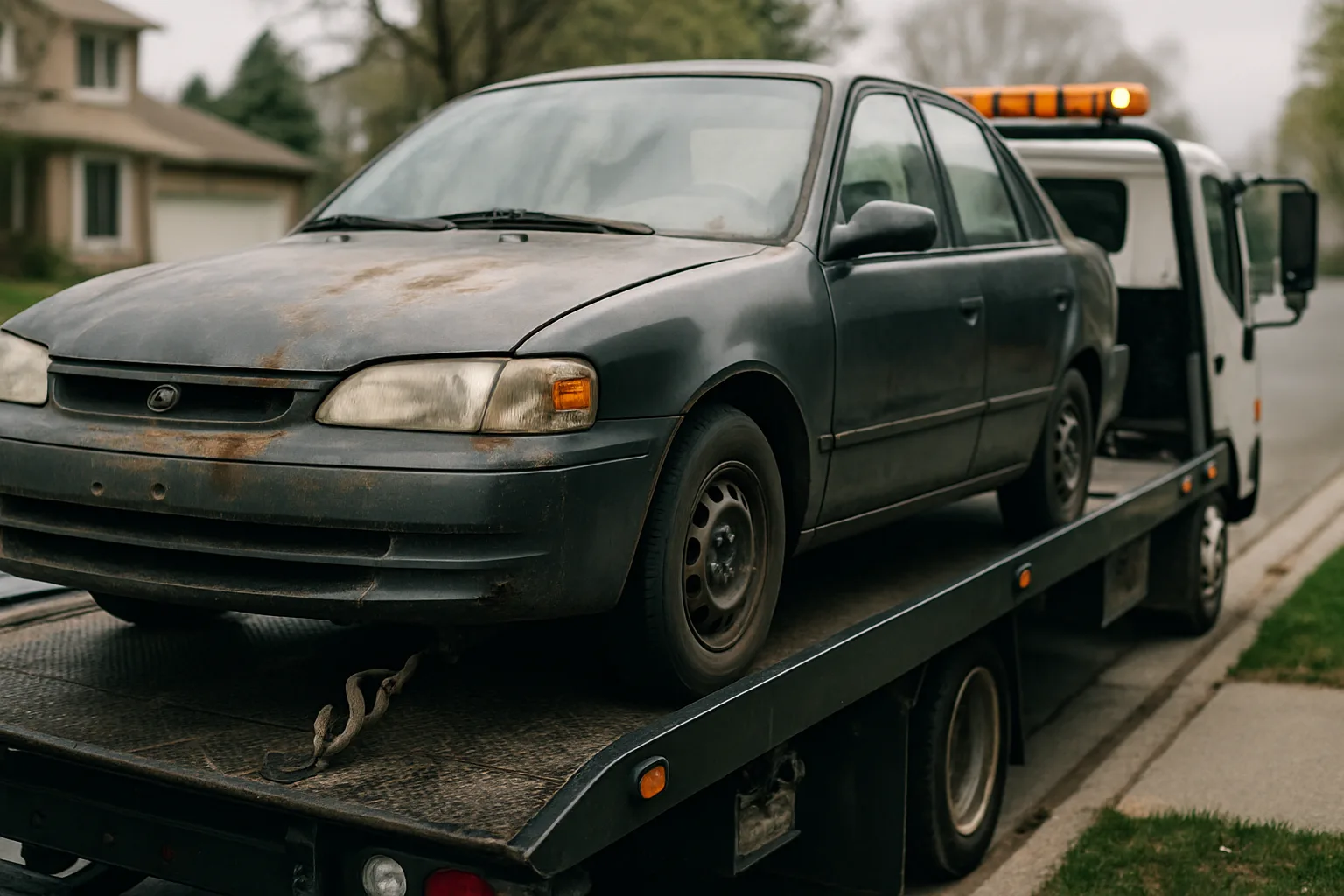
Most car owners think scrap prices are fixed. They aren't. The same vehicle sitting in your driveway today could fetch a meaningfully different number in January versus July — and if you're trying to sell my car for cash Markham, that timing gap matters more than most people realize. Scrap metal markets move. Demand cycles. Buyer behaviour shifts with the calendar. Understanding why can help you make a smarter decision about when to let go of that old car — and how to make sure you're not leaving money on the table when you do.
This isn't theory. It's how the scrap industry actually works, and it plays out across Ontario every single year.
---Why Scrap Car Prices Don't Stay the Same Year-Round
Steel prices — the backbone of scrap car value — are global commodities. They respond to manufacturing demand, energy costs, shipping rates, and raw material supply. None of those variables stay static. Add Canadian winters to the equation, and you get a domestic market that has its own seasonal rhythm layered on top of everything else.
For sellers, this creates real opportunity — and real risk. A car that you wait too long to sell can drop in value not because of what you did or didn't do, but simply because of when steel mills are running light or when processing yards in Ontario are overwhelmed with winter inventory. Knowing the pattern helps. If you want to get cash for your car in Canada at the best possible moment, the calendar is part of your strategy.
The Factors That Drive Seasonal Price Swings
- Steel demand cycles: Manufacturing ramps up in spring and summer. Mills buy more scrap to feed production. Higher demand generally supports stronger prices.
- Yard inventory levels: After winter, yards are flush with vehicles that sat through the cold months. High supply can soften what buyers are willing to pay per unit.
- Fuel and shipping costs: Moving crushed cars is expensive. When diesel prices spike — which tends to happen in warmer months — transport costs affect what processors net, which can suppress what they offer sellers.
- Catalytic converter and non-ferrous metal prices: Platinum group metals (PGMs) inside catalytic converters have their own market volatility, often independent of steel. A car with a high-value cat can shift in worth based on PGM spot prices, not just the body weight.
- Export demand: Processed scrap metal that moves through ports to overseas buyers follows shipping container availability and global demand — both of which fluctuate seasonally.
Winter in Ontario: What Really Happens to Scrap Car Value
Winter hits the scrap car market from multiple directions at once. On one hand, more vehicles get written off after accidents on icy roads — that increases supply hitting yards. On the other hand, processing slows down because outdoor operations are harder in sub-zero temperatures, transport is less reliable, and yard staff capacity drops. It's a complicated push-pull.
For sellers in Markham and across Ontario, the practical result of winter is often this: yards are busy accepting vehicles but may be slower to process them, and price competition between buyers can soften when logistics are strained. If you're sitting on a car that barely starts and you want it gone before February, you might take a lower offer just to get it off your property. That's the trap. You're making a convenience decision, but it's being priced like a desperate one.
The smarter play? Get multiple quotes before committing. A platform like smashrecycling.ca connects sellers with vetted buyers who compete for loads — which means the market sets your price instead of one buyer's low-ball offer setting it. More competition, better price discovery. That's how it works.
---Spring and Summer: The Stronger Selling Window for Scrap Cars
Late March through August tends to be the stronger window for scrap car sellers in Ontario. Here's why: steel mills are running harder to serve construction and manufacturing demand. Recycling yards are processing faster. Buyers are actively looking for inventory. The used parts market also heats up — people are fixing vehicles after winter damage, which means demand for salvageable components spikes.
If your vehicle still has working parts — a solid engine block, a viable transmission, usable body panels — spring and early summer is the window when those components carry more value. A junk car buyer in Canada isn't just buying scrap weight. They're buying anything that can be resold before it gets crushed. And in summer, that secondary market is active.
For Markham sellers specifically, the seasonal pattern also interacts with local traffic. As construction season opens across the Greater Toronto Area, demand for processed metal stays high. That regional industrial activity supports scrap prices in ways that rural Ontario markets don't always see. If you've been putting off the call to sell my junk car Markham, spring or early summer is historically a better time to make that move than mid-winter.
---How to Use a Scrap Car Value Calculator and Why It Helps
One of the most common mistakes sellers make is walking into a conversation with a buyer without any baseline. If you don't know what your car is roughly worth before you pick up the phone, you can't evaluate whether an offer is fair. That's where a scrap car value calculator Ontario free tool becomes genuinely useful — not as a definitive price, but as a starting reference point.
These calculators factor in:
- Vehicle make, model, and year
- Curb weight (heavier vehicles = more scrap metal by volume)
- Current steel prices in your region
- Condition (does it run? Are major components intact?)
- Whether a catalytic converter is present (cats add significant value in many cases)
No calculator replaces a real quote. But walking into a sale with a rough number arms you to push back if a buyer comes in low. Platforms that help you get a free car valuation before you commit are worth using. Knowledge is leverage in this market — always.
One thing to note: calculator outputs are based on current data at the moment you check them. Metal prices shift daily. A quote you got in March might be meaningfully different from one in October. Always check current rates before deciding.
Disclaimer: Scrap metal prices fluctuate based on market conditions, location, and vehicle specifics. Always verify current pricing before making decisions.---
What SMASH Does Differently for Scrap Car Sellers
Most car owners in Ontario go through the same process: call one yard, get one number, take it or leave it. That's not a market. That's a monologue. And when seasonal conditions are already putting pressure on prices, a single-buyer approach means you absorb all the downside and none of the upside when competition would have worked in your favour.
SMASH runs differently. As a B2B scrap metal marketplace, SMASH connects sellers with vetted buyers who compete through an auction format. That competition does real work — it reveals what the market is actually willing to pay instead of what one buyer wants to pay. For a seller timing a sale around seasonal price conditions, having multiple buyers in the room (even a virtual one) changes the outcome of the negotiation.
The platform also handles documentation — photo records, inventory tracking, auto-invoicing — which gives buyers more confidence in what they're bidding on. More confidence means stronger bids. And stronger bids mean better outcomes for sellers who've done the work of documenting their vehicle properly. If you want to read car selling tips before you start the process, getting familiar with documentation basics is a smart first step.
No subscription fees. SMASH only wins when the seller wins. That alignment matters, especially when market conditions are shifting and you need a buyer who's actually motivated to close.
---Timing Your Sale: A Practical Seasonal Guide for Ontario Sellers
You can't always time a sale perfectly — sometimes the car dies and the decision gets made for you. But if you have flexibility, here's a general framework based on how the Ontario market tends to behave:
- January–February: Traditionally slower. Yard capacity is strained, transport is harder, and buyer competition can soften. Sell now only if you need to.
- March–May: The market starts moving again. Processing picks up, steel demand builds, and buyers are looking to fill their pipelines. A solid window for sellers.
- June–August: Peak activity for many buyers. Construction-driven demand supports steel prices. Good time to sell if your vehicle has intact salvageable parts.
- September–October: Still reasonably active. Buyers are moving inventory before winter slows things down. A reasonable selling window.
- November–December: Market starts tightening again. Not the strongest time to sell, but yard volume picks up from accident vehicles. Get multiple quotes regardless.
Wherever you land in the calendar, the principle stays the same: more quotes beats fewer quotes, every time. Don't let one offer define your car's value, especially in a market that shifts with the weather.
If you're in Markham or anywhere across Ontario and you're ready to move on a vehicle that's been sitting too long, the best first step is getting a real number. Head to cashfor-cars.ca and get cash for your car in Canada — a free quote, no pressure, no guessing.
---Frequently Asked Questions
Q: Does the season actually affect how much I get when I sell my car for cash in Markham?
Yes, it can. Scrap metal prices — especially steel — fluctuate with manufacturing demand, which has seasonal patterns. Spring and summer tend to see stronger buyer activity and processing volume in Ontario. That said, the biggest factor in any individual sale is how many buyers are competing for your vehicle, not just the time of year.
Q: What's the best time of year to sell my junk car in Markham?
Spring through early fall is generally the more active window for scrap car sales in Ontario. Yards are processing faster, steel demand from construction is higher, and the used parts market is more active. If you have flexibility, avoid mid-winter unless you're working with a platform that brings you multiple buyer offers regardless of season.
Q: Is a scrap car value calculator Ontario free tool actually useful?
It's a useful starting point, not a final price. These tools factor in vehicle weight, make and model, current steel prices, and condition to give you a rough baseline. Always follow up with actual quotes from buyers — and get more than one. Market prices shift daily, so treat calculator results as a directional guide, not a guarantee.
Q: Do I need a title to sell my scrap car in Ontario?
Generally, having your vehicle's title or ownership document makes the process faster and smoother. Requirements can vary by buyer and province. In Ontario, most buyers will want proof of ownership. If you don't have the title, contact a licensed buyer directly to understand your specific options before you commit.
Q: How does SMASH help me get a better price for my scrap car?
SMASH operates as a B2B scrap metal marketplace where vetted buyers compete through an auction format. Instead of accepting one buyer's offer, you get competitive bids — which gives the market a chance to price your vehicle accurately. More buyers means better price discovery. There are no subscription fees; the platform only benefits when you do.
---Stay current on scrap metal market trends and industry insights by following SMASH on LinkedIn: linkedin.com/company/scrap-metal-auction-sales-hub.