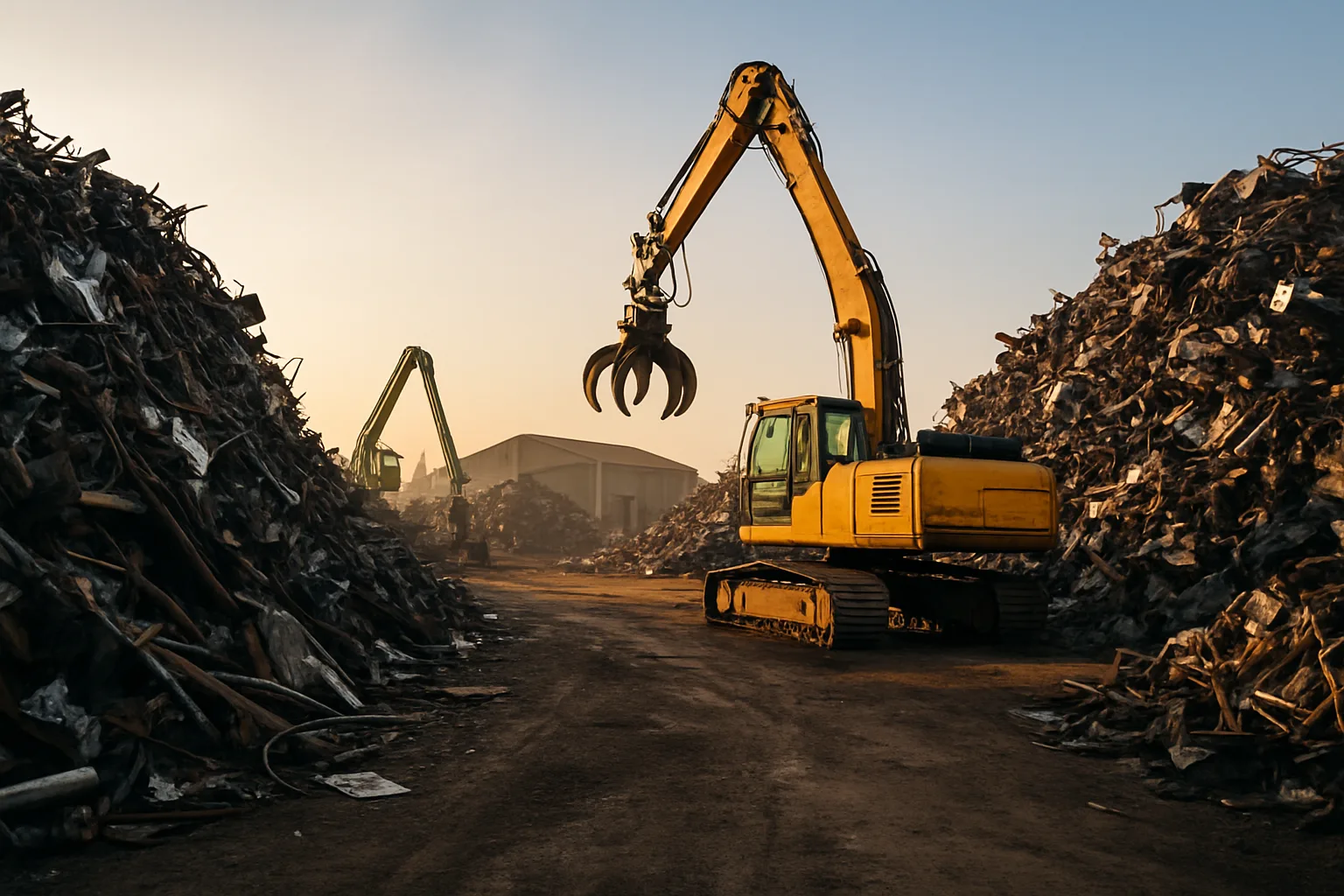
Junkyard, Salvage Yard, Auto Recycler — They're Not the Same Thing
Most car owners use these three terms like they're interchangeable. They're not. And if you're sitting on an unwanted vehicle in Scarborough trying to figure out who to call, the difference matters — especially when cash for junk cars Scarborough searches lead you to wildly different places with wildly different offers.
Here's the breakdown most sites skip. Understanding what each type of facility actually does helps you make a smarter decision, get a better price, and avoid leaving money on the table.
What Is a Junkyard — And Why the Name Is Outdated
The word "junkyard" conjures a lot: rusted fenders, stacked car towers, a guy with a German Shepherd. That image isn't wrong, but it's incomplete. A traditional junkyard accepts end-of-life vehicles — cars that are totalled, crushed, or mechanically dead — and stores them, often outdoors, until the metal is processed or sold in bulk.
The key distinction is that most classic junkyards are primarily in the scrap metal business. They're not focused on parting out vehicles or reselling components. They weigh your car, apply a rate per tonne based on current scrap steel prices, and that's your offer. Simple. Fast. But not always optimal.
In Ontario, many older scrap dealers still operate on this model. If your car is completely stripped — no catalytic converter, no working parts, just a shell — a junkyard-style buyer may be exactly what you need. But if your vehicle still has usable components, you're likely leaving money behind by going this route first.
What Makes a Salvage Yard Different
A salvage yard does something the traditional junkyard doesn't: it dismantles vehicles and resells usable parts. This is also called a "pull-a-part" or "auto dismantler" operation. You drive in, pay a small entry fee, and pull the part you need off a car yourself. Or staff do it for you at a premium.
For sellers, this matters because a salvage yard values your car differently. They're not just looking at steel weight. They're looking at:
- Make, model, and year — because demand for OEM parts varies widely
- Condition of specific components (engine, transmission, doors, catalytic converter)
- How many of that same model they already have on the lot
- Resale velocity — how fast they can move those parts
This means a 2016 Honda Civic with a seized engine might fetch more at a salvage yard than a junkyard, because the doors, seats, airbag sensors, and alternator still have value to someone restoring an identical car. Your scrap car value isn't just about weight — it's about what the market wants off it.
If you want to use a scrap car value calculator Ontario tool to get a preliminary estimate, keep in mind that most of those tools model for steel weight and scrap rates. They don't account for parts demand. A human buyer who actually looks at the car will often price it higher — or lower — depending on condition.
Auto Recyclers: The Modern, Regulated Version
Auto recyclers are the evolution of both the junkyard and the salvage yard. They operate under stricter environmental regulations, handle fluid recovery (oil, coolant, brake fluid, refrigerant) before dismantling, and often have digital inventory systems so buyers can find parts without walking the lot.
In Ontario, licensed auto recyclers must comply with provincial environmental standards around fluid disposal, tire management, and end-of-life vehicle processing. This isn't optional — it's regulated. So when you're looking to sell my car for cash Scarborough, working with a licensed auto recycler gives you more confidence that the transaction is above board and that your vehicle is being disposed of responsibly.
Here's what separates a quality auto recycler from a junk buyer operating out of a gravel lot:
- Documentation — You get a bill of sale, proof of transfer, and your liability for the vehicle ends cleanly.
- Environmental compliance — Fluids are drained and handled properly before the car is crushed or parted.
- Accurate valuation — They assess your car on multiple dimensions, not just weight.
- Towing and pickup — Most will offer scrap car removal Scarborough at no cost if the car is within their service radius.
Platforms like smashrecycling.ca connect sellers with vetted buyers — including licensed auto recyclers — and create competitive pricing through an auction format. That competition is how you find out what your car is actually worth to the market, not just what one buyer is willing to offer on a Tuesday afternoon.
Which One Should You Call If You're in Scarborough?
Let's be direct. If you're in Scarborough with an unwanted car and you want cash fast, here's how to think through your options:
Call a junkyard if:
- The car is stripped, crushed, or has zero usable parts
- You want same-day removal with no questions asked
- You're prioritizing speed over price
Go to a salvage yard if:
- Your car has specific high-demand parts (cats, transmissions, late-model doors)
- You're willing to negotiate on individual components
- You have time to shop the offer around
Work with a licensed auto recycler or platform like SMASH if:
- You want full price discovery across multiple buyers
- You want documentation and a clean transfer of ownership
- You want free pickup without haggling over towing fees
- You want to get cash for your car in Canada without the runaround
The honest answer for most Scarborough car owners? Skip the one-call, one-offer approach. More buyers means better price discovery. That's not a slogan — it's how markets work.
How SMASH Fits Into the Picture for Sellers
SMASH is built for scrap and salvage — not just for big industrial yards, but for individual sellers who want real competition on their vehicle. Instead of calling one buyer and guessing whether the offer is fair, you list the car with documentation (photos, VIN, condition notes) and let vetted buyers compete.
That process — transparent, auction-based, no subscription fees — is how the platform creates value. We only win when you do. If your car doesn't move, neither does our commission. That aligns incentives in a way a single cold call to a local buyer simply doesn't.
Want to understand how platforms like SMASH can help you get a free car valuation before you commit to any offer? That's the right starting point. Know your number before you pick up the phone.
For more practical guidance on maximizing your return when selling an unwanted vehicle, read car selling tips written specifically for Canadian car owners navigating this process for the first time.
The Bottom Line on Terminology — and Your Next Move
Junkyard, salvage yard, auto recycler — each term describes a different business model, a different valuation approach, and a different experience for the seller. None of them is automatically better. The right choice depends on your car's condition, your timeline, and how much you care about getting a fair price versus getting the fastest possible transaction.
What you shouldn't do is assume they're all the same and take the first offer you get. The scrap and salvage market in Ontario is active, and competition — whether through a platform or by shopping multiple buyers yourself — almost always surfaces a better number than a single call does.
If you're ready to stop guessing and start getting real offers on your unwanted car, the process is simpler than most people expect. Get a free quote at cashfor-cars.ca and find out what your vehicle is actually worth to buyers who are actively competing for it today.
Disclaimer: Scrap metal and used vehicle prices fluctuate based on commodity markets, demand, and regional conditions. Always check current rates before accepting an offer.
Frequently Asked Questions
Q: What's the fastest way to get cash for junk cars in Scarborough?
The fastest route is to contact a licensed buyer or platform that offers free pickup and same-day or next-day offers. Make sure you have your vehicle ownership documents ready — that speeds up the transfer process significantly. Platforms like SMASH connect you with multiple vetted buyers quickly, so you're not waiting on a single callback.
Q: Does a junkyard pay more than a salvage yard for my scrap car?
Not necessarily. A junkyard prices your car primarily on steel weight and current scrap metal rates. A salvage yard may pay more if your car has high-demand parts in good condition. The best approach is to get offers from both and compare — or use a platform that creates competition between multiple buyer types at once.
Q: How do I calculate my scrap car value in Ontario before calling a buyer?
Online scrap car value calculator tools in Ontario estimate based on vehicle weight and current steel prices. These give you a ballpark, but they don't account for parts demand, catalytic converter value, or condition premiums. Use them as a starting point, not a final number — and get a human assessment before you commit to any offer.
Q: Do I need to remove my plates before scrap car removal in Scarborough?
Yes. In Ontario, licence plates belong to the owner, not the vehicle. You should remove your plates before the car is picked up and either return them to a ServiceOntario location or transfer them to your next vehicle. Failing to do this can leave you on the hook for future plate-related fees.
Q: Is it legal to sell a car without a safety certificate in Ontario?
Yes — selling a vehicle "as is" to a scrap buyer, auto recycler, or salvage yard does not require a safety certificate. Safety certifications are required when selling a used vehicle for road use to a private buyer. Scrap and salvage transactions are exempt from this requirement.
---Stay current on scrap metal market trends and industry updates — follow SMASH on LinkedIn for weekly insights.