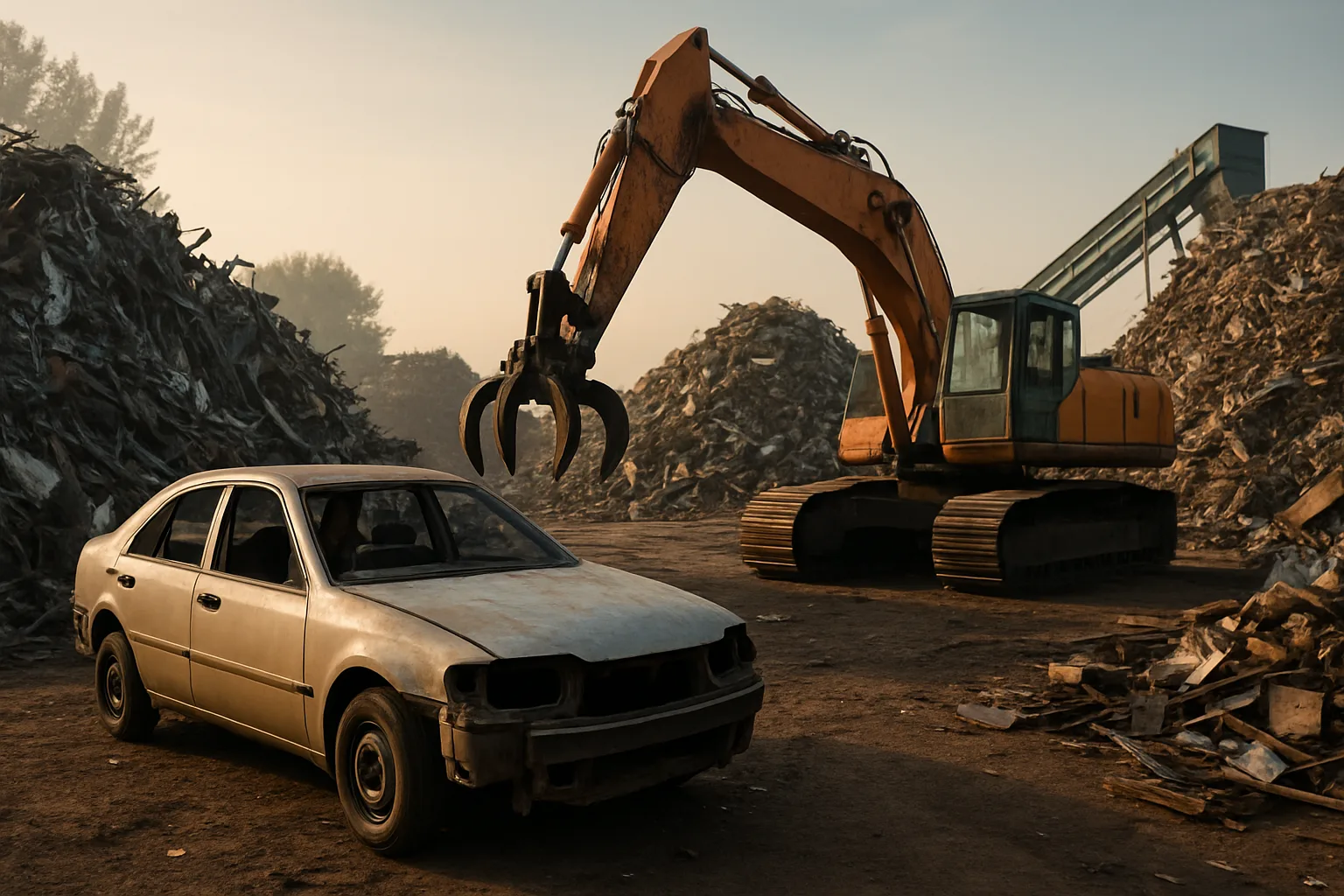
Don't Pay Another Month of Insurance on a Car You Already Scrapped
Most people focus on the money when they scrap a car. That makes sense — knowing your scrap car value today matters. But here's the step that costs people real money after the car is gone: forgetting to cancel the insurance. You could be paying $80, $100, even $150 a month for coverage on a vehicle sitting in a crusher. That's not a minor oversight. That's money walking out the door.
This guide walks you through exactly how to cancel your insurance after scrapping a vehicle in Canada — including what to do first, what documents you'll need, and how to avoid getting hit with a cancellation penalty. If you're in Kelowna or anywhere else in British Columbia, the process has some province-specific steps worth knowing.
Step One: Get the Paperwork Done Before You Call Your Insurer
Here's where most people get this backwards. They cancel the insurance first, then figure out the paperwork. Don't do that. Your insurer will ask for proof that the vehicle has been legally disposed of. If you can't provide it, the cancellation process gets messy — and in some cases, your insurer may not process a full refund.
Before you contact your insurance company, make sure you have:
- A bill of sale or transfer receipt from the scrap yard or buyer confirming they took ownership of the vehicle
- A deregistration confirmation from your provincial motor vehicle authority (in British Columbia, that's ICBC and the provincial registry)
- Your insurance policy number and the effective date of your current term
- The date the vehicle left your possession — this is the date your coverage should end, not the day you make the call
In British Columbia, your vehicle insurance is tied to your registration through ICBC. When you transfer the plate or cancel the registration, ICBC is notified. But that doesn't automatically cancel any optional extended coverage or third-party policies you may have through a private insurer. You need to contact each one separately.
How to Actually Cancel — And Avoid Getting Charged a Penalty
Insurance companies in Canada can charge a short-rate cancellation fee if you cancel mid-term — meaning before your policy renewal date. This fee is not a flat rate. It's usually a percentage of the unearned premium, and it's higher the more time is left on your policy. In short: the earlier in your policy term you cancel, the more it potentially costs you.
Here's how to protect yourself:
- Call or email your insurer the same day you hand over the vehicle. Insurance is date-specific. The sooner they know, the cleaner the cancellation.
- Ask specifically about short-rate vs. pro-rata cancellation. Pro-rata means you get back every unused day at the daily rate — no penalty. Short-rate means they take a cut. Push for pro-rata and use your deregistration document as leverage.
- Get the cancellation confirmation in writing. Don't assume a phone call closed the file. Ask for an email confirmation with the cancellation date clearly stated.
- Check your auto-renewal settings. If you pay monthly or have pre-authorized payments set up, confirm those are stopped. Banks don't always catch this immediately.
One more thing: if your vehicle was financed and you had GAP insurance or a lender-required policy, contact your lender directly. They may have a separate cancellation process, especially if the loan was already settled as part of the scrap transaction.
What Happens to Your Insurance Refund
If you cancel mid-term, most insurers will send you a refund for the unused portion of your premium — minus any applicable fees. How long that takes depends on the insurer and your payment method. If you paid upfront for the year, expect a mailed cheque or direct deposit within two to four weeks. Monthly payers typically just see future payments stopped and may receive a small credit.
Don't leave money on the table here. If you scrapped your car in February and your policy ran until November, that's potentially several hundred dollars coming back to you. That's real money — especially when you factor it in alongside the cash you already received from scrapping the vehicle.
Speaking of which: if you weren't sure what your car was worth before you handed it over, that's worth addressing for next time. Platforms like smashrecycling.ca give sellers a transparent, competitive process so you're not just taking the first number a yard throws at you. Knowing your scrap car value today before you commit to a buyer makes a difference — and it feeds directly into knowing when to time your insurance cancellation.
Sell Scrap Car in Kelowna? Here's the Local Process
If you're looking to sell scrap car Kelowna, the process is mostly the same as elsewhere in the province — but a few local specifics are worth knowing. In Kelowna and across the Okanagan, ICBC handles the vehicle registration side. When you transfer or cancel your plates at an Autoplan broker, they update the provincial record. You'll want that receipt as part of your documentation trail when you call your insurer.
Kelowna has a reasonable number of scrap and salvage buyers, but pricing varies more than most people realize. Scrap metal commodity rates shift constantly — copper, aluminum, and steel prices change week to week. What a yard quoted you six weeks ago may not reflect what your vehicle is worth today. That's why checking your scrap car value today before you commit is always the right move.
Using a competitive platform for your sale — rather than calling one yard and accepting whatever they say — gives you a baseline. SMASH runs a vetted buyer network that creates real price competition on loads. That kind of transparency is how sellers stop guessing and start knowing. You can get cash for your car in Canada through a process that doesn't rely on one buyer, one phone call, and a hope that the number they gave you is honest.
Common Mistakes People Make After Scrapping a Vehicle
Beyond the insurance issue, there are a handful of other missteps that cost sellers time or money after the car is gone. A quick checklist:
- Not keeping copies of everything. Bill of sale, deregistration receipt, insurance cancellation confirmation — keep them for at least two years. You may need them for tax purposes or if a title dispute arises.
- Leaving personal items in the vehicle. Sounds obvious, but garage door openers, sunglasses, tools, and registration documents get left behind constantly. Do a full sweep before the tow truck arrives.
- Not removing the plates. In most Canadian provinces, the plate belongs to you — not the vehicle. Take them off before the car leaves. In British Columbia, you return them to an Autoplan broker or transfer them to your next vehicle.
- Assuming the yard handles the title transfer. Reputable buyers will handle paperwork correctly, but verify. You don't want your name still tied to a vehicle after it leaves your hands.
- Not comparing offers. One call to one yard is not a market. It's a guess. SMASH exists specifically to fix this — bringing multiple vetted buyers to a single listing so the price reflects actual demand, not one buyer's margin.
Want to avoid these pitfalls entirely? Read car selling tips before your next sale — getting ahead of the paperwork makes the whole process faster and cleaner.
The Right Order of Operations When Scrapping a Car
Here's the sequence that keeps everything clean and protects your refund:
- Get your scrap car value today — compare at least two offers before accepting anything
- Accept an offer from a vetted buyer and confirm pickup logistics
- Remove your plates and personal items before the tow
- Get a signed bill of sale or transfer receipt at pickup
- Visit an Autoplan broker (if in B.C.) to cancel or transfer your registration
- Contact your insurer with the deregistration receipt — request pro-rata cancellation
- Confirm cancellation in writing and verify any pre-authorized payments are stopped
- File your documents somewhere you'll find them in two years
That's it. Eight steps. None of them complicated — but skipping any one of them creates friction that takes more time to untangle than it would have to just do it right the first time.
If you're in Kelowna and ready to move forward, you can access Kelowna scrap metal services built specifically for this region. And when you're ready to get a free car valuation, the process is straightforward — no guessing, no pressure, no single-buyer take-it-or-leave-it pricing.
Scrapping a car and cancelling your insurance properly isn't complicated. It just takes doing things in the right order. The cash you already got from the vehicle is yours. Don't leave more on the table by paying insurance on something that no longer exists.
Frequently Asked Questions
Q: How do I know what my scrap car value today is before selling?
Scrap car values depend on the weight of the vehicle, current metal commodity prices (steel, aluminum, copper), and the condition of salvageable parts. The best way to know your scrap car value today is to get multiple offers rather than accepting the first one. Platforms that bring vetted buyers into competition give you a real market price, not a single yard's best guess.
Q: Can I cancel my car insurance without the deregistration papers?
Technically yes, but your insurer may apply a short-rate penalty instead of a pro-rata refund if you can't prove the vehicle was legally transferred or destroyed. Always get your deregistration receipt from your provincial registry before contacting your insurer — in British Columbia, that means visiting an Autoplan broker. It takes the same day and protects your refund.
Q: How do I sell my scrap car in Kelowna, BC?
Start by getting your vehicle's current value from at least two buyers — don't commit to the first number you hear. Remove your plates, gather any available documents (title, registration, ID), and confirm the buyer handles the title transfer properly. SMASH connects sellers with vetted buyers across North America, which means real competition on your load rather than one yard setting the price unilaterally.
Q: How long does an insurance refund take after cancelling?
Most Canadian insurers process mid-term cancellation refunds within two to four weeks. If you paid annually upfront, expect a mailed cheque or direct deposit for the unused portion minus any applicable fees. Monthly payers typically see future payments cancelled with a small credit applied. Always get written confirmation of your cancellation date so the refund calculation is correct.
Q: What if I lost the title — can I still scrap my car in Canada?
Yes, in most provinces you can still scrap a vehicle without the original title, though requirements vary. You'll typically need government-issued ID, proof of ownership (registration, insurance documents), and a signed declaration. Check with your provincial registry before booking a pickup. Reputable buyers work with sellers through this process regularly — it's not a dealbreaker.
Ready to stop guessing what your car is worth and just get paid? Get cash for your car in Canada with a free, no-obligation quote at cashfor-cars.ca. The paperwork, the pickup, the insurance cancellation — it all starts with knowing your number.
Scrap metal prices fluctuate with commodity markets. All price references in this article are general in nature. Check current rates before making any decisions.
Follow SMASH on LinkedIn for ongoing industry updates, scrap metal market insights, and news from the B2B scrap metal marketplace across North America.