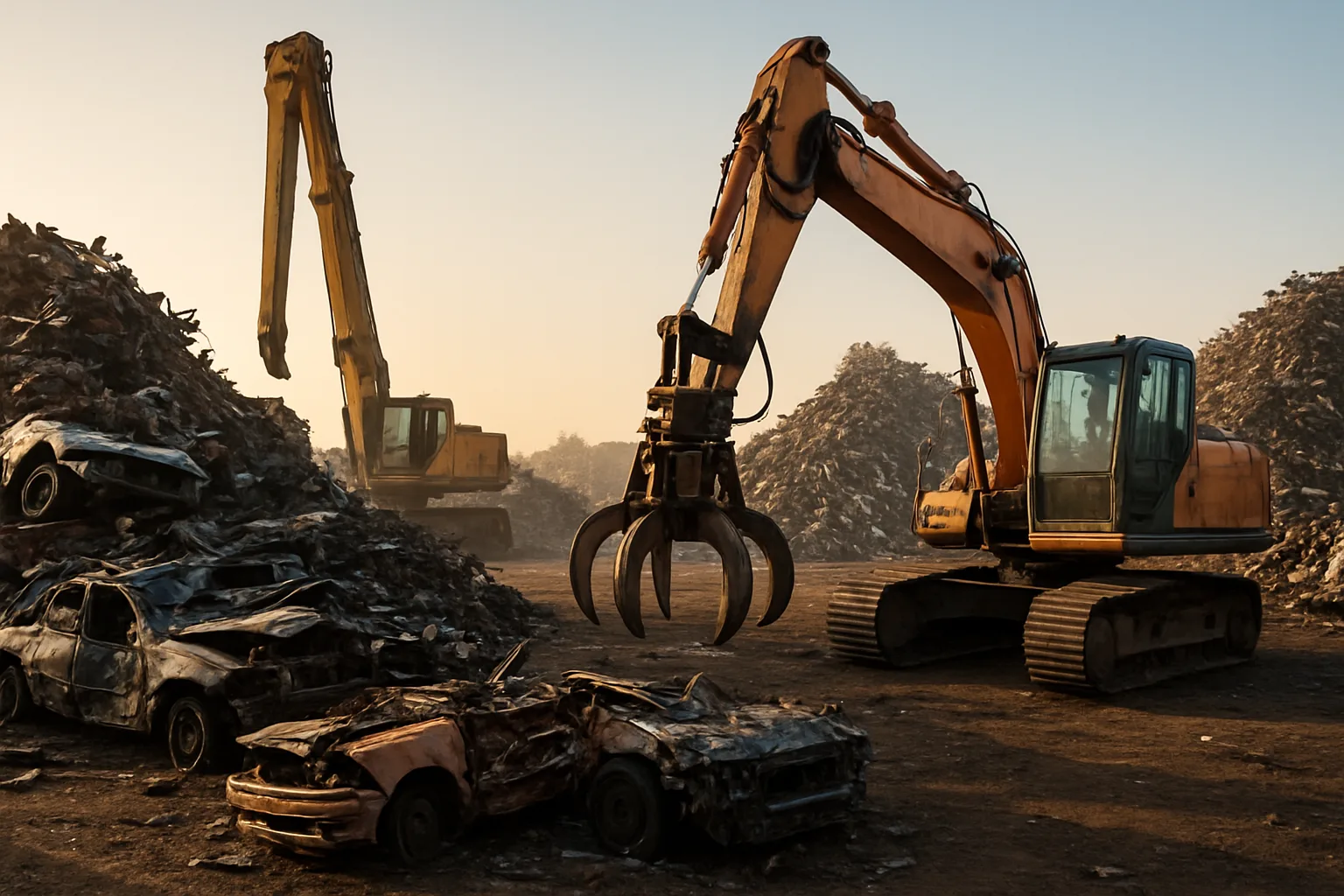
What's Your Scrap Car Actually Worth in 2026? Here's the Real Answer
Most people selling a scrap car expect a flat rate. They google a number, call one buyer, and take whatever they're offered. That's leaving real money on the table — and in 2026, the gap between a bad offer and a fair one can be significant. Understanding scrap car value today means understanding what's actually driving the price, not just accepting the first number someone throws at you.
This guide breaks it down honestly. No invented prices. No promises. Just the real factors that determine what your junk car is worth — and how to make sure you're getting a fair shake when you sell.
How Scrap Car Value Today Is Calculated
Your car isn't just a car when it hits a recycling yard. It's a collection of recoverable materials — steel, aluminum, copper, catalytic converters, and reusable parts. Each of those materials carries its own market value, and that value shifts constantly based on global commodity markets.
Here's what actually goes into pricing your scrap vehicle:
- Curb weight: Heavier vehicles mean more recoverable steel. A full-size truck or SUV will generally fetch more than a compact sedan — not because of brand, but because of mass. When buyers talk about junk car prices per ton, this is where it starts.
- Catalytic converter: Cats contain platinum group metals — platinum, palladium, and rhodium. Depending on your vehicle's make and engine size, the cat alone can represent a significant portion of the total value. Never let a buyer skip past this.
- Aluminum content: Alloy wheels, engine blocks, transmission housings — aluminum commands a premium over steel. Vehicles with more aluminum components recover more value per pound.
- Reusable parts: If your car is relatively recent and the engine, transmission, doors, or electronics are intact, a buyer may factor in parts value on top of scrap weight.
- Current metal prices: This is the variable nobody can control. Steel, aluminum, and precious metal prices fluctuate with global markets — sometimes daily. A quote from last week may not reflect today's rate.
Disclaimer: Metal prices fluctuate. The factors above influence value, but actual offers depend on current market conditions. Always get an up-to-date quote before committing.
Why Single-Buyer Quotes Leave You Short
Here's the problem with the traditional approach: you call one buyer, they give you a number, and you either take it or hang up. That buyer has no incentive to offer you more than the minimum you'll accept. There's no competition. There's no transparency. You have no idea if the offer reflects the actual market or just their margin target for the week.
This is exactly the dynamic that platforms like SMASH Recycling — where verified buyers bid on your metal are built to disrupt. When multiple vetted buyers compete for your vehicle or your load, price discovery happens in the open. You see what the market actually thinks your car is worth — not what one buyer decides to tell you.
More buyers means better price discovery. That's not a slogan. That's how auctions work. If you're in a market like Longueuil or anywhere across Quebec, you shouldn't be limited to whoever picks up the phone first.
Sell Scrap Car in Longueuil — What Local Sellers Should Know
If you're looking to sell your scrap car in Longueuil, you're in a well-connected part of Quebec with access to multiple recycling yards and buyers. That's an advantage — but only if you use it. Having options means nothing if you still call one buyer and accept the first offer.
A few things Longueuil and Quebec sellers specifically should keep in mind:
- Seasonal timing matters: Demand for scrap vehicles often ticks up in spring and fall. If your car has been sitting through a Quebec winter, the yard will factor in rust, freeze damage, and fluid conditions when pricing it.
- Documentation: Have your registration and proof of ownership ready. In Quebec, you need to transfer ownership properly — this protects you from liability after the sale.
- Fluid removal: Most licensed recyclers in Quebec will drain fluids before crushing — that's standard and compliant with provincial environmental regulations. Make sure any buyer you deal with follows proper de-pollution protocols.
- Transport logistics: Many buyers offer free towing in the greater Longueuil area. Factor that into your comparison. A slightly lower cash offer with free pickup can beat a higher offer where you pay for the tow.
Whether your car is in Longueuil, across the South Shore, or anywhere in Quebec, the fundamentals are the same: know what's in your car, get multiple quotes, and don't settle for the first number you hear.
How Scrap Metal Inventory Management Affects Your Payout
This one surprises a lot of private sellers — but it matters. When a recycling yard or buyer prices your vehicle, they're working from their own inventory and margin calculations. A yard that's already heavy on steel may offer less for your beater sedan than a yard that's running light on ferrous material. Their internal scrap metal inventory management directly influences what they'll pay you.
You can't control what a buyer's yard looks like. But you can control how many buyers you put your car in front of. A buyer sitting on excess steel has little incentive to stretch on price. A buyer who needs to fill a load — or hit a weekly target — might pay noticeably more for the exact same car on the exact same day.
This is another reason why competitive formats produce better outcomes for sellers. SMASH uses documented inventory tools and a vetted buyer network to make this process transparent. When you get cash for your car in Canada through a competitive process, you benefit from real market demand rather than one yard's inventory math.
The Documentation Advantage — Why Detailed Listings Sell Better
Buyers price uncertainty into their offers. If they don't know whether your catalytic converter is intact, whether the engine is seized, or whether there are missing parts — they'll assume the worst and adjust accordingly. That's not dishonesty. That's risk management.
The sellers who get the strongest offers are the ones who show up prepared:
- Photo documentation: Clear photos of the exterior, interior, engine bay, undercarriage, and any notable damage. Buyers can see exactly what they're bidding on.
- VIN details: Your VIN tells buyers the exact make, model, trim, engine, and original equipment. SMASH uses VIN lookup as part of its inventory process — this removes guesswork and builds buyer confidence.
- Catalytic converter status: Is it original and intact? Aftermarket? Missing? This matters a lot. State it upfront.
- Mileage and condition notes: A 2009 Civic with 180,000 km and a seized engine is a different proposition than one that ran fine until last month. Give buyers the real picture.
Documented inventory gives buyers more confidence — and confident buyers bid stronger. It's that straightforward. If you want to get a free car valuation that actually reflects your vehicle's true condition, start by pulling together what you know about the car before you make the first call.
Don't Sell Blind — Know Before You Go
Selling a scrap car for the first time can feel like walking into a negotiation where the other side knows all the rules. It doesn't have to be that way. The more you understand about what drives scrap car value today, the harder it is for a low-ball offer to stick.
A few final reminders before you sell:
- Get at least two or three quotes before committing.
- Ask specifically about the catalytic converter — get confirmation it's included in the offer.
- Confirm the buyer covers towing or factor in the towing cost separately.
- Check that the buyer is licensed and will handle the title transfer correctly.
- Don't let urgency push you into a bad deal. A few extra hours of comparison can mean a meaningfully better outcome.
Whether you're in Longueuil, across Quebec, or anywhere else in Canada, the tools exist to get a fair price. Platforms like SMASH put real competition behind your sale. Read car selling tips to go into the process fully prepared — and skip the guesswork that costs sellers money every day.
Ready to find out what your car is actually worth? Get cash for your car in Canada — get a free quote at cashfor-cars.ca and stop leaving money on the table.
Frequently Asked Questions
Q: How is scrap car value today determined in Canada?
Scrap car value is based on the vehicle's weight, recoverable materials (steel, aluminum, catalytic converter), current metal market prices, and any intact reusable parts. Prices fluctuate with commodity markets, so a quote from last week may not reflect today's rate. Always get a current quote before agreeing to a sale.
Q: What's the average junk car price per ton in Quebec right now?
Metal prices change frequently, and we don't publish a fixed rate — any number we print here could be outdated within days. The best approach is to contact multiple buyers and compare current offers. Heavier vehicles like trucks and SUVs will generally recover more value due to higher steel content.
Q: How do I sell my scrap car in Longueuil?
Start by gathering your vehicle registration and proof of ownership — you'll need these to transfer title legally in Quebec. Get quotes from multiple buyers, confirm whether towing is included, and ask specifically about how the catalytic converter is priced. Using a competitive platform like SMASH ensures you're not limited to one local buyer's offer.
Q: Does my catalytic converter affect scrap car value?
Yes — significantly. Catalytic converters contain platinum, palladium, and rhodium, which are high-value metals. An intact, original-equipment cat can represent a notable portion of your car's total scrap value. Always confirm with buyers that the cat is factored into your offer, and be cautious of buyers who seem to gloss over it.
Q: Why should I use an auction platform instead of calling one junk car buyer?
A single buyer has no competitive pressure to offer you more than the minimum you'll accept. An auction format puts multiple vetted buyers in competition for your vehicle, which produces better price discovery. Competition can help reveal the true market value — rather than one yard's preferred margin.
Stay sharp on scrap metal market trends and industry news — follow SMASH on LinkedIn for regular updates from inside the recycling industry.