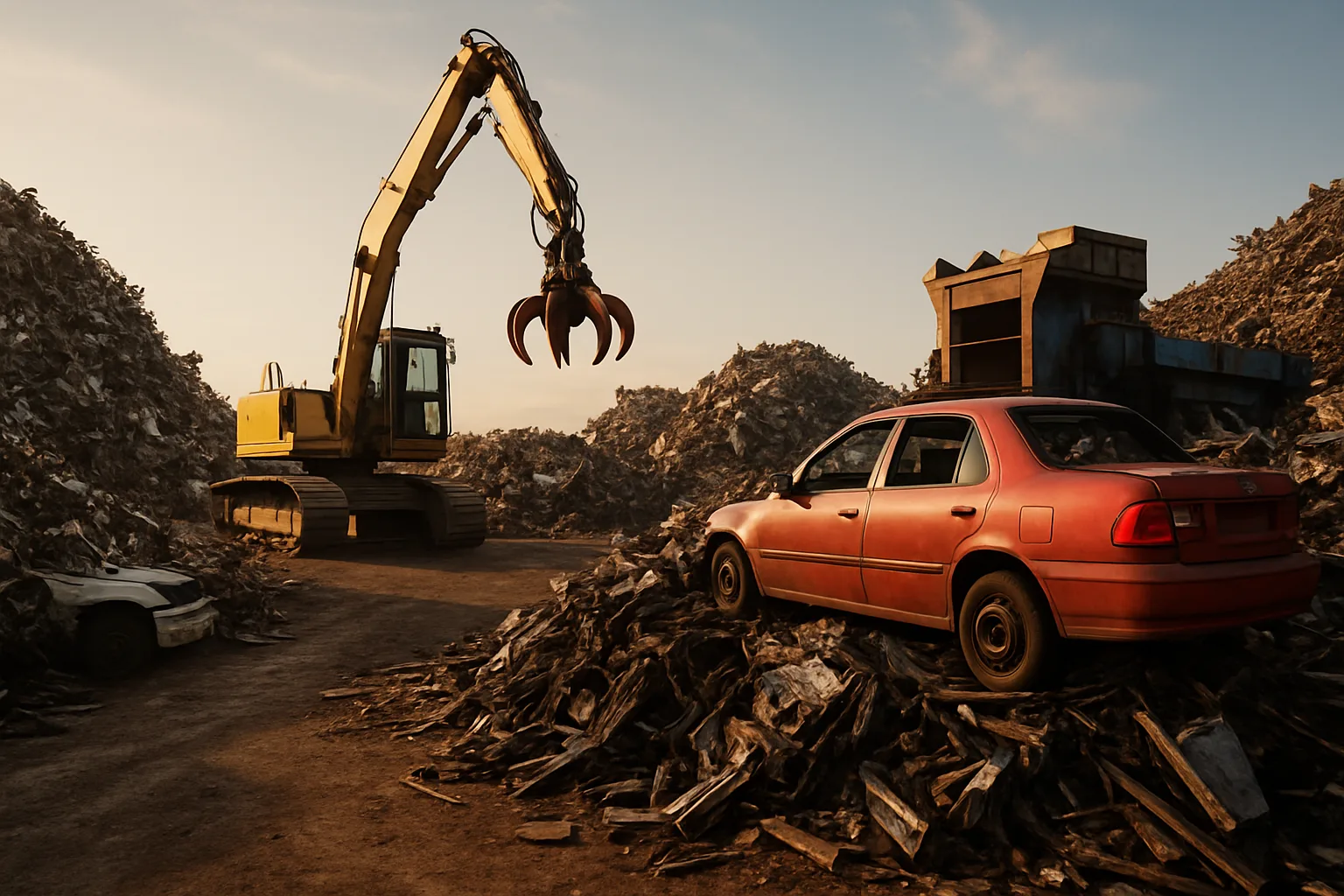
Not All Scrap Cars Are Worth the Same — Here's Why
You've got an old car sitting in the driveway. Neighbour sold his rusted-out sedan last month and got a decent payout. You figured yours would fetch something similar. Then the quote comes in lower than expected. What gives? The answer comes down to three things: make, model, and condition. Understanding how these factors work together helps you set realistic expectations — and make smarter decisions when it's time to sell.
If you're looking at free scrap car pickup Winnipeg services, knowing what drives your vehicle's value means you won't leave money on the table. This isn't complicated, but most sellers don't think about it until after the deal is done.
How Vehicle Make and Model Affect Scrap Value
A car's make and model influence scrap value in two distinct ways: the weight of the vehicle and the demand for its parts. These aren't the same thing, and both matter.
Heavier vehicles — think full-size trucks, older SUVs, large American-made sedans — carry more raw steel and ferrous metal. Since scrap yards pay by weight, a heavier vehicle generally returns more at the scale. A stripped-out half-ton truck can weigh 3,500 to 4,500 lbs. A compact hatchback might come in under 2,500 lbs. That difference adds up fast when you're calculating scrap metal recycling Canada-wide rates.
Beyond weight, parts demand matters enormously. Some makes and models have strong aftermarket demand for used components. Engines, transmissions, catalytic converters, doors, and electronic modules from popular or hard-to-source vehicles can significantly increase what a buyer will pay. Vehicles with platinum-rich catalytic converters — often found in certain Japanese and European makes — can command a higher overall offer just because of that one component.
- High scrap weight vehicles: Full-size trucks, body-on-frame SUVs, older domestic sedans
- High parts demand vehicles: Popular models with active repair communities, low-production vehicles with rare parts
- Lower value vehicles: Lightweight economy cars with no parts demand and small catalytic converters
Why Vehicle Condition Changes Everything for Junk Car Buyers
Condition isn't just about how a car looks. It's about what a buyer can actually do with it. A running, driving vehicle opens up more resale or export options. A non-running vehicle that's still structurally intact can be parted out. A crushed, flood-damaged, or fire-damaged car goes straight to the shredder — and that limits what any buyer will offer.
Here's how condition typically breaks down in the eyes of a junk car removal Winnipeg buyer or recycling facility:
- Running and driving — Highest value tier. More buyers are interested. Private sale, export, or parts dismantling are all possible.
- Non-running but complete — Good parts value. Engine, transmission, body panels, and interior are all salvageable. Buyers will pay more for completeness.
- Non-running and stripped — Missing catalytic converter, airbags deployed, interior gutted. Value drops significantly — mostly scrap metal weight at this point.
- Fire, flood, or collision-damaged — Lowest value tier. Structural integrity is compromised. Most components are unsalvageable. Weight is the primary value driver.
Rust is another factor that changes the equation in colder climates. In Winnipeg and across Manitoba, winters are hard on vehicles. Years of road salt exposure can compromise frame integrity, floor panels, and subframes. A visually clean vehicle sitting on a rotted frame is worth considerably less than it appears. Buyers factor this in quickly.
The Role of Scrap Metal Markets in Setting Your Car's Price
Even if your vehicle is heavy, complete, and in reasonable shape, the price you get still reflects what's happening in the broader metal market. Steel, aluminum, copper, and platinum group metals (PGMs) all fluctuate. When steel prices drop, scrap car values drop with them — regardless of what your specific vehicle weighs.
This is where most sellers get confused. They compare a quote from six months ago to one they get today and wonder why it's different. Metal markets move constantly. A cold snap in demand from steel mills, shifts in global trade, or changes in automotive manufacturing output all ripple through to what a recycling yard will pay for your car today.
This is exactly why platforms like SMASH Recycling exist. Instead of calling one buyer and accepting whatever they offer, SMASH runs competitive auctions where vetted buyers bid on scrap loads — including vehicles. Competition between buyers helps reveal what the market is actually willing to pay. More eyes on your inventory means better price discovery. That's not a slogan — that's just how markets work.
Disclaimer: Scrap metal prices fluctuate daily based on market conditions. Always check current rates before accepting any offer.
Does a Title Matter? What to Know About Selling a Car Without One
Many sellers in Winnipeg and across Canada wonder whether they can sell my junk car no title — and the honest answer is: it depends on the buyer and the province.
In Manitoba, vehicle ownership documentation is managed through Manitoba Public Insurance (MPI). For a vehicle being scrapped rather than resold or driven, many scrap buyers and recycling yards will accept alternate proof of ownership — a driver's licence, a vehicle registration, or other supporting documents. However, requirements vary by facility and by how the vehicle will be processed.
Here's what you should know before you call:
- If you have a registration or bill of sale, bring it. Even if it's not a title, it helps establish ownership.
- Some buyers will not touch a vehicle without documentation — to protect themselves from liability and stolen vehicle issues.
- A lost title can sometimes be replaced through MPI before you sell. This may take time but can improve your selling options.
- Be upfront about your documentation situation when you request a quote. It changes what buyers can offer and how quickly they can move.
Being prepared with the right paperwork speeds up the process significantly. Don't show up at a transaction without it — that's how deals fall through.
How to Get the Most Out of Your Scrap Car Sale in Winnipeg
Knowing why prices vary is useful. Knowing how to act on that knowledge is better. Here's a practical approach to maximizing what you walk away with when selling a scrap vehicle in Winnipeg or anywhere in Canada.
1. Get multiple quotes. Never accept the first offer. Prices vary between buyers based on their current inventory needs, metal market positions, and parts resale channels. A single quote tells you nothing about the market. Two or three quotes tell you a lot.
2. Know what you have before you call. Look up your vehicle's weight, identify whether it has a functioning catalytic converter, and note the overall condition honestly. Buyers ask these questions — knowing the answers makes the conversation faster and more productive.
3. Don't strip it before you sell it. It seems logical — pull the battery, the good tires, whatever looks useful. But stripping a vehicle often reduces its total value more than the parts are worth individually unless you have a specific buyer for those components lined up already.
4. Ask about pickup logistics upfront. If you're looking at free scrap car pickup Winnipeg services, confirm what "free" actually includes. Does towing cost extra if you're in a tight location? Is there a mileage limit? Get this in writing before committing.
5. Use platforms that create competition. Whether you're selling a single vehicle or clearing a lot, more buyers means more leverage. The SMASH scrap metal auction model puts documented inventory in front of vetted buyers across North America — that's a fundamentally different dynamic than a one-call, take-it-or-leave-it offer.
If you want to get cash for your car in Canada without the guesswork, start with a platform or service that gives you visibility into what buyers are actually willing to pay. You can also get a free car valuation to understand your vehicle's worth before you commit to any offer.
And if you've got scrap metal beyond just the vehicle — copper wire, aluminum, ferrous material — check out our car selling tips blog for more guidance on getting the most out of every material you're moving. You can also explore Winnipeg scrap metal services to find local options near you.
Whether you're in Winnipeg, across Manitoba, or looking at cash for junk cars Edmonton — the same principles apply. Make, model, condition, documentation, and market timing all shape what you'll be offered. Know them and you'll negotiate better every time.
When you're ready, get a free quote at cashfor-cars.ca and find out what your vehicle is actually worth today. No pressure, no obligation — just a real number based on real market conditions.
Frequently Asked Questions
Q: How does free scrap car pickup work in Winnipeg?
Most services offering free scrap car pickup in Winnipeg send a tow truck to your location at no charge to you. They assess the vehicle on-site or based on photos you provide, make an offer, and haul it away once you agree. Always confirm what's included in "free" pickup — some services have geographic limits or may charge extra for difficult access situations.
Q: Why did I get a lower quote than my neighbour for a similar car?
Small differences in condition, mileage, parts availability, and the current state of metal markets can cause significant price differences between similar vehicles. Timing matters too — metal prices shift daily. Two quotes taken weeks apart can vary noticeably even for identical vehicles.
Q: Can I sell a junk car in Winnipeg without a title?
In many cases, yes — especially if the vehicle is being scrapped rather than resold as a driveable unit. Manitoba scrap buyers often accept vehicle registration or other proof of ownership in lieu of a formal title. However, requirements vary by buyer, so ask specifically before you assume documentation won't be an issue.
Q: Does the make of my car really affect the scrap price that much?
Yes, for two reasons: weight and parts demand. Heavier vehicles return more at the scale. Vehicles with high-demand parts — especially popular makes with strong aftermarket interest or valuable catalytic converters — often command a premium beyond raw metal weight alone.
Q: How do I know if I'm getting a fair price for my scrap car in Winnipeg?
Get at least two or three quotes from different buyers and compare them. Platforms that introduce competitive bidding — like SMASH — take this further by putting your vehicle in front of multiple vetted buyers simultaneously, which helps surface what the market is genuinely willing to pay rather than what a single buyer wants to offer.
Stay current on scrap metal markets and industry news — follow SMASH on LinkedIn for regular updates, pricing insights, and tips for getting more out of every load you sell.