Your Car Gets Picked Up — Then What? A Step-by-Step Look Inside Auto Recycling
Most people assume their old car gets crushed and that's the end of the story. The reality is far more interesting — and far more valuable. Scrap car removal in Medicine Hat kicks off a detailed, multi-stage process that extracts value from nearly every component on your vehicle before a single piece of metal gets shredded. Understanding what happens after pickup helps you appreciate why competitive pricing matters, and why who buys your car makes a real difference.
Whether you're sitting on a rusted-out half-ton in your driveway or a high-mileage sedan that finally gave up, here's exactly what happens once the tow truck pulls away.
Stage 1: Arrival and Initial Assessment at the Recycling Yard
The moment your vehicle arrives at the yard, it gets logged. VIN numbers are recorded, condition is noted, and the vehicle gets assigned to a processing queue. This isn't just paperwork — it's how reputable recyclers track inventory, manage parts availability, and stay compliant with provincial regulations in Alberta around end-of-life vehicle handling.
At this stage, the yard is already making decisions. Is this vehicle worth parting out? Are there resaleable components — doors, engines, transmissions, electronics? Or is it headed straight to the crusher? The answers depend on make, model, year, condition, and current market demand for parts. A 2018 pickup with a solid powertrain gets treated very differently than a flood-damaged compact with a seized engine.
- VIN lookup confirms ownership history and flags any liens or theft records
- Condition assessment determines whether parts are salvageable
- Market check identifies which components have buyer demand right now
- Hazardous material flag — airbags, fuel, fluids all get noted for safe removal
This is also where how much your salvage vehicle is worth starts to crystallize. The yard's assessment directly influences what they paid you — or should have paid you. If you got one phone call and one number, you may never know what your car was actually worth to the market. Platforms like get competitive bids for your scrap in Canada through SMASH change that dynamic by exposing your vehicle to vetted buyers before it disappears into a single yard's queue.
Stage 2: Fluid Removal and Depollution — Non-Negotiable First Step
Before anything gets dismantled or resold, every end-of-life vehicle goes through depollution. This is a regulated process, and in Alberta, it's mandatory. Trained technicians drain and safely dispose of all hazardous fluids before the car goes any further through the system.
Here's what gets pulled out at this stage:
- Engine oil — typically 4-6 litres per vehicle, collected for recycling
- Coolant (antifreeze) — toxic to animals and groundwater, requires proper disposal
- Brake fluid — hygroscopic and corrosive, not something you leave in a crusher
- Power steering fluid and transmission fluid
- Gasoline or diesel — tanks are drained and sometimes the fuel is reused on-site
- Refrigerants (R-134a or R-1234yf) — AC systems are evacuated using certified equipment
- Mercury switches — found in older vehicles, flagged for hazardous waste handling
Airbags are also deactivated at this stage. An undeployed airbag going through a shredder is a serious safety hazard — yards deal with this before anything else moves forward. This entire depollution step is what separates a legitimate recycler from an operation that's cutting corners and creating environmental liability.
Stage 3: Parts Harvesting — Where Real Value Gets Extracted
This is the part that surprises most people. A significant portion of the value in your old vehicle isn't in the scrap metal — it's in the reusable parts. A working alternator, a clean set of rims, a functioning transmission, even interior trim pieces — all of these have secondary market value that far exceeds what you'd get melting the same material down.
Skilled dismantlers work through the vehicle systematically. High-demand parts get pulled first:
- Engines and transmissions — especially for popular makes with strong used parts demand
- Catalytic converters — contain platinum, palladium, and rhodium; always valuable
- Alternators, starters, and electronics
- Doors, hoods, and body panels — especially for late-model vehicles still on the road
- Wheels, tires, and suspension components
- Seats and interior components in good condition
Parts are photographed, tagged, and entered into inventory. Many yards use serial tracking and photo documentation to manage their parts database — buyers searching for components need accurate descriptions and condition photos to make purchasing decisions. This is the same discipline that platforms like SMASH apply to the B2B scrap metal marketplace, where documented inventory gives buyers more confidence and drives better price discovery across loads.
If you want to get a free car valuation before you call a yard, knowing what's on your vehicle helps you understand what you might be leaving on the table. A car with a functioning catalytic converter and a solid engine is worth more than the same model with both stripped out — and you should know that before you agree to a price.
Stage 4: The Hull Goes to the Shredder — Ferrous and Non-Ferrous Separation
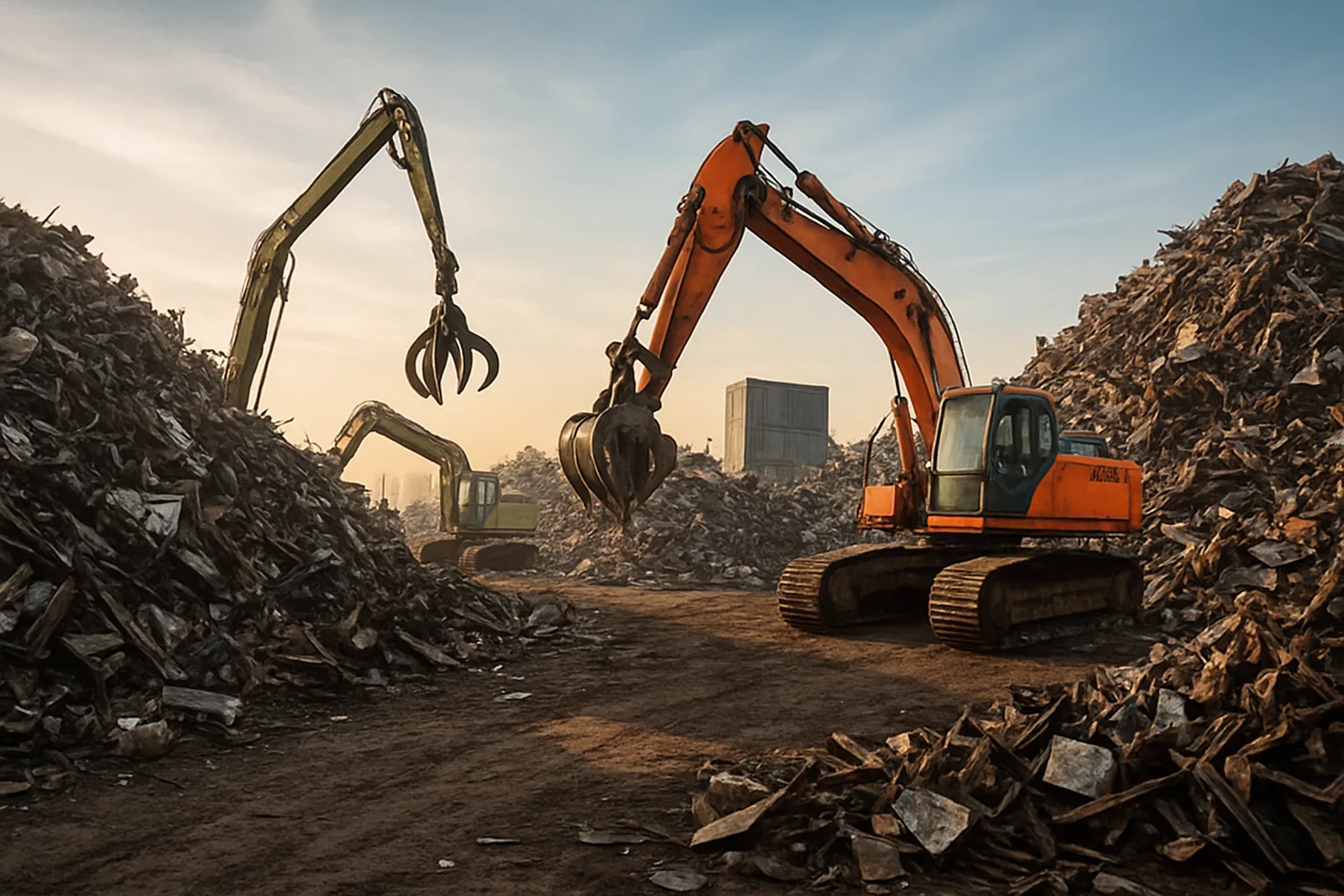
Once parts are harvested and fluids are removed, what's left is called the hull — essentially the metal carcass. This is where the vehicle finally enters the scrap metal stream. The hull gets baled or shredded depending on the facility's equipment and downstream buyers.
Shredding produces a mixed output called "shredder fluff," which then gets processed through separation systems — magnets pull out ferrous steel, eddy current separators catch non-ferrous metals like aluminum and copper, and the remainder (foam, glass, plastic) is handled as residue. It's a more technical process than most people picture.
Ferrous metal from car hulls — primarily steel — goes to steel mills as scrap feed. Non-ferrous material, including aluminum from engine blocks, wheels, and body panels, gets separated and sold separately at higher per-pound values. For a yard in Medicine Hat or anywhere else in Alberta, getting the right price for this mixed non-ferrous output depends heavily on who's buying and how competitive the market is at the time of sale.
This is exactly where a B2B scrap metal marketplace like SMASH adds real value for recycling operations. Instead of one phone call to one buyer, yards can put their shredded non-ferrous or sorted loads in front of multiple vetted buyers simultaneously. More buyers means better price discovery — that's not a marketing line, that's how competitive markets work.
Stage 5: What Determines the Final Value — And Why You Should Care
Here's the part that connects directly back to your experience as a seller. The value your car generates through this entire process is substantial — parts revenue, fluid recovery credits, scrap metal at market, and sometimes core value for components like alternators or starters that get rebuilt and resold. The yard captures all of that. What you received was a negotiated portion of the estimated total.
If you're searching for junk car buyers near me in Medicine Hat, the spread between what different buyers offer can be significant. Not because one buyer is dishonest and another isn't — but because buyers have different cost structures, different parts demand, different downstream connections, and different risk tolerances on a given day.
That's why getting multiple offers matters. And it's why platforms designed around competition and transparency — rather than single-buyer cold calls — tend to produce better outcomes for sellers. If you're curious about how this works for larger loads or commercial volumes, you can read car selling tips or explore what structured auctions look like at the B2B level.
For individual car sellers in Alberta, the takeaway is simple: know what you have, document it, and don't settle for the first number you hear.
How to Make Sure You Get a Fair Price Before Your Car Leaves Your Driveway
Now that you know what happens after pickup, you can ask smarter questions before you agree to anything. Here's what to do:
- Check if your catalytic converter is intact. If it is, mention it. It's worth real money and buyers know it.
- Note any recently replaced parts — new tires, a fresh battery, a rebuilt alternator. These affect value.
- Get at least two or three quotes before you commit. The spread between the lowest and highest offer can surprise you.
- Ask whether the quote includes towing. Some buyers subtract towing fees after the fact.
- Confirm the buyer handles the title transfer properly. In Alberta, you want documentation that the vehicle is no longer in your name.
If you want to skip the guesswork entirely, get cash for your car in Canada through a platform that connects you with buyers who compete for your vehicle — not one buyer who names a price and waits for you to say yes.
The scrap car removal process in Medicine Hat doesn't have to feel like a black box. The yards doing this work are running real operations with real costs — but that doesn't mean you walk in blind. Know your car, know the process, and make them compete for it.
Frequently Asked Questions
Q: How long does the auto recycling process take after my car is picked up?
The depollution and initial assessment typically happen within 24-48 hours of arrival. Full dismantling and parts harvesting can take anywhere from a few days to a few weeks depending on the yard's volume. The metal hull may sit in inventory until market conditions are favorable for selling to a mill or shredder.
Q: Does scrap car removal in Medicine Hat include free towing?
Most reputable junk car buyers in Medicine Hat include towing in their quoted price. Always confirm this upfront — some buyers quote high and then deduct towing costs at pickup. Get the all-in number in writing before you agree.
Q: How much is my salvage vehicle worth if the engine is seized?
A seized engine reduces your car's value because the powertrain — typically one of the most valuable salvageable components — is no longer sellable as a used part. Your car still has scrap metal value, and other parts (catalytic converter, body panels, electronics) may still be intact. Get quotes that reflect the actual condition of your vehicle.
Q: Can I sell a car without a title in Alberta?
This depends on the buyer and the specific circumstances. Most legitimate recyclers in Alberta require proof of ownership to process the vehicle legally. If you've lost your title, contact Alberta registries about a replacement before trying to sell — it protects you from future liability.
Q: What happens to the parts that don't sell at the auto recycler?
Parts that don't move as individual units eventually get sold as bulk scrap to secondary recyclers or processors. Nothing sits at a yard indefinitely — the economics push everything downstream eventually, either as a usable part or as raw material. It's a closed-loop system designed to extract value at every level.
If your old vehicle is sitting in your driveway in Medicine Hat and you're ready to move it, don't leave money on the table by calling one buyer and taking the first number you get. Get cash for your car in Canada — visit cashfor-cars.ca for a free quote and find out what your car is actually worth before it goes anywhere.
Stay up to date on scrap metal market trends and industry insights by following SMASH on LinkedIn — useful whether you're selling one car or managing a full recycling operation.