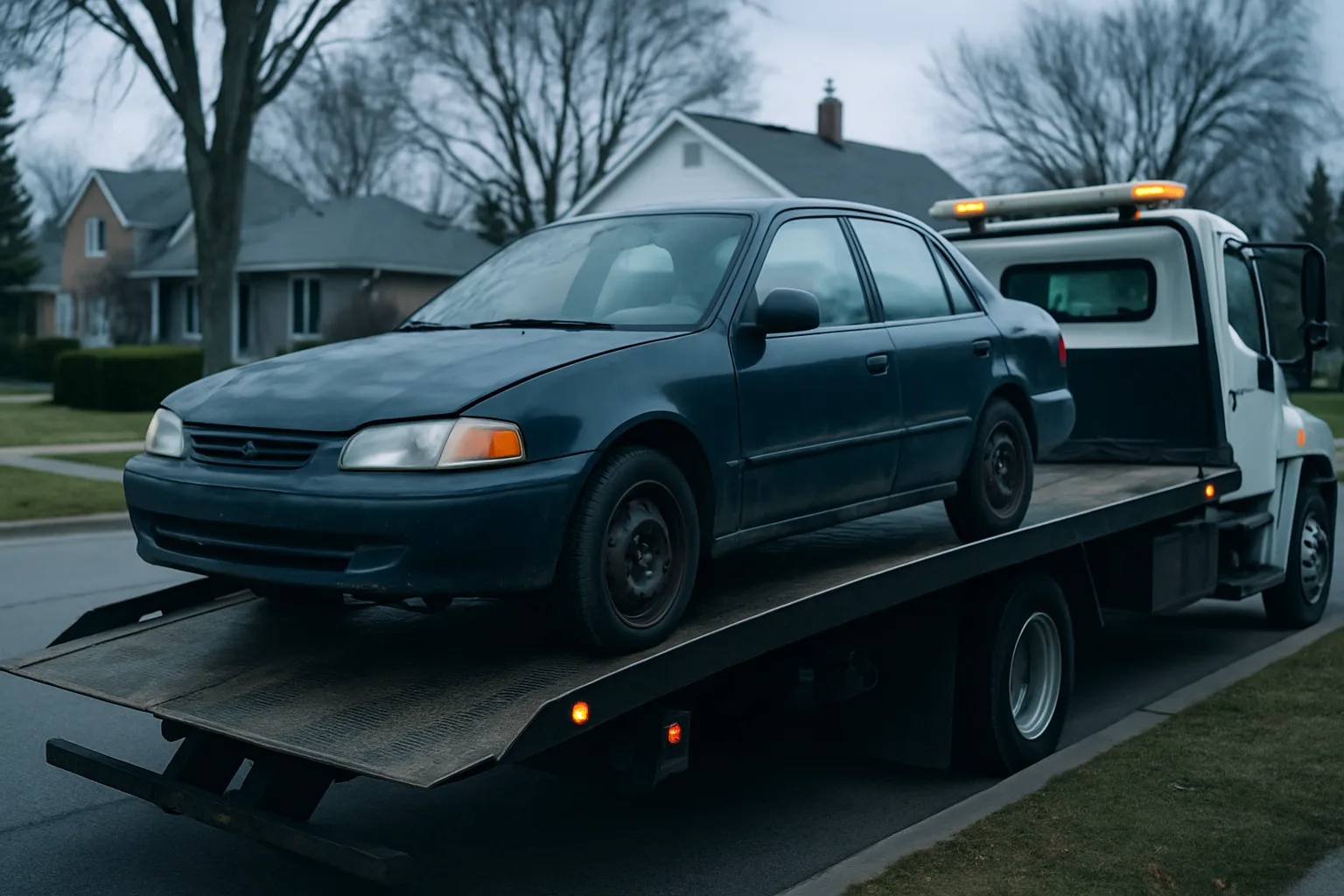
Most people selling a scrap car have no idea what it's actually worth — and that gap costs them real money. Whether your vehicle runs or not, sits in a driveway in Montreal, or is rusting behind a garage in rural Quebec, it has value. The question is how much, and who's actually going to pay it.
This guide breaks down how scrap car value is calculated, what factors move the number up or down, and how to make sure you're not leaving cash on the table when it's time to sell.
---What Actually Determines Your Scrap Car's Value?
Here's the short answer: your car's weight, the current price of steel, and what usable parts it still has. That's the foundation. But several variables can push that number higher — or kill it entirely if you're not careful about who you call.
Scrap metal markets fluctuate. Steel, aluminum, copper, and other non-ferrous metals all have spot prices that shift daily. A car that would have fetched one price in February might be worth meaningfully more or less by July. That's not a hedge — it's just how commodity markets work. When steel prices climb, scrap yards pay more per ton. When they drop, the offer on your vehicle drops too.
Key factors that determine scrap car value:
- Vehicle weight: Heavier vehicles — trucks, SUVs, full-size sedans — return more per ton because you're moving more steel. A compact car might weigh 1,200 kg. A half-ton truck can hit 2,000+ kg.
- Current steel and aluminum prices: These change constantly. Always check current market rates before you commit to a price.
- Condition of the body and drivetrain: Rust, collision damage, and fire damage affect value. A crushed frame tells a buyer the metal is still there, but significant structural damage can reduce what a yard will offer.
- Usable parts: Engines, transmissions, catalytic converters (cats), alternators, starters, and intact glass all add value above the scrap weight price.
- Fuel type: Hybrid and electric vehicles contain different materials — some more valuable non-ferrous metals, some less scrap-friendly battery chemistry. Buyers assess these differently.
- Location and logistics: A car in an accessible Montreal driveway is easier to move than one on a rural property with no road access. Towing cost eats into what a buyer can offer.
Understanding these levers puts you in a stronger position before you pick up the phone or request a quote.
---The Real Range: What Scrap Cars Pay in Canada Right Now
Without inventing numbers, here's the honest reality: scrap car payouts in Canada vary widely depending on vehicle size, metal prices, and the buyer you're dealing with. A small hatchback in poor condition at low steel prices might net a few hundred dollars. A heavy, parts-complete pickup truck during a strong steel market can return significantly more.
Buyers calculate value using a simple formula: vehicle weight × price per ton (or pound) of scrap steel, adjusted for parts value. Most of what you're selling is steel. The rest — copper wiring, aluminum trim, lead weights, the catalytic converter — gets broken out separately by processors who know what they're doing.
What affects the range?
- Scrap steel is priced per ton. Prices shift weekly based on mill demand and global supply.
- Cats are priced based on the specific vehicle model and the precious metals inside — platinum, palladium, rhodium. A cat from a common commuter vehicle pays very differently than one from a pickup or a European sedan.
- A complete, running engine with no known issues adds real value. A seized block adds almost nothing.
- Tires and rims — if they're in decent shape — can move the number up. Bald tires on bent rims? Scrap value only.
The takeaway: don't accept the first number you hear. Get multiple quotes. Competition exists in this market — you just have to invite it.
Platforms like SMASH give you access to vetted buyers who compete for your vehicle or load. That's how price discovery actually works. One call to one buyer is not a market — it's a guess. Compare scrap metal bids from Canadian buyers and see the difference competition makes.
---How to Get an Accurate Scrap Car Valuation Before You Sell
You don't need to be a metal trader to get a fair number. You need to be prepared. Buyers who sense you have no idea what your vehicle is worth will quote accordingly. Walk in knowing your vehicle's specs and you shift the dynamic.
Steps to prepare before requesting quotes:
- Know your vehicle's weight. Look up the curb weight for your year, make, and model. You can find this in the owner's manual or through a quick search. This is the baseline for any scrap offer.
- Check what's still on the car. Is the catalytic converter present? Is the battery intact? Is the engine complete? These details matter.
- Document the condition. Photos of the body, engine bay, interior, and undercarriage give buyers real information. Documented condition builds confidence — buyers reward it.
- Get at least three quotes. Call local scrap yards, use an online scrap car value calculator Canada free tool, and check whether a B2B scrap metal marketplace like SMASH can connect you to competitive buyers in your area.
- Confirm what's included in the offer. Does the buyer cover towing? Is there a fee for paperwork? Get this clear before you agree to anything.
If you're in Quebec and dealing with Montreal scrap metal services, the process is the same — but confirm the buyer is licensed and handles transfer of ownership properly under provincial rules.
If you want a fast starting point, get a free car valuation before you start calling around. Knowing a baseline number before your first conversation is always better than going in cold.
---Junk Car Buyers Near Me Montreal: What to Look For
Not every buyer offering cash for cars in Montreal is operating the same way. Price is one factor. Reputation, process transparency, and whether they handle the paperwork properly are just as important.
When you search for junk car buyers near me in Montreal, you'll find local yards, national services, and individual operators. Here's how to sort the good from the bad quickly:
Signs of a trustworthy scrap car buyer:
- They ask specific questions about the vehicle before quoting (year, make, model, VIN, condition)
- They provide a written or confirmed quote — not just a verbal number that changes when they show up
- They handle or clearly explain the title transfer and deregistration process
- They arrange towing without hidden fees
- They pay on pickup — not days later via a mailed check
Red flags to avoid:
- Quoting without asking about the vehicle's condition or VIN
- Lowering the price significantly when they arrive for pickup
- Asking you to keep driving the vehicle after the sale (liability issue)
- No clear process for paperwork or proof of sale
Montreal has active scrap and recycling infrastructure. Quebec as a whole has strong environmental requirements around vehicle disposal — which means buyers operating legitimately will have their processes in order. If something feels off, it probably is.
---How SMASH Changes the Game for Scrap Vehicle Sellers
The old way to sell a scrap car: call one buyer, take their number, hope it's fair. That approach made sense when there were no options. It makes no sense now.
SMASH is a B2B scrap metal marketplace that connects sellers with vetted buyers who compete for loads. The platform handles inventory documentation, VIN lookup, photo documentation, and auto-invoicing — so both sides of the transaction have full visibility.
More buyers means better price discovery. That's not a marketing line — it's just how markets work. When one buyer knows they're competing with others, they sharpen their offer. When you get cash for your car in Canada through a competitive process instead of a single cold call, the math usually works out in your favor.
SMASH doesn't charge subscription fees. There are no monthly costs for sellers. The platform only benefits when sellers do — which is the right incentive structure for this kind of service.
Whether you're selling a single vehicle or moving multiple vehicles as part of a recycling operation, documented inventory gives buyers more confidence — and confidence drives better offers. If you want to read car selling tips before you list, there's practical guidance available before you commit to anything.
---Pricing Disclaimer and How to Stay Current
Scrap metal prices are a moving target. Steel, aluminum, copper, and precious metals used in catalytic converters all fluctuate based on global demand, mill activity, and supply chain conditions. Any price you hear today may be different next week.
This guide does not provide guaranteed prices. All scrap car values depend on current market conditions, vehicle specifics, and buyer competition at the time of sale. Always request current quotes before making a decision.
The best protection against being lowballed is preparation: know your vehicle's weight and condition, get multiple quotes, and use competitive platforms to let buyers work for your business instead of the other way around.
---Frequently Asked Questions
Q: How much does scrap car removal in Montreal typically cost me?
In most cases, reputable scrap car buyers in Montreal offer free towing as part of the transaction — you shouldn't be paying for pickup. The buyer builds logistics into their offer. If a buyer is charging you a removal fee, get other quotes before agreeing.
Q: Do I need the title to sell a scrap car in Quebec?
In Quebec, you'll generally need to provide proof of ownership to transfer a vehicle, even for scrap. A legitimate buyer will walk you through the paperwork required under provincial rules. Avoid any buyer who tells you documentation doesn't matter — it does, and it protects you from future liability.
Q: How do I know if I'm getting a fair price for my junk car?
Get at least three quotes from different buyers. Know your vehicle's curb weight before you start — that's the baseline for any offer. Platforms like SMASH help create price competition by connecting sellers with multiple vetted buyers, which is a more reliable way to discover fair market value than calling a single yard.
Q: Does a non-running car still have scrap value?
Yes. A non-running vehicle still has steel weight, and may still have a working catalytic converter, intact battery, and usable parts. The scrap value is based primarily on material content — not whether the vehicle starts. A car that doesn't run is worth less than a running one, but it's still worth something real.
Q: What's the fastest way to sell a scrap car in Montreal?
Have your vehicle information ready (year, make, model, VIN, condition), request quotes from multiple buyers at once, and confirm towing and payment details upfront. Using a service that connects you to multiple buyers simultaneously — rather than calling one yard at a time — speeds up the process significantly and tends to result in better offers.
---If you're sitting on an unwanted vehicle in Montreal or anywhere across Canada, the worst thing you can do is nothing. Every month a car sits, it loses value to rust, stripping, and shifting metal markets. Getting a quote costs you nothing. Knowing what your car is actually worth is the first step — and it takes minutes. Get cash for your car in Canada — request a free quote at cashfor-cars.ca and find out what your vehicle is really worth today.
Stay current on scrap metal market conditions and industry trends by following SMASH on LinkedIn: follow SMASH on LinkedIn for updates that actually matter to sellers and recyclers across North America.