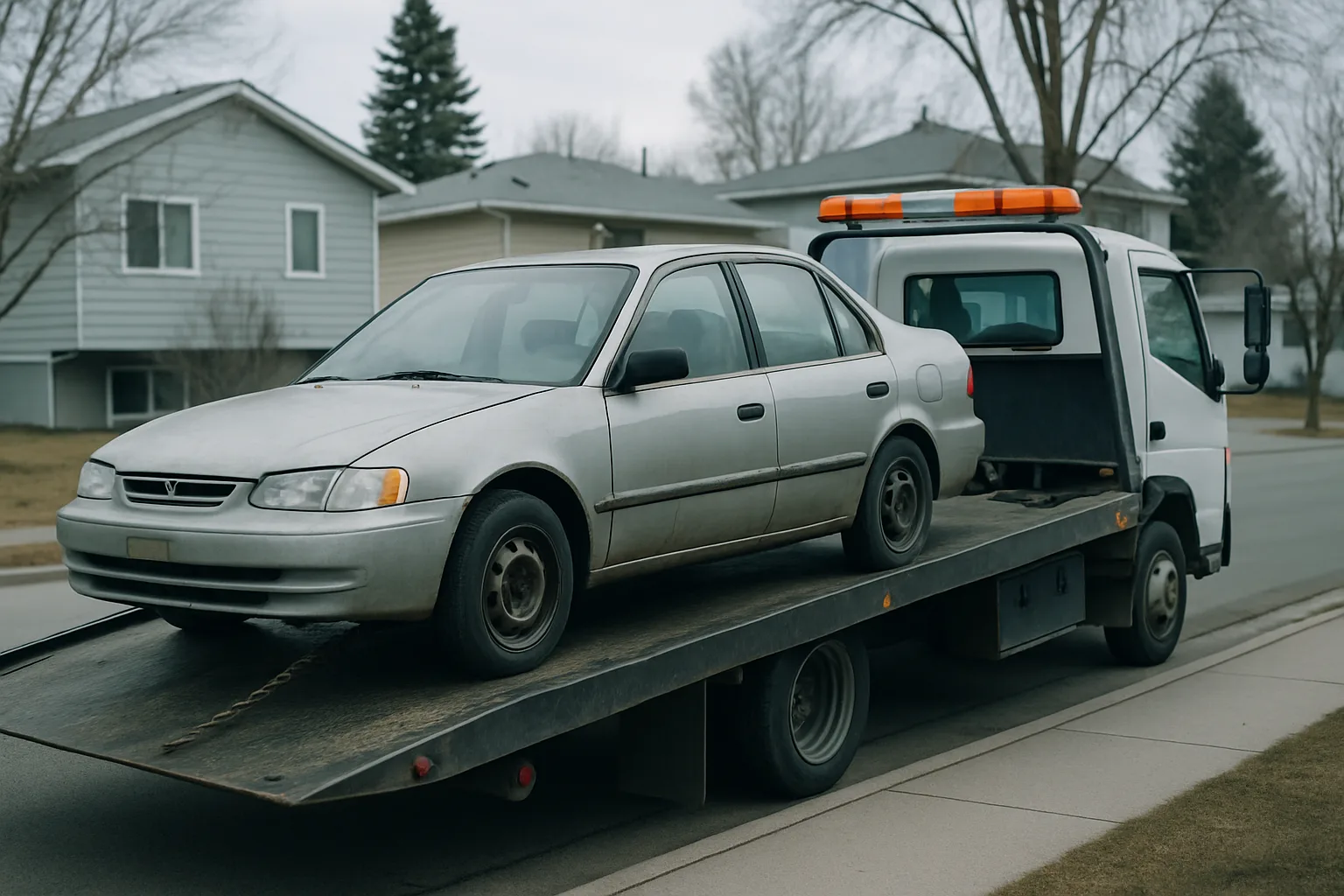
Most car owners assume scrap value is scrap value — the car's dead, it's worth whatever the yard offers. That assumption costs you money. A 2018 Honda CR-V and a 2005 Ford Focus sitting side by side can fetch wildly different prices, even if both are completely undriveable. Understanding why helps you get cash for your car in Canada without leaving dollars on the table.
If you're trying to sell my car fast Red Deer, knowing what actually drives your car's scrap value is the difference between a fair payout and a lowball offer you accepted because you didn't know better. Let's break it down.
Why Scrap Car Prices Are Never One-Size-Fits-All
Scrap yards don't price cars by gut feel — they price them by math. Every vehicle that rolls through a gate gets evaluated on a handful of hard factors: weight, metal composition, parts demand, and current commodity prices. Those factors shift constantly, which is exactly why scrap metal prices today are never the same as they were three months ago.
Ferrous metals (steel, iron) make up the bulk of most vehicles. A full-size pickup truck can carry over 1,500 kg of steel. A compact sedan might carry half that. Before you've said a word about condition, the make and model already determine how much raw metal is sitting in your driveway. More metal means a higher base price — full stop.
But weight is just the starting point. What sits on top of that steel frame matters just as much:
- Aluminum content — found heavily in newer vehicles, high-end makes, and trucks with aluminum body panels. Aluminum pays significantly more per kilogram than steel.
- Catalytic converters — contain platinum group metals (PGMs). A Toyota Prius cat is worth multiples of what a base model sedan cat fetches.
- Copper wiring and harnesses — more electronics means more copper. Luxury and hybrid vehicles carry more of it.
- Non-ferrous components — wheels, radiators, alternators. All priced separately from the steel body.
The make and model of your car tells an experienced buyer exactly what's inside before they pop the hood. That's not guesswork — it's data.
How Vehicle Condition Changes the Math on Cash for Junk Cars Red Deer
Condition affects value in two separate ways: parts value and processing cost. A vehicle in rough shape might still carry valuable salvageable parts. A vehicle that's been sitting in a field for a decade with a seized engine and stripped interior is worth closer to its raw metal weight — and the yard factors in the extra labour to process it.
Here's how condition typically breaks down in terms of what a buyer is evaluating:
- Running vs. non-running — A car that drives (or at least starts) is easier to move and inspect. Non-running vehicles may require flatbed pickup, adding cost that sometimes gets deducted from your offer.
- Complete vs. stripped — Missing catalytic converters, wheels, batteries, or airbags? Those get priced out of your offer fast. A complete car is always worth more than a gutted shell.
- Rust and structural damage — Heavy corrosion affects the quality of recoverable steel. Alberta winters are hard on undercarriages, and yards in Red Deer know exactly what a heavily salted, 12-year-old frame looks like.
- Fluid and hazmat status — Cars with intact fluids (oil, coolant, refrigerant) are easier to process responsibly. Leaking or missing fluids add disposal steps that affect the yard's margin.
The bottom line: condition isn't just about aesthetics. It directly affects how much usable material a buyer can extract and how much labour they need to do it. Both of those numbers hit your final payout.
Make and Model Matter More Than Most People Think
Certain makes consistently command stronger scrap and parts prices. It's not brand loyalty — it's supply, demand, and metal composition.
Higher-demand vehicles in scrap and salvage markets tend to share a few traits:
- Wide parts demand (lots of vehicles on the road using the same parts)
- Higher aluminum or non-ferrous content
- Valuable catalytic converters (hybrids, luxury, and some trucks)
- Heavier overall weight (trucks, SUVs, full-size vans)
A full-size GM pickup or a Ford F-Series with a dead engine often fetches more than a running compact car — simply because of weight and the value of the drivetrain components. Honda CR-Vs and Toyota RAV4s tend to hold strong parts value because there are millions of them on North American roads and demand for their components stays steady.
On the flip side, older domestic sedans with high rust, limited parts demand, and smaller frames tend to sit at the lower end. The car isn't worthless — but it's being priced almost entirely on its steel weight, which caps the ceiling fast.
Platforms like SMASH connect vehicle sellers to vetted buyers who understand exactly this kind of nuance. Instead of accepting the first number a single yard throws out, competition between buyers can help reveal what your specific make and model is actually worth in the current market. Visit smashrecycling.ca to see how the auction model works for scrap loads and vehicles.
Scrap Metal Prices Today: Why Commodity Markets Drive Your Payout
Even if you have the right make, the right model, and a complete vehicle in decent shape — the day you sell matters. Scrap metal prices float with global commodity markets. Steel prices track infrastructure demand, trade policy, and manufacturing output. Copper and aluminum prices respond to energy markets and supply chain conditions.
In 2026, commodity markets have remained active but volatile. Anyone quoting you a firm price without referencing current market conditions is either guessing or building in extra margin. Real buyers price to today's market — not last month's.
This is why the old way of selling (one phone call, one buyer, accept the offer) is structurally broken. You have no reference point. You don't know if today is a high market day or a low one. You don't know if the buyer on the phone is passing along current prices or pocketing the spread.
Transparency fixes that. When multiple vetted buyers compete for your vehicle or your load, the price discovery process does the work for you. SMASH is built around that model — documented inventory, competitive bidding, and no guessing games about whether you got a fair shake. If you're ready to get a free car valuation, start there.
What Red Deer and Alberta Car Sellers Need to Know Right Now
Selling a scrap or unwanted car in Red Deer comes with a few regional realities worth understanding. Alberta's climate is brutal on vehicles — freeze-thaw cycles, road salt, and gravel roads accelerate corrosion faster than almost anywhere else in the country. That affects scrap value.
Alberta also has a strong pickup and truck culture, which means full-size trucks and SUVs are plentiful in the local market. Higher supply of a specific type of vehicle doesn't always mean lower prices — parts demand stays strong when the local fleet is large — but it does mean buyers have options. Coming in with documentation, photos, and a clear vehicle history gives you an edge.
For anyone trying to sell my junk car today in Red Deer, a few practical steps make a real difference:
- Know your VIN and have it ready — buyers use it to pull specs and parts demand data instantly
- Keep the catalytic converter on the car until you sell — removing it and trying to sell separately rarely works in your favour unless you know exactly what you have
- Don't strip the battery or wheels — complete vehicles consistently outperform gutted ones
- Get more than one offer — the first number is rarely the best number
Local Red Deer scrap metal services understand the regional market, the condition of Alberta vehicles, and what local buyers are actively paying. Use that knowledge to your advantage.
If you want to dig deeper into the process, read car selling tips from people who work in the industry every day — not generic advice written for a national audience with no local context.
How to Get the Most When You Sell Your Car Fast in Red Deer
Getting maximum value isn't complicated. It requires information, documentation, and exposure to more than one buyer. Here's a straightforward process that works:
- Pull your VIN — Know the year, make, model, trim, and engine. This data drives every serious buyer's valuation.
- Document the condition honestly — Take photos of the exterior, interior, engine bay, and undercarriage. Buyers who can see what they're buying make stronger offers.
- Identify what's complete and what's missing — Cats, wheels, battery, airbags. Know before you call.
- Get multiple offers — One offer is just a number. Two or three offers is a market. Platforms that create competition between buyers do this work for you.
- Understand the pickup terms — Is towing included? Who handles the title transfer? Are you responsible for draining fluids? Know the full picture before you agree.
The process doesn't need to be complicated — but it does need to be deliberate. Sellers who show up with information consistently walk away with better outcomes than those who accept the first call.
If you're ready to stop guessing and start getting real offers, the straightforward next step is to get cash for your car in Canada through a process that's built around transparency, not assumptions. Head to cashfor-cars.ca for a free quote on your vehicle — no obligation, no pressure, just a real number based on what your car is actually worth today.
Frequently Asked Questions
Q: What makes some scrap cars worth more than others in Red Deer?
Weight, metal composition, parts demand, and current commodity prices all play a role. A heavier truck with aluminum panels and a valuable catalytic converter will outprice a small steel-heavy sedan almost every time. The make and model tell experienced buyers a lot before they even look at the car.
Q: How do I sell my car fast in Red Deer without getting lowballed?
Get more than one offer. A single buyer with no competition has no reason to sharpen their number. Documenting your car's condition with photos and knowing your VIN before you call puts you in a stronger position. Platforms that connect sellers to multiple vetted buyers help reveal what your car is actually worth in today's market.
Q: Does the condition of my car really affect cash for junk cars Red Deer payouts that much?
Yes — significantly. A complete, non-running vehicle in average condition will consistently outperform a stripped or heavily corroded shell of the same model. Missing parts like the catalytic converter, battery, or wheels get deducted from your offer because they represent value the buyer can no longer recover.
Q: How do scrap metal prices today affect what I get paid for my vehicle?
Directly. Steel, aluminum, and copper prices fluctuate with global commodity markets. A vehicle priced on a strong market day fetches more than the same vehicle priced on a down day. Always ask buyers what current market conditions they're using to price your car — any serious buyer should be able to answer that.
Q: Can I sell my junk car today in Alberta even if it hasn't been driven in years?
Yes. Non-running and long-stored vehicles are bought and sold regularly across Alberta. You'll typically need the title or ownership documents, and the buyer will likely arrange flatbed pickup. The price will reflect the vehicle's condition and completeness — but a complete, long-sitting car is still worth real money.
Stay current on scrap metal market trends and industry updates by following SMASH on LinkedIn: linkedin.com/company/scrap-metal-auction-sales-hub.