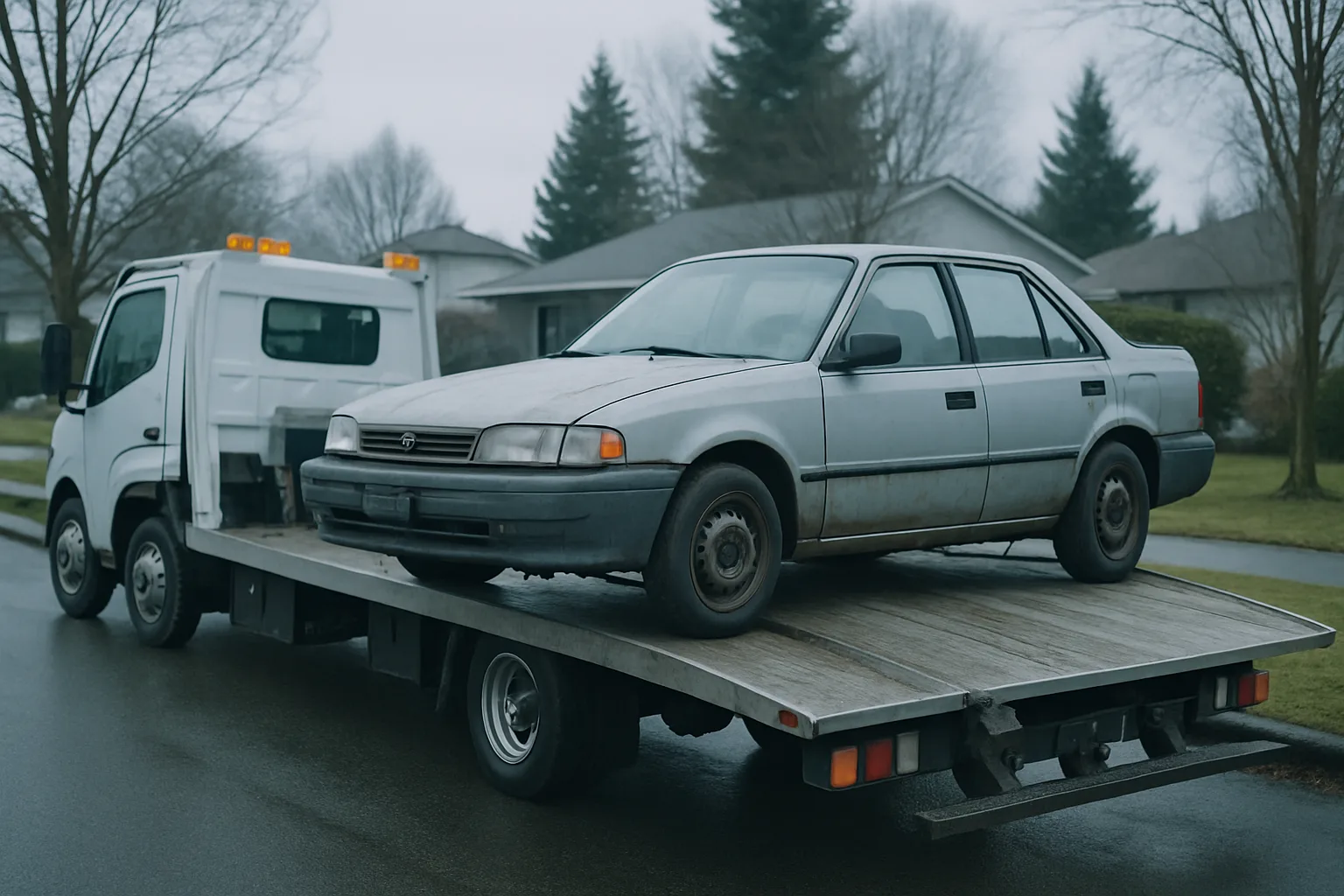
Most people assume scrapping a car is messy, complicated, and bad for the environment. One Chilliwack car owner thought the same thing — until she learned what actually happens to a vehicle when it's recycled properly. What she discovered changed how she thought about getting rid of her 2009 Honda Civic, and it put real cash in her pocket faster than she expected.
This is that story. And if you're sitting on an unwanted vehicle right now, it's probably your story too.
If you're ready to get cash for your car in Canada, keep reading — because understanding the process makes it faster, smarter, and a lot less stressful.
---The Problem: A Dead Car Taking Up Space in Chilliwack
Sarah (name changed for privacy) had owned her 2009 Civic for over a decade. By early 2026, it had a blown head gasket, rust eating through the frame, and a repair estimate that exceeded the car's value twice over. It sat in her driveway in Chilliwack for four months before she decided to do something about it.
She'd heard the usual options. Call a wrecker. Post it on Marketplace. Tow it to a scrap yard. But she had one concern that kept stopping her: what actually happens to the car? She didn't want it leaking fluids into a ditch or ending up in a landfill. She wanted to know it was being dealt with responsibly.
That question — what happens to a scrapped vehicle — is one more car owners should be asking. The answer is more reassuring than most people think, and it's also why platforms like SMASH are reshaping how Canadians sell junk cars.
---What Eco-Friendly Car Recycling Actually Looks Like
Modern vehicle recycling in British Columbia isn't the chaotic junkyard scene people imagine. There's a defined, regulated process — and a properly recycled vehicle generates almost no landfill waste. Here's how it breaks down:
- Fluid Extraction First — Before anything else, certified recyclers drain all hazardous fluids: engine oil, transmission fluid, brake fluid, coolant, power steering fluid, and refrigerants. These are collected and processed separately. None of it ends up in the ground.
- Battery Removal — The 12V lead-acid battery (and in hybrids or EVs, the high-voltage pack) is removed and routed to battery recyclers. Lead is one of the most successfully recycled materials on the planet.
- Catalytic Converter Harvest — Cats contain platinum, palladium, and rhodium — precious metals with real market value. They're removed, documented, and sold to smelters who recover those metals. This is a significant value component of any scrap vehicle.
- Parts Salvage — Functional parts — doors, engines, transmissions, alternators, seats — get pulled and resold as used auto parts. This extends their life and reduces manufacturing demand for new components.
- Shredding and Separation — What's left goes to an auto shredder. The resulting material is separated into ferrous metals (steel, iron) and non-ferrous metals (aluminum, copper, zinc). These go directly back into the supply chain as raw materials.
- The Final Number — Around 80-85% of a vehicle's weight is typically recycled or reused. That's not a guess — that's the industry standard target that responsible recyclers work toward.
Sarah had no idea the process was this structured. Once she understood it, she stopped hesitating. She wanted her Civic handled this way — not dumped.
---How Sarah Found a Buyer and Sold Her Car Fast in Chilliwack
The old way of selling a scrap car means calling one wrecker, getting one number, and taking it or leaving it. That's not competition — that's guessing. Sarah had been quoted $180 by phone from a local yard. She wasn't sure if that was fair or not because she had nothing to compare it to.
A friend told her about SMASH — a platform that connects sellers with vetted scrap and salvage buyers who bid competitively on vehicles and loads. Instead of accepting the first number she heard, Sarah listed her Civic with photos, documented the condition, and let the market respond.
She received multiple offers within 48 hours. The highest offer came in significantly above her initial quote. She accepted, coordinated pickup, and the car was gone within three business days of listing. The buyer arranged towing at no cost to her. She signed the paperwork, handed over the keys, and received payment.
That's what happens when you replace a single cold call with actual buyer competition. You can also get a free car valuation before you list, so you walk into the process knowing your baseline — not guessing it.
If you want to understand how buyer competition actually affects scrap pricing, compare scrap metal bids from Canadian buyers and see what real market discovery looks like.
---Why Scrap Metal Prices Today Matter When You Sell Your Car
The value of a scrap vehicle isn't static. It moves with scrap metal prices today — specifically the price of shredded steel, aluminum, and the metals inside your catalytic converter. When steel prices are up, the base scrap value of your vehicle is higher. When they're soft, expect lower offers.
This is why timing and transparency matter. A yard that gives you a phone quote without showing you current market rates could be quoting from last week's prices — or simply offering less than the market supports. That's not a dig at any specific buyer. It's just how one-call selling works. You don't have visibility. You're trusting a number you can't verify.
SMASH changes that dynamic. When multiple vetted buyers are competing on your vehicle, the price discovery happens in the open. You see what the market will pay right now — not what one buyer decides to tell you. For a car with decent ferrous content, a functioning catalytic converter, and salvageable parts, that difference can be meaningful.
Disclaimer: Scrap metal prices fluctuate daily based on commodity markets, regional demand, and material grades. Always check current rates before committing to a sale.
---The Environmental Case for Selling Through a Vetted Buyer Network
Here's something most people don't think about: who you sell your car to affects how it gets recycled. Not all buyers operate the same way. Certified auto recyclers in British Columbia follow provincial environmental regulations for fluid disposal, refrigerant handling, and parts processing. An unlicensed buyer might not.
When you sell through a platform that vets its buyers — like SMASH does — you're not just getting better price discovery. You're also more likely to have your vehicle processed by a legitimate, compliant recycler. That matters if you care about where your fluids end up and whether your car's materials actually re-enter the supply chain.
Sarah specifically asked during her sale whether the winning buyer was a licensed recycler. They were. She got documentation of the sale and the buyer's credentials. That's the kind of accountability you don't get from a cash-in-hand Marketplace transaction where the car disappears and you have no idea what happened next.
For anyone in Chilliwack or the broader Fraser Valley looking to sell my car fast Chilliwack — and do it in a way that doesn't create environmental headaches — this is the framework that works.
---What You Need Before You Sell Your Junk Car Near You
Whether you're in Chilliwack, Abbotsford, Hope, or anywhere across British Columbia, the prep work before you sell is the same. Getting this right speeds up the process and protects you legally.
- Locate your vehicle title (registration). You need proof of ownership to transfer legally. No title means complications. Most legitimate buyers won't proceed without it.
- Remove your plates. In British Columbia, plates stay with the owner, not the vehicle. Return them to ICBC or transfer them to your next car.
- Clear your personal belongings. Check the trunk, under seats, glovebox, and door pockets. People regularly leave valuables, documents, or IDs in cars they're selling.
- Document the condition honestly. Photos of the body, interior, engine bay, and any visible damage. Accurate documentation means buyers bid with confidence — and that confidence shows up in the offers.
- Note any valuable components. Does it have a functioning catalytic converter? A newer battery? Aftermarket wheels? These affect value and should be disclosed upfront.
- Cancel your insurance. Once the car is sold and plates returned, contact ICBC to cancel the policy and claim any unused premium.
Sarah had all of this ready before she listed. Her documentation was thorough. Buyers knew exactly what they were bidding on. That clarity — combined with the competitive format — is what produced a result she was happy with. You can read car selling tips for more practical prep advice before you list.
---Frequently Asked Questions
Q: How do I sell my car fast in Chilliwack?
List your vehicle on a platform that connects you to multiple vetted buyers — like SMASH — rather than calling a single yard. Prepare your documentation upfront: title, photos, and a condition description. Competitive bids typically come in within 24-48 hours, and pickup is usually arranged within a few business days. The more complete your listing, the faster buyers can commit.
Q: How much can I get for a junk car in Chilliwack?
It depends on the vehicle's weight, condition, and current scrap metal prices. A typical passenger car produces roughly 800-1,000 kg of steel. The value of the catalytic converter, functional parts, and non-ferrous components all add to the base number. Don't accept a single phone quote without knowing what the market is paying — buyer competition is the only reliable way to find that out.
Q: Is scrapping my car bad for the environment?
Not when it's done properly. A certified auto recycler drains all fluids, removes hazardous materials, and processes the vehicle's metals back into the supply chain. Around 80-85% of a vehicle's weight is typically recycled. The key is selling to a vetted, licensed buyer — not an unknown cash buyer who may not follow proper disposal protocols.
Q: Do I need my title to sell a junk car in British Columbia?
Yes. Proof of ownership is required to legally transfer a vehicle. Legitimate buyers in British Columbia will require documentation before processing a sale. If you've lost your title, contact ICBC to get a replacement before you list the car.
Q: What happens to the catalytic converter when I scrap my car?
A functioning catalytic converter contains platinum, palladium, and rhodium — metals with real commodity value. Certified recyclers remove and document the cat, then sell it to smelters who recover those metals. This is one of the higher-value components of a scrap vehicle and should always be disclosed when you list your car for sale.
---Sarah's 2009 Civic didn't end up in a ditch. It was drained, parted, shredded, and melted back into raw material — and she got paid fairly for making that happen. If you've got an unwanted vehicle sitting in your driveway in Chilliwack or anywhere across Canada, that's exactly the outcome you should expect too. Get cash for your car in Canada — get a free quote at cashfor-cars.ca and find out what your vehicle is actually worth in today's market.
Stay current on scrap metal market trends and industry insights — follow SMASH on LinkedIn for regular updates from inside the recycling industry.